


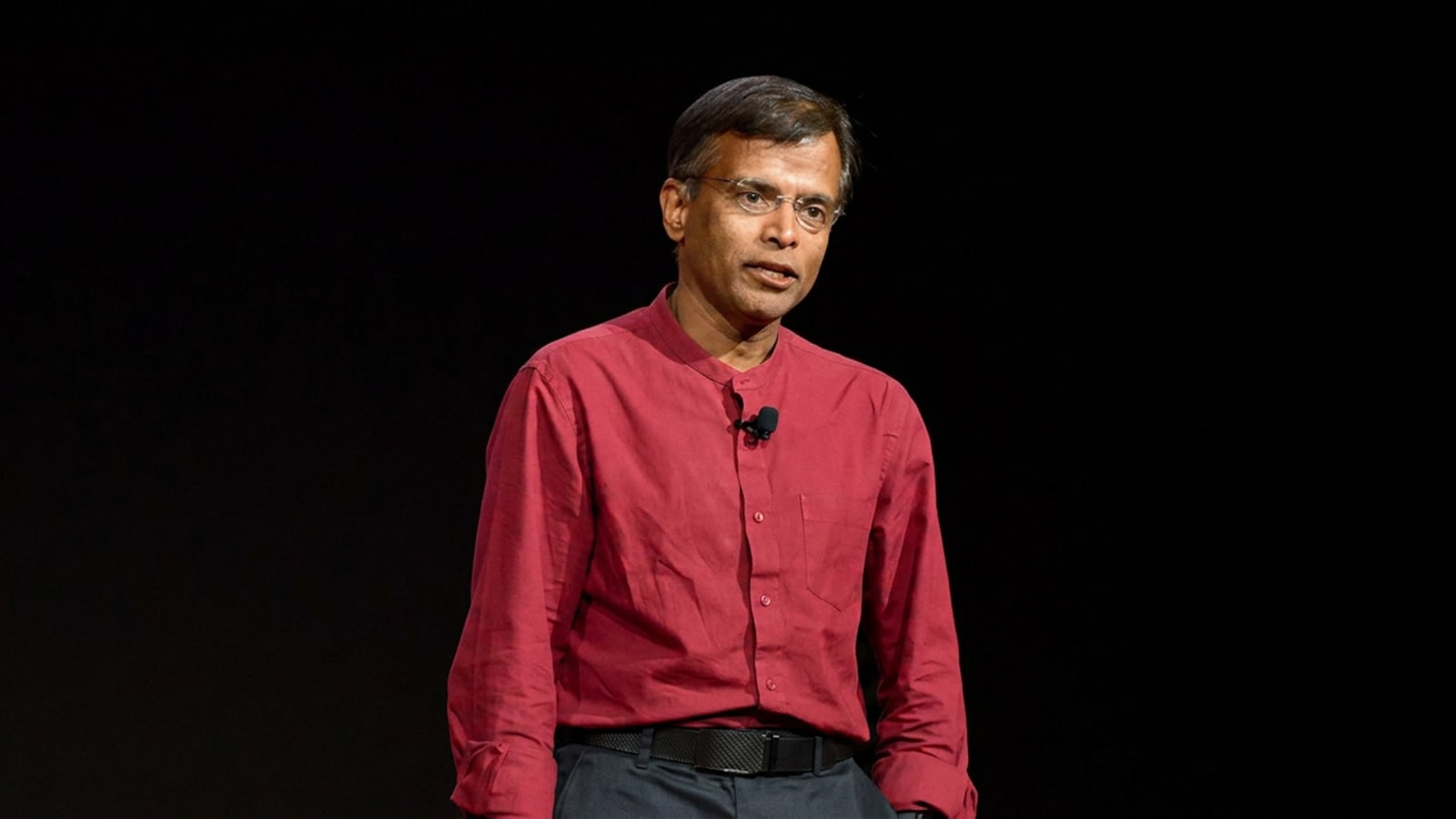
Aswath Damodaran is warning that Wall Street may be sleepwalking into catastrophe as fears grow over a possible Chinese move on Taiwan and an AI-fueled market bubble that could hammer the global economy.
In a stark podcast interview, the NYU finance professor said investors are massively underestimating the danger of a geopolitical shock involving China, even as military timelines increasingly point to Beijing being ready for a Taiwan operation before the end of the decade.
“The expectation is they will be prepared to take over Taiwan by 2027. It will more likely be 2029 or later,” the interviewer said before asking what such a conflict would do to the global economy and the AI industry.
“You can’t hedge against it,” Damodaran answered. “That’s the definition of a truly catastrophic event.”
The veteran market watcher said current stock prices reveal a dangerous level of complacency. If markets truly believed a China-Taiwan war was approaching, he argued, investors worldwide would already be fleeing risk assets.
“It’s clearly not the expectation of the market,” Damodaran said. “Because if that were the expectation, you’d see a very different market playing out now. Not just in the US, but across the globe.”
If war breaks out, he warned, the damage would spread instantly through markets, supply chains and economies already heavily dependent on AI spending and semiconductor production tied to Asia.
“There’s no hiding from it,” he said. “I don’t see any way around that.”
Damodaran also sounded the alarm on the massive AI investment frenzy powering the US economy, warning that the eventual correction could hit far harder than the dot-com collapse because AI spending now touches nearly every corner of the country.
“I think the macroeconomic costs are going to be greater from a correction because this is carrying the macroeconomy a lot more than the dot-com boom did,” he said.
Unlike the internet mania of the late 1990s, today’s AI boom is not confined to tech stocks and venture capital. Trillions are flowing into data centers, power grids, chip manufacturing, construction projects and water infrastructure nationwide.
“You’re getting it across the country in the building of data centers, people being employed in the power companies, the water being demanded,” Damodaran said. “There’s collectively a lot more accounting for here if there’s a correction.”
Asked whether that means the next crash could be worse than 2001, Damodaran said the fallout would likely be broader, deeper and harder to escape.
“It’ll be more widespread. It’ll be more market-wide,” he warned. “And more of a macroeconomic hangover that you take a little longer to get through.”
For now, he believes the threat of war remains the biggest immediate danger hanging over markets.
“The war is the most immediate one,” Damodaran said. “That’s what the market is going to be watching on a day-to-day basis.”



