


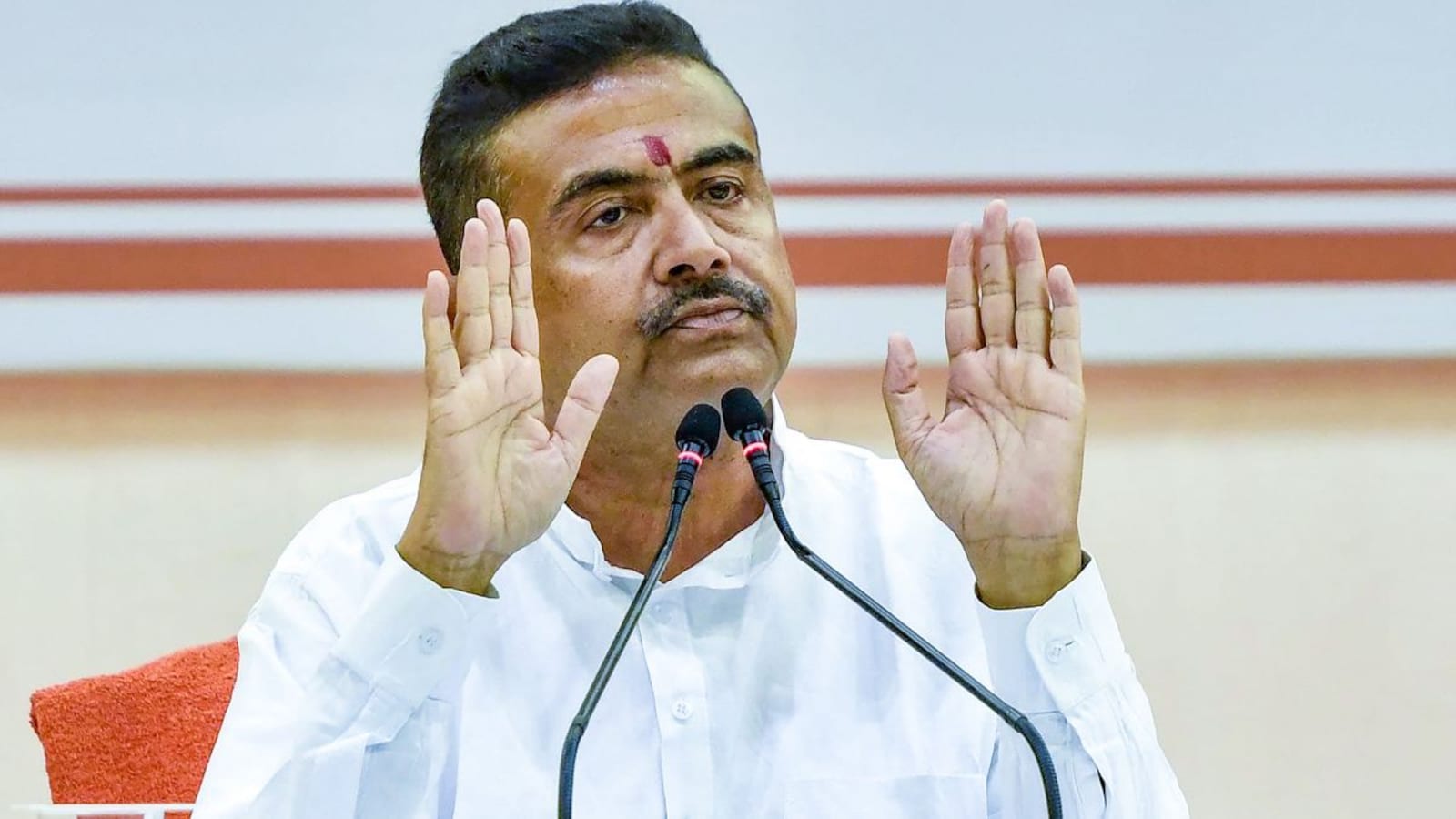
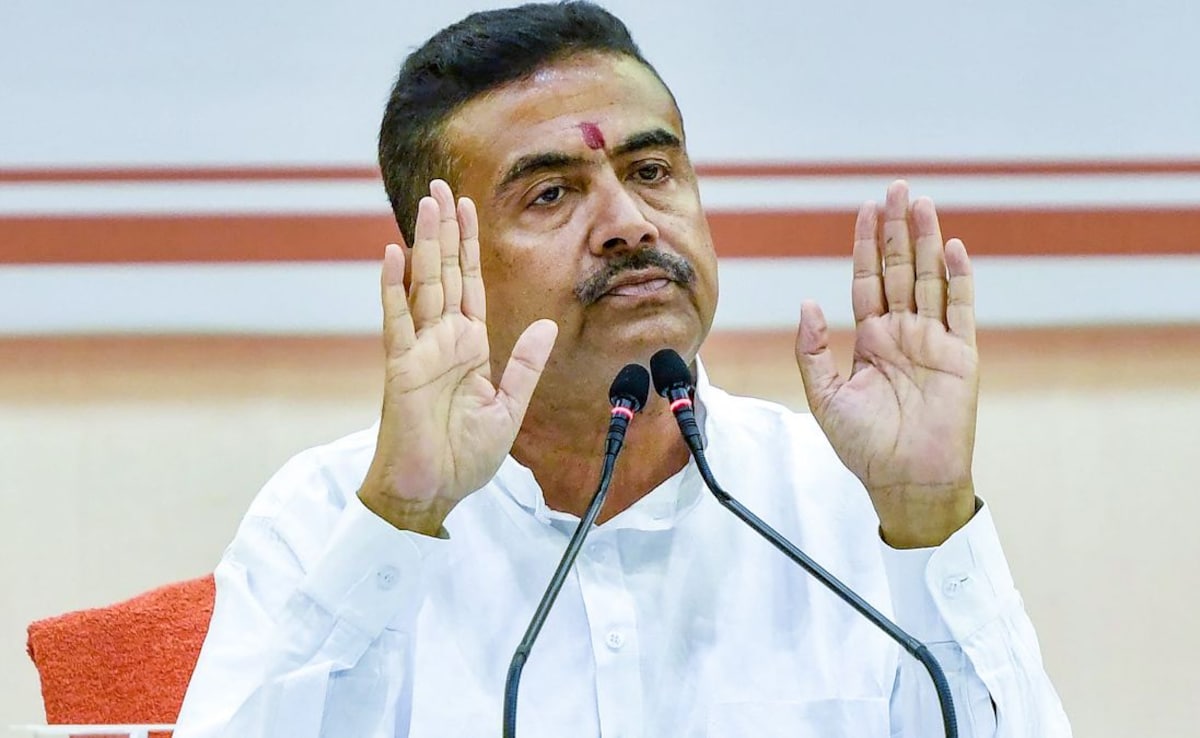
West Bengal’s ninth chief minister, Suvendu Adhikari, is the state’s first chief minister in 55 years who hails from outside Kolkata and hence has no house of his own in the city.
Most of his predecessors, from the first chief minister Prafulla Chandra Ghosh, who was in the chair for barely six months before making way for Dr Bidhan Chandra Roy, to three-term chief minister Mamata Banerjee, were mostly residents of Kolkata and hence contested seats in and around the city and had their homes there. Most of the state’s chief ministers have lived in neighbourhoods alongside commoners as neighbours.
Since Kolkata has functioned without a designated chief ministerial quarter, Adhikari moved to a plush convention centre-cum-guesthouse, “Soujanya” – a high-tech complex built in 2014 by the Mamata Banerjee government in the Alipur area that is part of the Bhabanipur assembly seat. Soujanya was built to house VVIP guests to the city.
Adhikari lived in a private flat at Chinar Park in Rajar Haat, situated in the northern fringes of the city, a comparatively newly developed area, close to the airport, whenever he came to Kolkata from his home in Kanthi. When he became leader of the opposition in the Bengal assembly in 2021, his official residence was at the state’s guest house, Nizam Palace, in central Kolkata.
Suvendu Adhikari hails from Kanthi, in East Midnapur, where he lived in his ancestral home, Shanti Kunja, along with his father Sisir Adhikari and the rest of his family. While he won from Nandigram for the 2016 and 2021 assembly polls, he represented the Kanthi Dakshin assembly seat in 2005 and the Tamluk parliamentary seat in 2009 and 2014. His growing-up years were spent in Midnapur, and hence he had never lived in the city before he joined the state’s political class.
As the first chief minister, from July 1947 to January 1948, Prafulla Chandra Ghosh lived in a north Kolkata neighbourhood.
Bidhan Chandra Roy, who served at the top post from 1948 to 1962, a renowned doctor, lived and worked out of his ancestral house at Wellington Square (now Raja Subodh Mallick square), which he donated to be run as a charitable hospital after his death.
Prafulla Chandra Sen, a Gandhian known as “Arambager Gandhi”, represented the Arambagh seat in the Hooghly district. When he became chief minister, he lived in a private flat off Park Street in central Kolkata that belonged to Congress leader Ashok Krishna Dutta, according to an old timer from the party.
Ajoy Mukherjee, the only other chief minister who hailed from Tamluk and represented the Tamluk Assembly seat, lived in the government quarters in Belvedere Estate in Alipur, south Kolkata, when he became chief minister for three truncated terms. His first tenure lasted from February 1969 to March 1970, followed by second and third terms till June 1971.
Siddhartha Shankar Ray, who was in office from 1972 to 1977, had his ancestral house at Beltala Road, Bhabanipur, where he lived. Ray represented the Chowrighee constituency in central Kolkata.
Jyoti Basu, Bengal’s longest-serving chief minister, who was in office from 1977 to 2000, represented the Satgachhia constituency on the outskirts of Kolkata. Most of the years he lived in his ancestral home on Hindustan Road in south Kolkata and in the later years moved to a government accommodation in the Salt Lake area – Indira Bhawan, an irrigation department bungalow. Before moving into Indira Bhawan, Basu had briefly stayed at the Raj Bhawan.
Buddhadeb Bhattacharya, who was in office from 2000 to 2011, continued to live in his government flat on Palm Avenue in south Kolkata and represented the Jadavpur seat.
Mamata Banerjee continues to live in her ancestral home – a small single stories house on Harish Chatterjee Street in the Kalighat neighbourhood that is part of the Bhabanipur constituency that she represented.



