


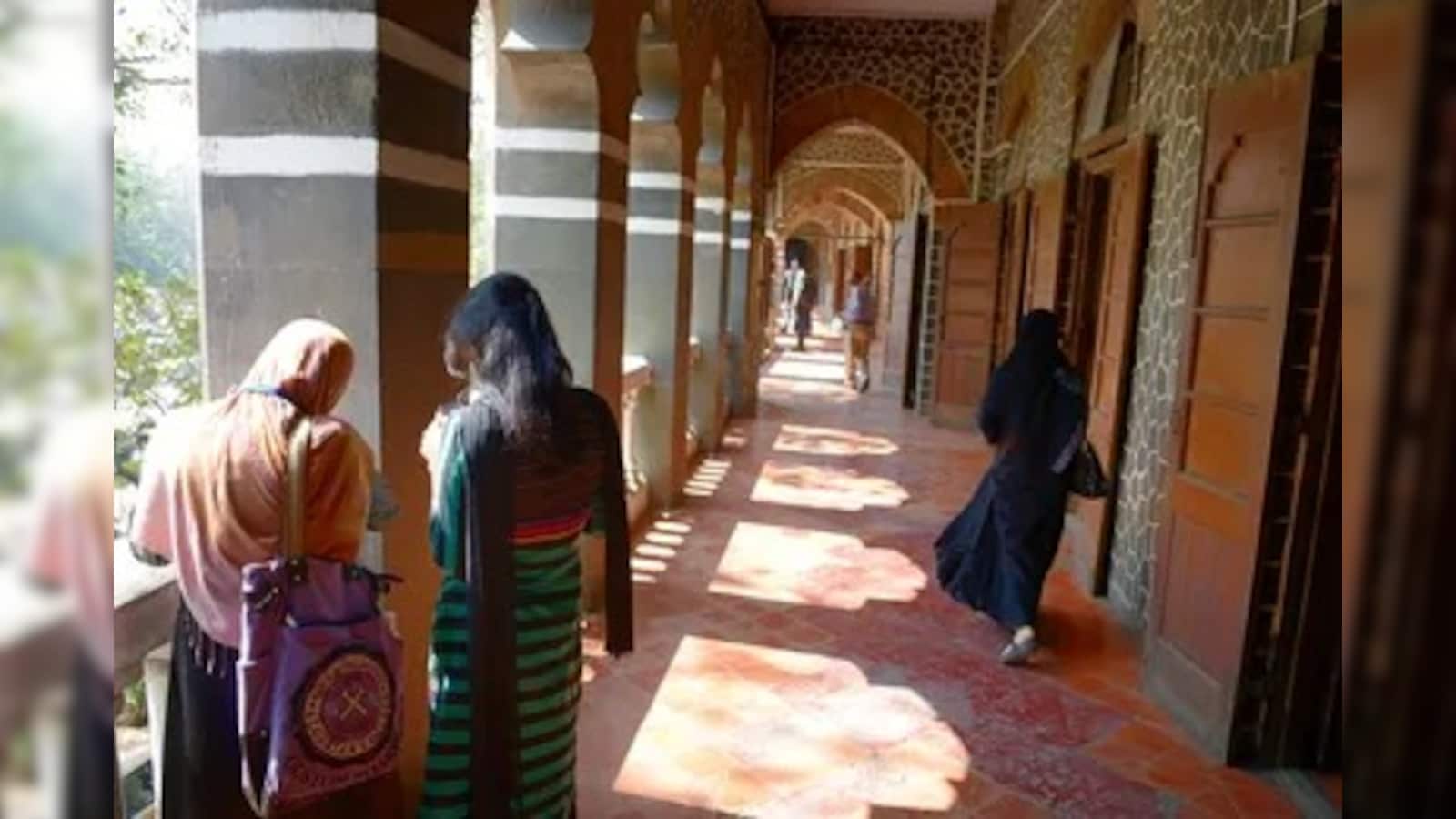
Student protests that rocked India last week are shining a light on the country’s private coaching industry and its soaring costs.
After-school tuition is sucking up a bigger portion of Indian family budgets these days as an increasing number of students compete for a limited number of spots at top colleges.
That’s why when examination papers for entrance to medical schools were leaked in May, and the government forced more than 2 million students to resit the test, anger exploded onto the streets. The protests by tens of thousands of students last week in New Delhi and other major cities culminated in the education minister resigning over the scandal and Prime Minister Narendra Modi appointing a task force to tackle the problem of leaked papers.
ALSO READ: You Pass More Than Trauma To Next Generation | The Reason Why
Here’s a look at the drivers of education costs in India and how that’s fueling the frustrations of young people.
Education costs are rising faster than incomes
Household incomes have increased at a compound rate of 11.9% a year in the past decade, trailing the 15.7% pace in education spending, according to the Consumer Pyramids Household Survey by private data provider Centre for Monitoring Indian Economy.
An average household in India now spends almost 3% of their income on education, at least a decade high, compared with 1.95% in 2014-15, according to CMIE.
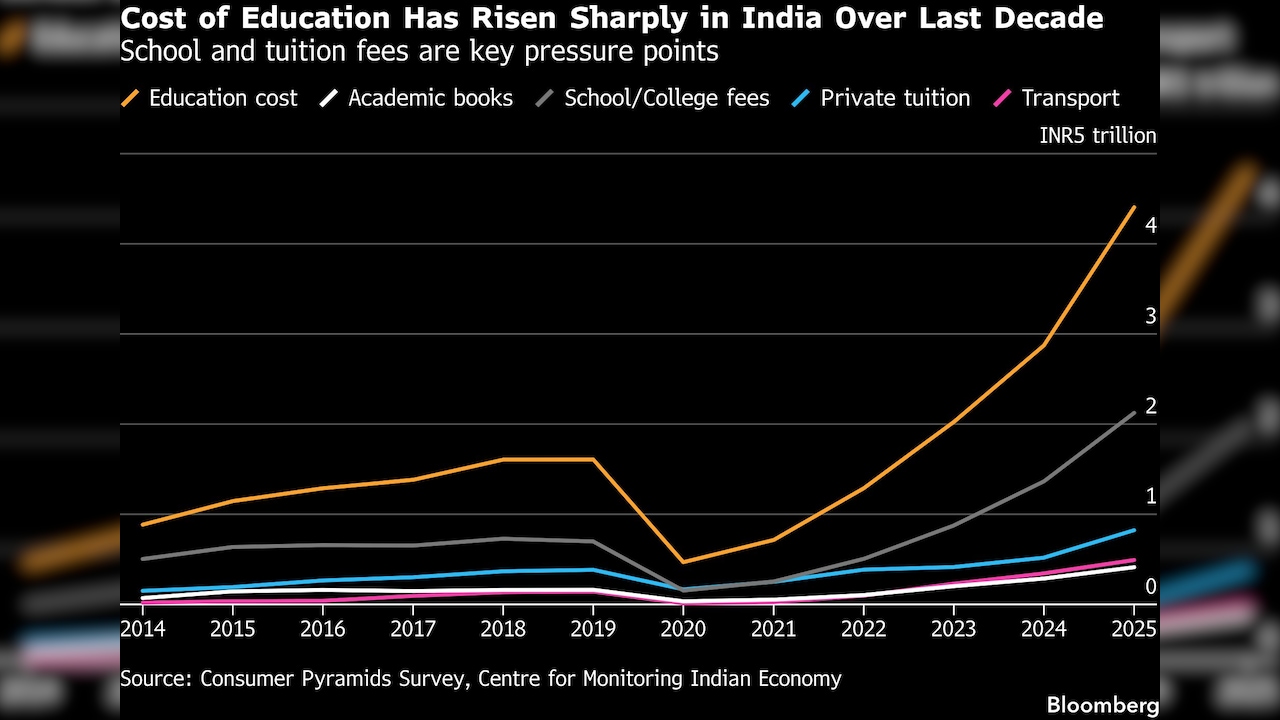
Private tuition was among the fastest-growing components of households’ education budget, increasing an average of 16.7% a year, while school and college fees rose 14%. Spending on books grew even faster, at 17.5% a year.
For many families, the payoff is the chance to secure a place at an affordable government college. A five-year medical degree at a government college can cost as little as 50,000 rupees ($522.77), while at some private colleges the bill would be a minimum of 5 million rupees.
Competition for seats at top colleges is fierce
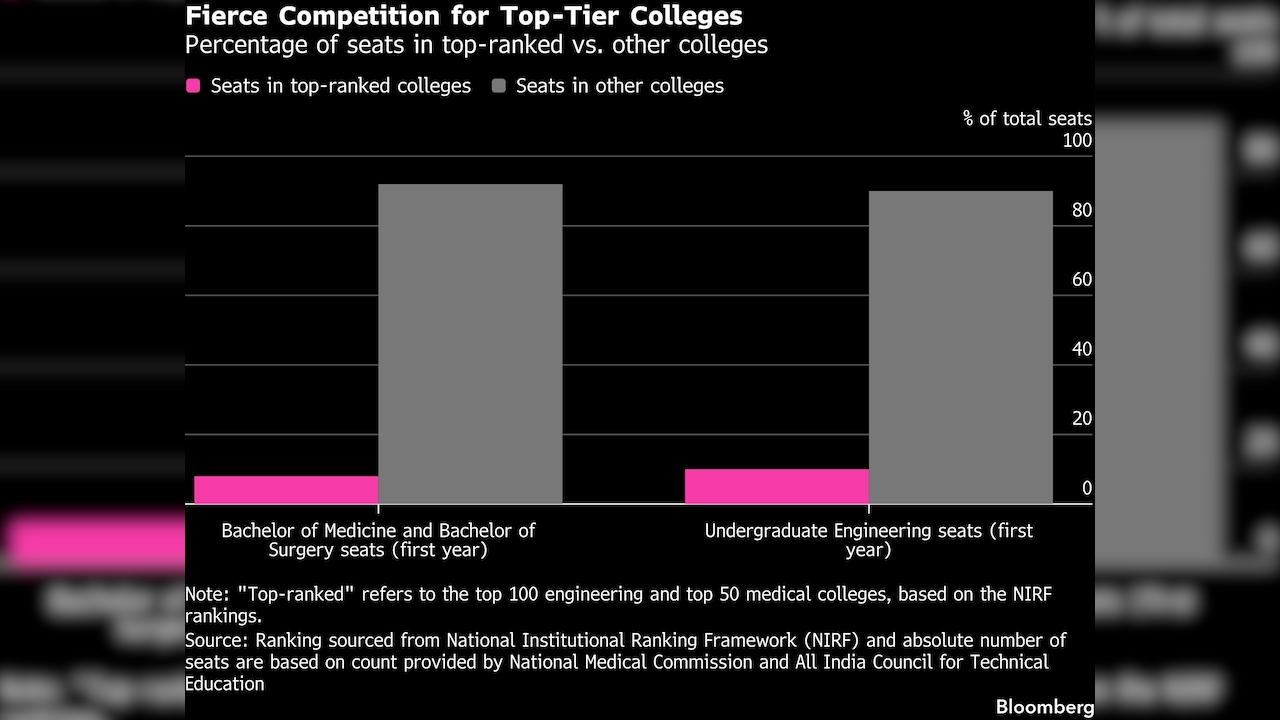
Medical and engineering degrees are highly sought after in a country where quality jobs are scarce. For the medical entrance exam that was canceled this year — known as the National Eligibility Cum Entrance Test, or NEET — nearly 2.3 million students took the test, competing for about 140,000 undergraduate medical school seats nationwide. Fewer than 10,000 of those are at the country’s top 50 medical colleges.
The competition is also fierce for engineering colleges that produced global technology leaders such as Alphabet Inc.’s Sundar Pichai and International Business Machines Corp.’s Arvind Krishna. Registrations for the Joint Entrance Examination, the gateway to many of those institutions, climbed to about 1.6 million in 2026, although India’s top 100 engineering schools offer only about 134,000 first-year posts.
ALSO READ: Amit Shah On Pradhan’s Resignation: ‘Students Hold Greater Importance Than Any Position’
Private tutoring services are booming
To get into top schools, parents are paying more and more for private coaching, a largely unregulated industry for which there’s little official data. The central government introduced guidelines in January 2024 to regulate the sector after reports of institutes charging exorbitant fees, making misleading claims and other malpractices. However, with school education largely under the jurisdiction of state governments, the Ministry of Education says its ability to regulate coaching institutes is limited.
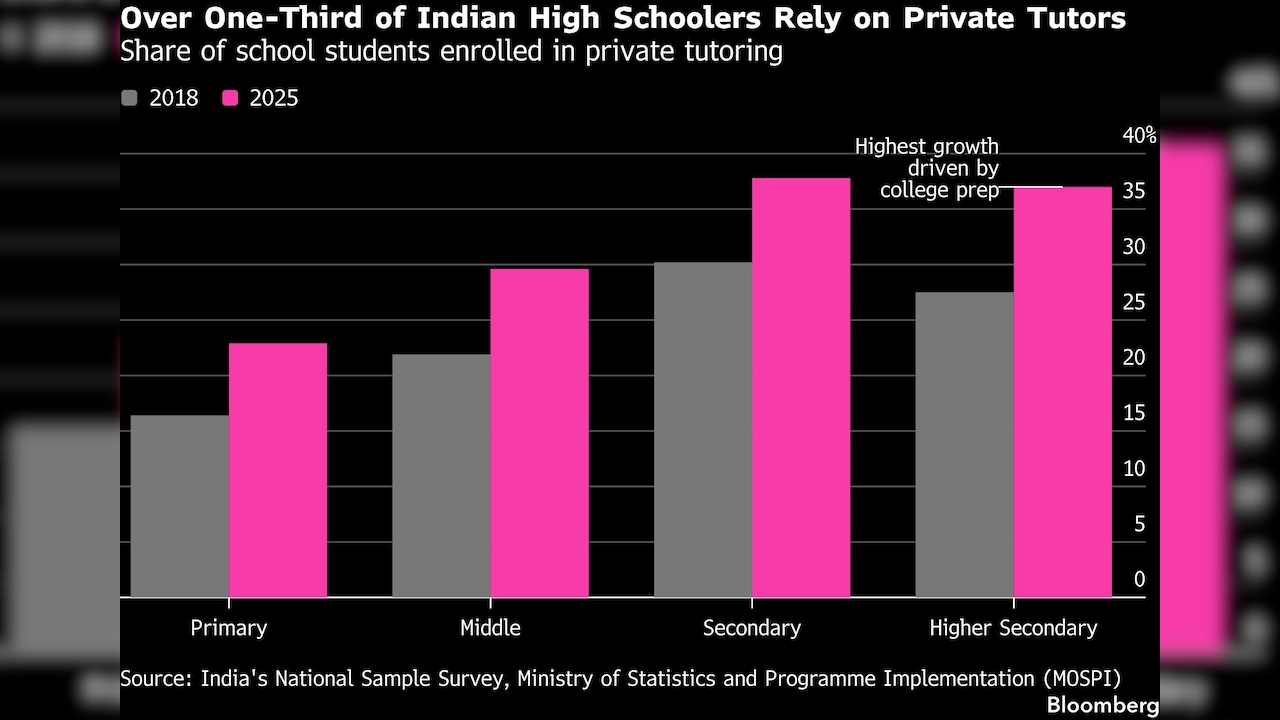
About 38% of secondary-school students were enrolled in private tutoring in 2025, up from 30% in 2018, according to results of the government’s sample surveys on education.
ALSO READ: ‘No Adverse Legal Action’: Himanta Sarma-Led Assam Govt Withdraws Cases Against NEET Protesters
Tuition costs are soaring
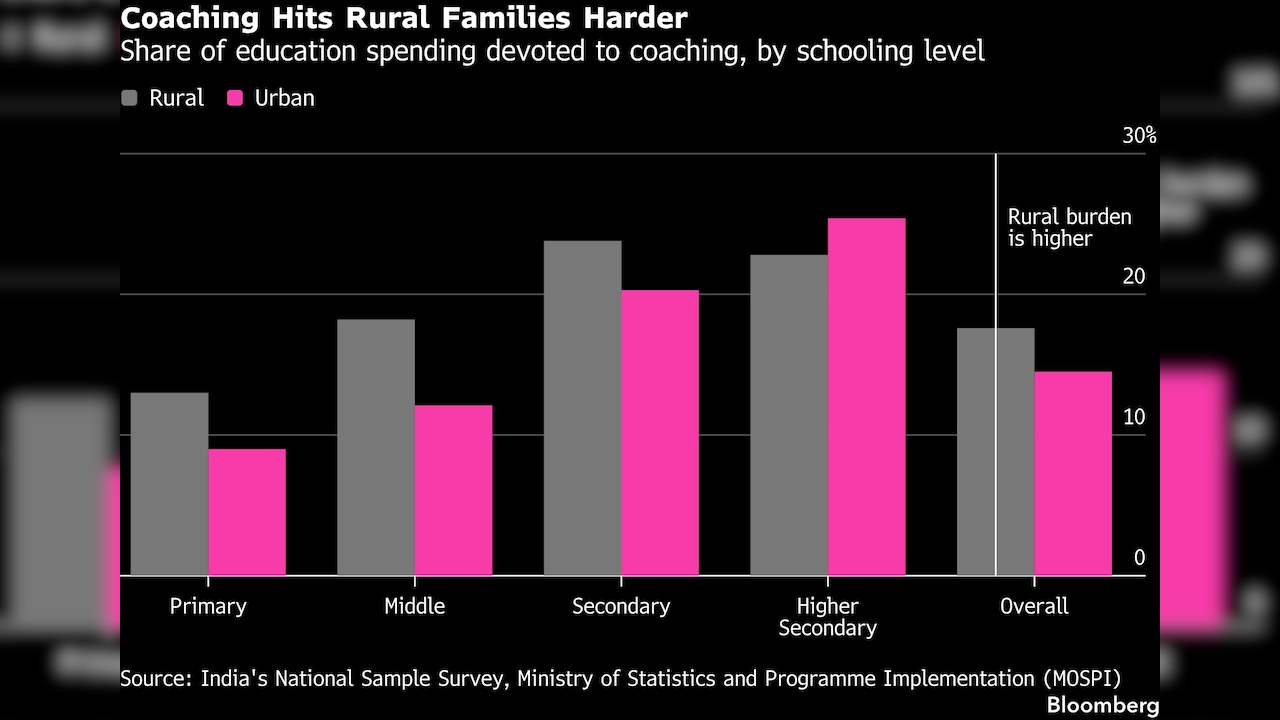
In 2025, families spent an average of 16% of their child’s total education budget on private coaching, up from 12.5% in 2018. In rural areas, the financial burden is even higher.
The proportion of spending dedicated to private coaching climbs as students reach higher grade levels. Families with children in higher secondary school spent nearly a quarter of their education budget on private coaching in 2025, up from 18% in 2018.
The government is spending less of its budget on education
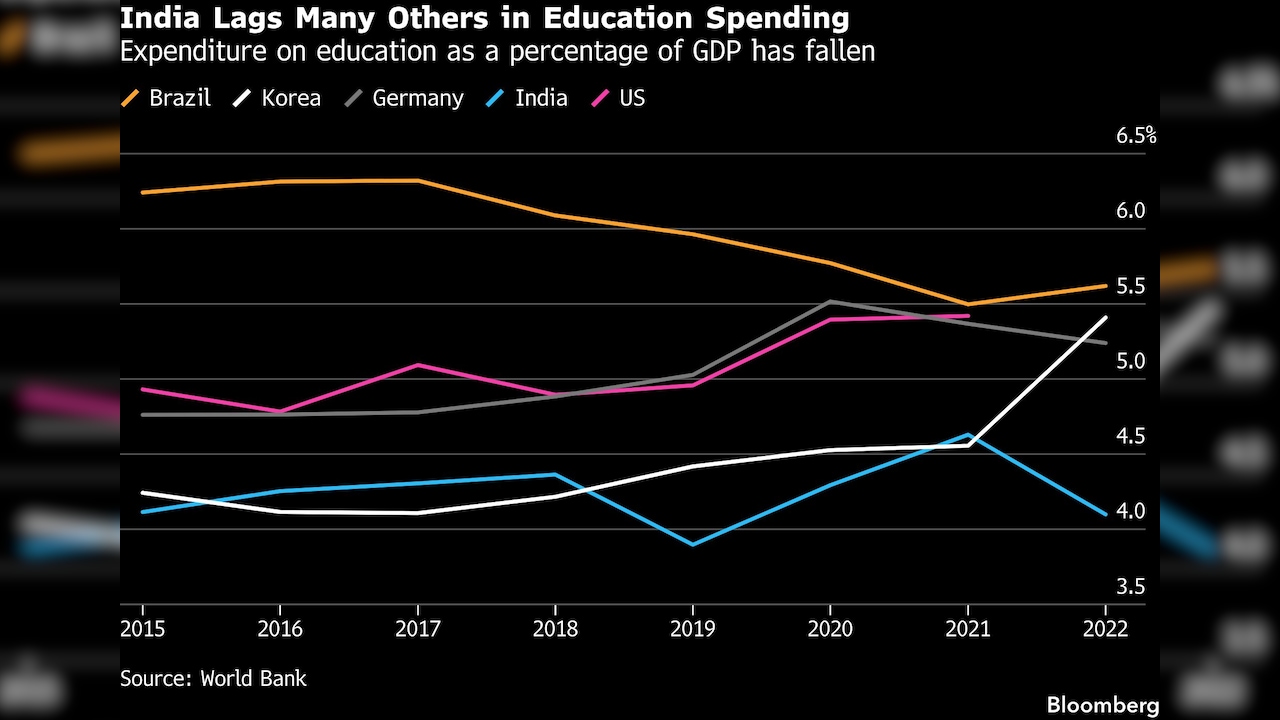
The coaching boom has coincided with a declining share of the government’s budget being devoted to education. Although allocations to the Ministry of Education have risen in nominal terms, they have fallen as a share of total government spending over the past decade. The ministry received about 1.39 trillion rupees in the 2026-27 budget, or roughly 2.6% of total expenditure.
Education spending is shared between the federal and state governments, making the ministry’s allocation only one part of overall public investment in the sector.
(This story has not been edited by NDTV staff and is auto-generated from a syndicated feed.)
Essential Business Intelligence,
Sharp Market Insights,
Practical Personal Finance Advice, Daily Fuel, Gold and Silver Prices and Latest Stories — On NDTV Profit.



