



Imagine going to your favorite coffee shop, only to find it closed because the staff is attending a mandatory history lesson. That is exactly what happened in South Korea recently.
On June 22, Starbucks South Korea will shut down all of its 2,000 stores for half a day. They didn’t do this for a break or a celebration, but to give their employees “social sensitivity” training and a lecture on modern Korean history.
What went wrong?
It all started with a massive marketing blunder. Starbucks ran a promo for their new tumblers on May 18, calling it “Tank Day.”
This was a terrible choice of date because May 18 is the anniversary of the 1980 Gwangju massacre a dark time in South Korea when the military violently crushed a pro-democracy protest, killing hundreds of people.
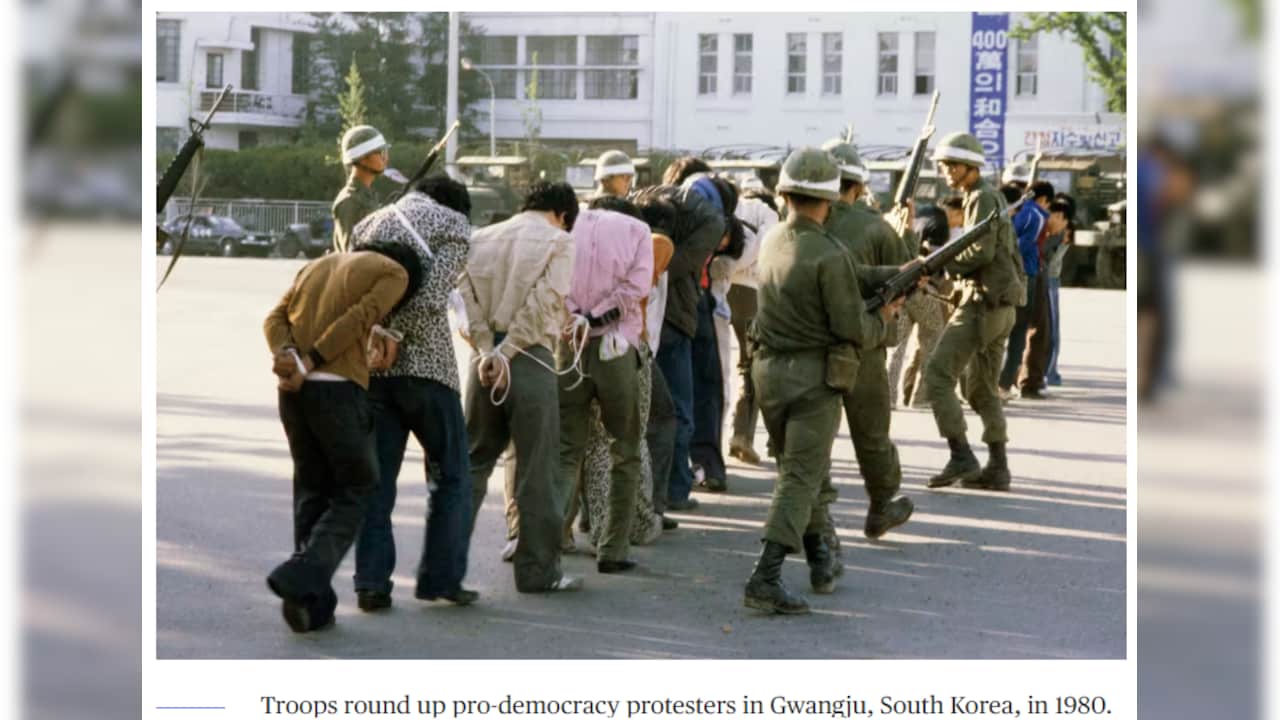
Gwangju massacre is a painful memory for many. Over 10 violent days, paratroopers crushed pro-democracy protests against military strongman Chun Doo-hwan.

(Memorial to student activist Park Jong-chul)
Starbucks branded the date of its promotion “Tank Day”. It also featured the slogan “thwack on the desk”. For Koreans, this phrase brings back painful memories. In 1987, a student activist was tortured to death by the police. Trying to cover it up, the police lied to the public, claiming the student simply dropped dead out of shock when an officer slammed his hand on the desk with a “thwack.” That lie sparked massive nationwide protests. This case became a major turning point in the South Korea democracy movement.
Marketers chose the “thwack” slogan after consulting an AI tool for suggestions, Shinsegae Group said.
Using a phrase linked to police brutality and a tragic date to sell coffee mugs sparked immediate public anger. People started boycotting the brand, customers smashed their Starbucks mugs in protest, and even government ministries cut ties with the company.
The Fallout
Backlash was so severe that the CEO of Starbucks Korea, Son Jung-hyun, was fired. The global head office stepped in, stating that while the mistake wasn’t intentional, it “never should have happened.”

Closing the stores for half a day to educate the staff wasn’t cheap, either. It cost the company an estimated 2.1 billion won in lost sales which is around 12.8 crore rupees.
They’ve done this before!
Actually, this is not the first time Starbucks has closed its shops to teach its staff a lesson.
Back in 2018, the company faced a massive public backlash in America. Two Black men, Rashon Nelson and Donte Robinson, went to a Starbucks in Philadelphia for a business meeting. While they were waiting for their third person to arrive, one of them asked to use the washroom. The staff said no because they hadn’t bought anything yet.
When the men quietly refused to leave and decided to keep waiting, the store staff actually called the police. The police arrived, put handcuffs on the two men, and took them out of the cafe. People were completely furious and accused Starbucks of racism.
To fix this huge mess, Starbucks took a bold step. They shut down 8,000 stores across the US for an afternoon and gave mandatory training to 1,75,000 employees. The goal was to teach them how to treat people equally and ensure that everyone feels welcome in their cafes, no matter who they are.
Coffee is becoming famous all over the world!
Coffee is a booming business everywhere. Globally, the coffee market is worth a massive Rs 38.1 lakh crore. Even in India, coffee is becoming huge. The Indian coffee market was worth Rs 13,000 crore in 2020 and is expected to jump to Rs 32,000 crore by 2027.
Because there is so much money to be made, companies are constantly trying to do creative marketing to grab our attention. But sometimes, they cross the line and deeply offend people.
Starbucks isn’t alone in this. Other huge brands have made similar careless mistakes:
Dove (2017): They ran a body wash ad that appeared to show a Black woman turning into white. People called it highly racist, forcing Dove to pull the ad and apologise for missing the mark on diversity.
Hyundai (2013): The car company made a highly insensitive ad showing a man trying to end his life using car exhaust fumes to promote a new model. They faced heavy backlash and had to quickly apologize and take the video down.
At the end of the day, it shows that no matter how big a company is, or even if they use smart AI tools to write their ads, a little common sense and human sensitivity are always needed



