


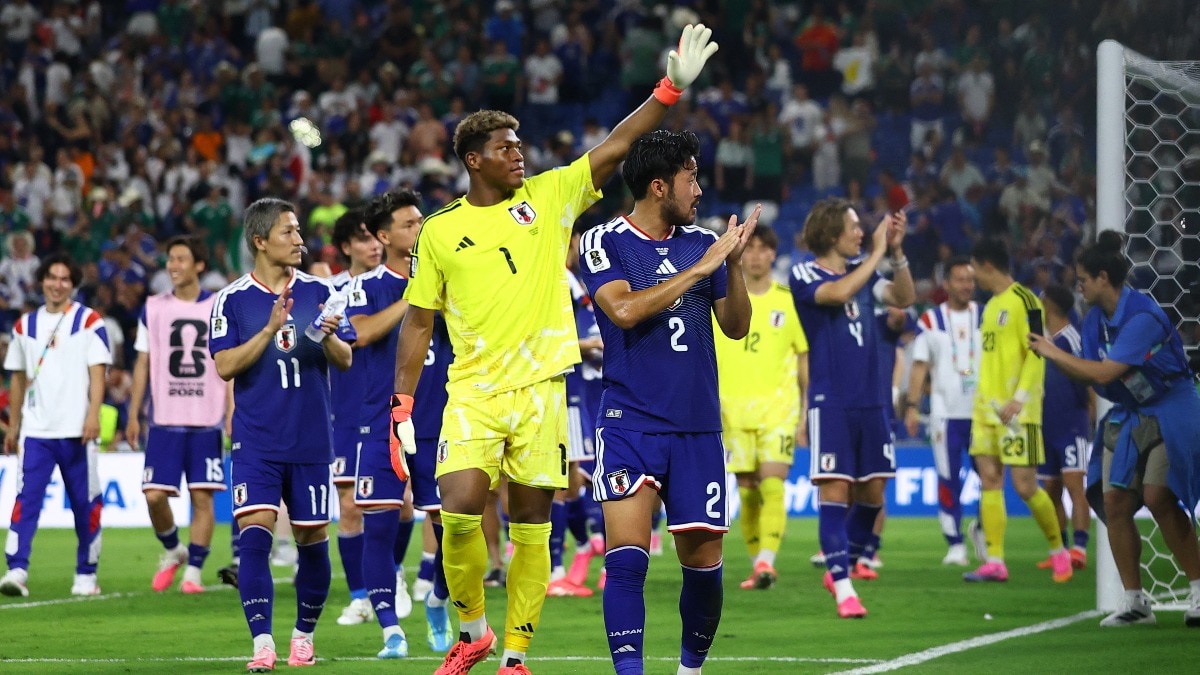
Asian giants Japan delivered a commanding 4-0 victory over Tunisia in the 1,000th match in FIFA World Cup history on Saturday, June 20, at the Stadio Monterrey, Mexico, moving to the brink of qualification for the knockout stages. The result also confirmed Tunisia as the third team to be eliminated from the World Cup after suffering a second consecutive defeat in Group F.
Tunisia VS Japan, FIFA WORLD CUP 2026 HIGHLIGHTS
The landmark occasion carried extra weight, marking nearly a century since the first FIFA World Cup match was played 96 years ago on July 13, 1930. With FIFA president Gianni Infantino among the dignitaries in attendance, the stage was set for a historic night in global football. Japan ensured it became memorable for all the right reasons with a performance defined by intensity, control, and clinical finishing.
The game began at a frantic pace, and Japan wasted no time asserting dominance. Within four minutes, Daichi Kamada opened the scoring, reacting quickest inside the box to bundle home Keito Nakamura’s low cross from close range. The early goal immediately put Tunisia on the back foot, forcing them into a reactive shape as Japan dictated the tempo.
Tunisia struggled to settle into any rhythm, and their defensive structure quickly began to unravel under sustained pressure. Japan almost doubled their lead soon after, with the ball just creeping past the line—only to replays show it not crossing, out by the narrowest of margins.
However, Japan capitalised again in the 30th minute when Ayase Ueda doubled their lead. Picking up possession just outside the box, Ueda unleashed a fierce low drive that flew into the far corner, leaving the Tunisian goalkeeper with no chance. By this stage, Japan were fully in control, pressing high and moving the ball with confidence, while Tunisia were constantly chasing shadows.
After the break, Japan showed maturity in game management, slowing the tempo while still maintaining their attacking threat. Their patience paid off in the 69th minute when Ueda turned provider, lifting a clever, perfectly weighted pass over the Tunisian backline. Junya Ito timed his run to perfection and calmly finished to make it 3-0, effectively ending any hopes of a Tunisian comeback.
HISTORIC NIGHT
Ueda then capped off a brilliant individual performance with his second major contribution of the night. Rising to meet a deep cross, he guided a precise header into the net to seal Japan’s fourth goal. With that strike, Japan made history as the first Asian nation to score four goals in a single FIFA World Cup match.
Ueda also became only the second player in this edition of the tournament, after Cody Gakpo, to register both a brace and an assist in the same game.
The victory takes Japan level with the Netherlands on four points in Group F and leaves them well positioned heading into the final group fixtures. For Tunisia, the defeat proved decisive. Under new head coach Herve Renard, appointed following a heavy 5-1 loss to Sweden, they became the tournament’s third eliminated side, joining Haiti and Turkey in exiting the competition at the group stage.
As the final whistle confirmed the 4-0 scoreline, attention returned to the significance of the occasion itself. The 1,000th World Cup match served as a reminder of the tournament’s long and rich history, stretching back to its first edition in 1930. On this milestone night, Japan delivered a performance that matched the magnitude of the moment.
From the opening whistle to the final goal, Japan combined sharp pressing, technical precision, and ruthless finishing to overwhelm Tunisia. It was a complete display that not only secured a vital win but also etched their name into World Cup history on a night that will be remembered long after the tournament concludes.
Japan will next face Sweden on June 26 in a decider for who qualifies automatically for the knockout stages of the World Cup, while Netherlands faces a battered Tunisan side.
FIFA World Cup | FIFA World Cup Schedule | FIFA World Cup Points Table | Football News
– Ends



