


Some of the sounds of Ajmer are age-old. Like the cry of the azaan at the dargah of Khwaja Moinuddin Chishti. Or the bells of Mayo College, ringing through corridors trod by the sons of the well-known and well-heeled. A third, perhaps less perceptible now, is provided by the sirens at Ajmer Railway Workshop, which quietly chugs into its 150th year in Aug, mostly without remark but still bearing a precious part of the city’s identity.If the dargah brings seekers of the 13th century Sufi mystic’s grace from near and far — as it drew Mughal Emperor Akbar over four centuries back — and the school imparts an aristocratic gloss to the city, it is the railway workshop that gave Ajmer a remarkably cosmopolitan character, still very much evident even if not as palpable as it once was.
Melting Pot
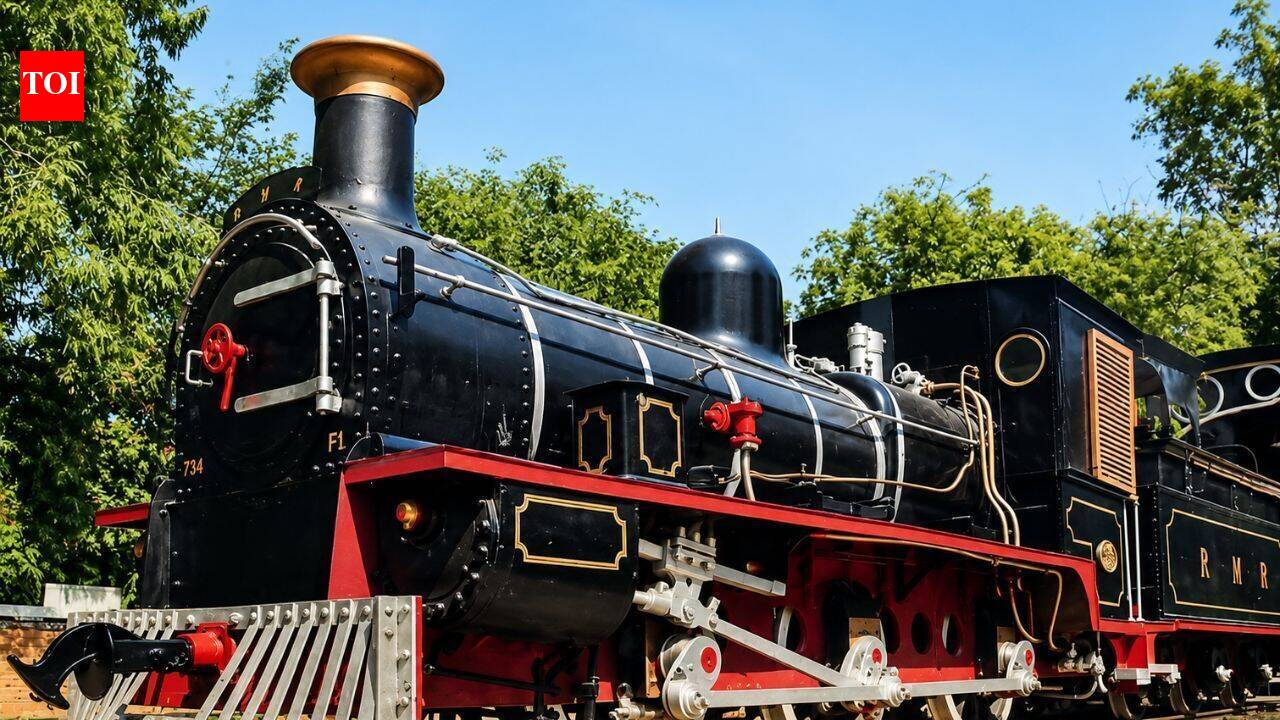
Set up in 1876 — a year after the opening of Mayo Colege — under the Rajputana-Malwa Railway, what began as a modest repair facility grew into a key pillar of Indian Railways. It was also the third-oldest railway workshop in undivided India.But its story runs beyond machines and tracks. British and Jewish engineers, Parsi technicians, and workers from present-day UP, Gujarat, Kerala and Maharashtra didn’t just work here — they settled, built homes, and formed communities. Over time, their presence gave Ajmer a distinctly cosmopolitan character, still visible in colonial bungalows, old railway institutes, churches, the Jewish cemetery near Ana Sagar, Parsi fire temples, and markets shaped by trading families like the Agarwals.Some railway colonies still carry fading Bombay, Baroda and Central India Railway (BB&CI) markings on their walls. In older neighbourhoods near the workshop, rusted iron gates, century-old rainwater pipes and sloping tiled roofs survive amid newer construction. In many ways, the workshop became the centre around which modern Ajmer grew.The workshop’s arc also mirrors national history: from building India’s first indigenously made steam locomotive in 1895 to becoming a munitions hub during WW-I. During the war years, it produced artillery like 12-pounder guns and thousands of howitzer shells, and built fully equipped armoured trains fitted with machine guns and communication systems for deployment in war zones such as Mesopotamia.But the workshop’s most enduring impact may be social. As the railway network drew people from across India and abroad, Ajmer became one of Rajasthan’s earliest cosmopolitan cities.
Enduring Signs
British and Anglo-Indian communities established clubs, churches and residential colonies that shaped Ajmer’s colonial character. The Railway Institute became a major social centre with ballrooms, and sports and cultural events.The workshop also reshaped Ajmer’s urban landscape: planned colonies, churches, officers’ bungalows and institutional campuses grew around the railway zone, leaving a colonial imprint that still survives in parts of the city.
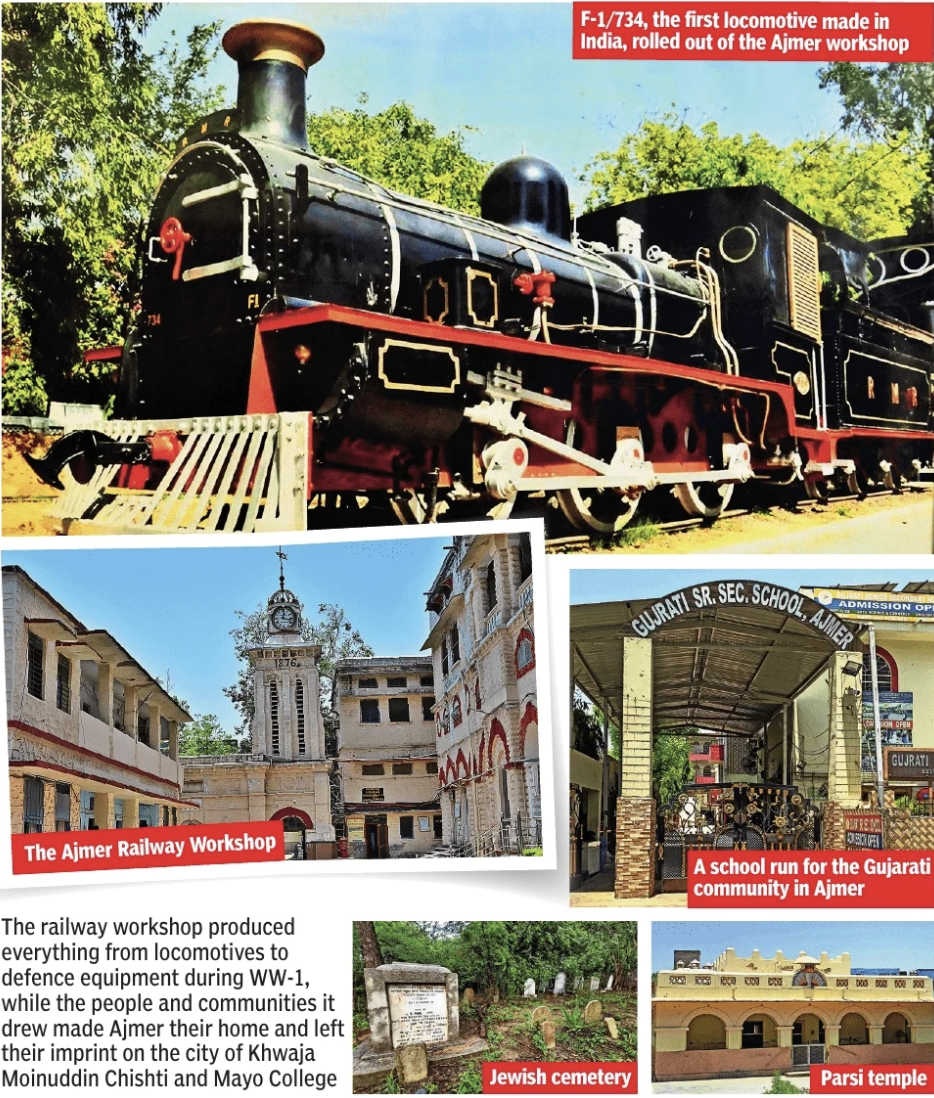
Ajmer railway workshop
Bengalis arrived largely as teachers, clerks and railway officials. Institutions like Mayo College attracted Bengali educators who contributed to literature, theatre and music in the city. Gujarati traders expanded businesses in textiles, grain trade and transport, while Agarwal businessmen became deeply linked with Ajmer’s commercial economy.Prashant Patel, a fourth-generation Gujarati tobacco businessman, recalled stories of his great-grandfather, who moved from Gujarat to Ajmer for business after the railways arrived. “Ajmer embraced us like its own. Not only have we preserved our cultural practices, but Gujarati continues to be widely spoken in Ajmer’s trading communities,” said Patel.Sister Pearl, principal of Sophia College, said the railways also helped seed institutions such as Mayo College, Sophia College, St. Anselm’s School and several convent schools, laying the foundation for the city’s educational culture. “Even the railways opened a school for British children and others. The attendance sheets are still preserved, and many people who spent their childhood here continue to visit the place,” she said.Parsis played an important role in the workshop’s technical development, arriving as engineers, technicians and supervisors. Their mechanical expertise made them indispensable in the early decades of railway expansion. Hosi Dorabshah, 78, living in Mount Abu, represents the fourth generation of his family to serve in railways. “My great-grandfather came to Ajmer from Gujarat and served in the railways. I also retired as a guard,” he said.Calling himself part of the “last generation” of Parsis in railway service, Dorabshah said there are now around 28 Parsis living in Mount Abu and about 15 in Ajmer — among the last remaining members of the community in the state. “My children have discontinued the tradition of joining the railways, and I expect that the younger generation will eventually move to Mumbai or Gujarat,” said Dorabshah.Many old Parsi and AngloIndian homes now stand locked or have been sold as younger generations migrate to Mumbai, Pune and abroad. Some railway quarters that once housed large Parsi families are now occupied by elderly couples or caretakers.Ajmer’s small Jewish community also arrived in the railway era. Nearly 300-400 Jews once lived in the city, many linked to railways. Today, the Jewish cemetery near Ana Sagar remains among the few visible traces of Rajasthan’s Jewish heritage.The workshop has continued evolving with railway technology. From nearly 15,000 at its early-20th-century peak, the workforce now stands at around 4,500 due to modernisation, and restructuring. Today, it maintains modern coaches and locomotive stock, freight wagons and premium trains, including Palace on Wheels and Vande Bharat.



