























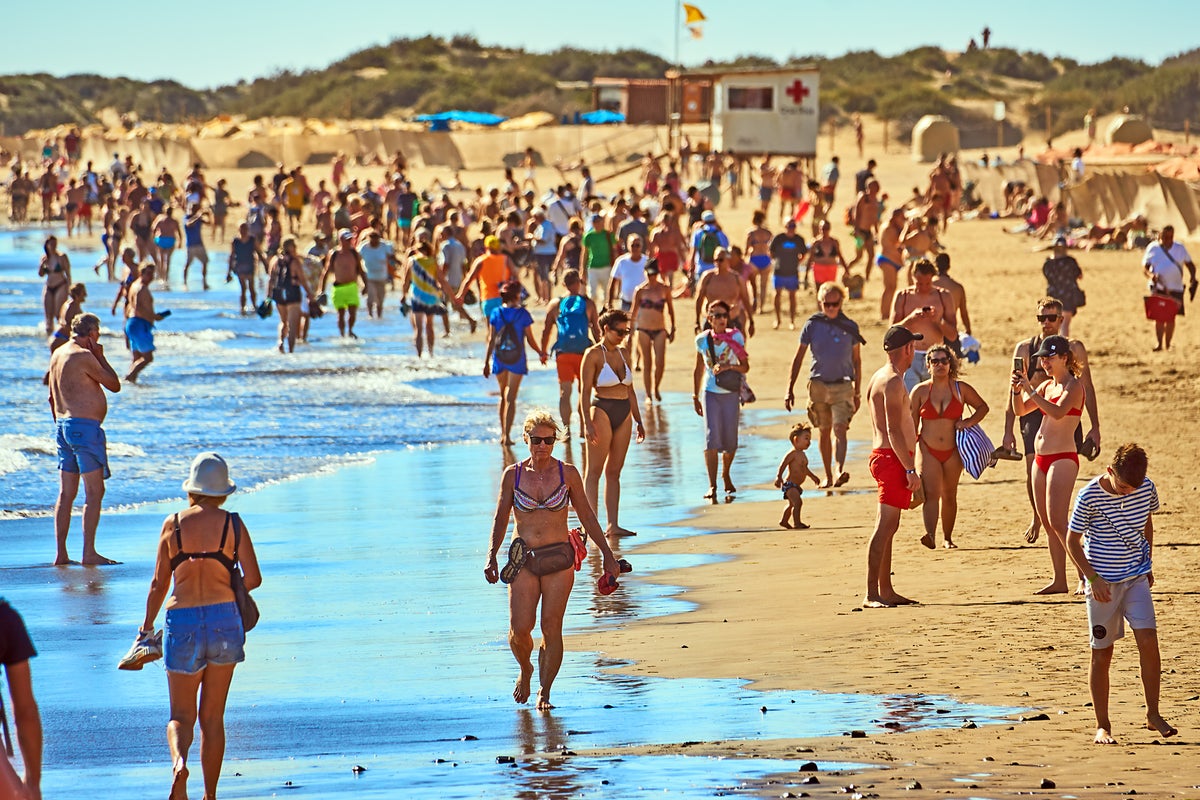
Tourists in the Canary Islands can soon make voluntary donations to sustainability projects instead of paying a mandatory tourist tax adopted elsewhere in Europe.
The Canary Islands government and the UK Spanish Tourist Office announced a new initiative, the Canary Islands Tourism Regeneration and Nature Restoration Fund (REGNEXT), to fund environmental and community projects without introducing a compulsory visitor tax on Monday.
The system will be in place across Tenerife, Gran Canaria, Lanzarote, Fuerteventura, La Palma, La Gomera and El Hierro.
Several European destinations, from Venice to Edinburgh, have introduced visitor taxes to help control overtourism during peak travel periods.
According to the Canary Islands: “REGNEXT aims to make tourism a direct contributor to environmental restoration and community wellbeing through voluntary contributions.”
In a statement, the islands said that officials “will design a voluntary, traceable, and transparent financing system that will allow resources to be directly and specifically allocated to regeneration projects.”
Donations will be made online directly to specific pilot schemes, with travel companies such as easyJet holidays, Jet2.com, Jet2holidays and Tui taking part.
A record-breaking 18.39 million tourists visited the Canary Islands in 2025.
Jessica de León, Minister of Tourism for the Canary Islands, said: “REGNEXT has been created to make tourism an active force for environmental and social regeneration.
“Through voluntary contributions from visitors, businesses and climate foundations, we can ensure that part of the value tourism generates is reinvested directly into restoring ecosystems, strengthening climate resilience and improving the communities that make our destination so special.”
Habitat restoration, biodiversity conservation, emissions reduction, climate adaptation, landscape improvement and affordable housing initiatives are among the projects supported by REGNEXT.
The Spanish tourist office said: “For UK travellers, REGNEXT offers a new way to support the destination they visit without increasing the cost of their holiday through a compulsory tax, while giving travel companies a transparent mechanism for investing in measurable environmental and social outcomes.”
Manuel Butler, director of the Spanish Tourist Office UK, added: “By supporting tangible environmental and social initiatives, REGNEXT will help protect and restore natural spaces, reduce emissions, improve quality of life for residents and enhance the visitor experience.”
Read more: What do we know about UK tourist taxes?