


Jennifer Capriati was 13 when she appeared on the cover of Sports Illustrated. By 16 she had an Olympic gold medal. By 18 she was in rehabilitation and had spoken to the New York Times about wanting to take her own life. Andrea Jaeger was world Number 2 at 16 and retired at 21 with a destroyed shoulder. Tracy Austin won the US Open at 16 and was finished as a major force before she could legally drink.
“These are not footnotes in sporting history,” writes former South African batsman Daryll Cullinan in an emotional column for ESPNcricinfo.
“They are warnings”.
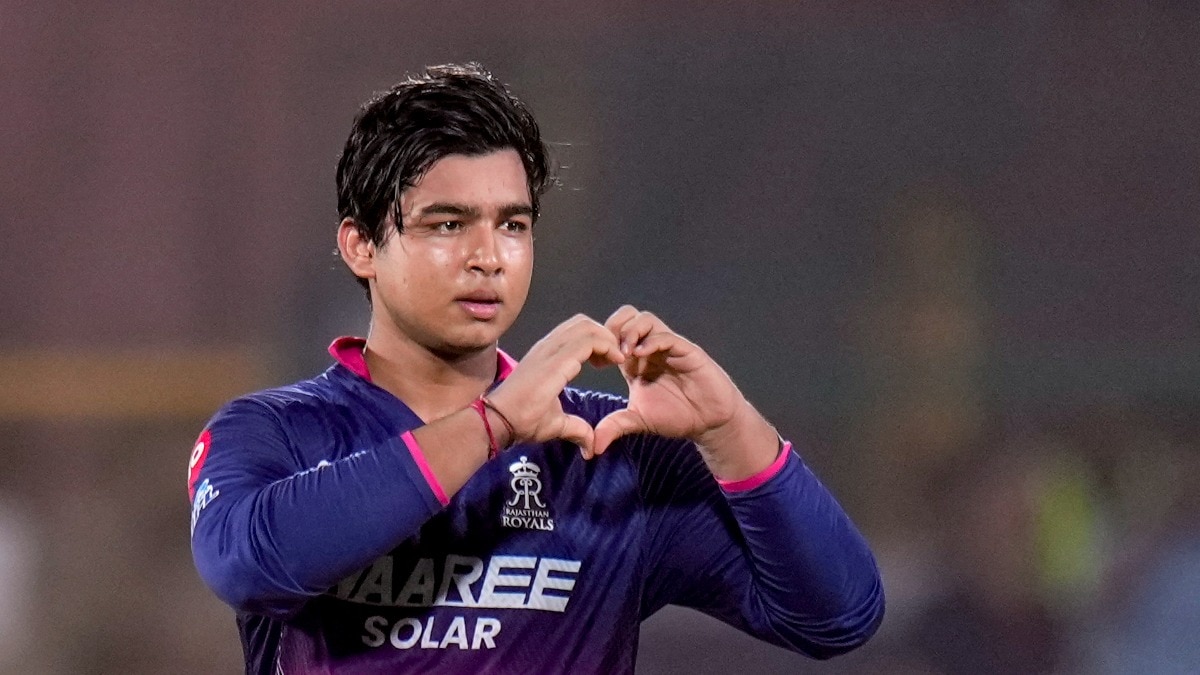
Cullinan believes cricket may be living through the opening chapter of its own version of the same story, all focused on Vaibhav Sooryavanshi, the 15-year-old batting prodigy from Samastipur, Bihar, who has taken world cricket by storm.
Following Vaibhav Sooryavanshi’s inclusion in the senior T20I squad, a polarising selection debate has taken centre stage. The 15-year-old batting prodigy, who plundered 776 runs to claim the IPL 2026 Orange Cap for Rajasthan Royals before smashing a 29-ball 94 for India A, was left to warm the bench during India’s recent tour of Ireland – where India lost 0-2.
The team management justified the decision by stating they would not disturb the existing hierarchy, preferring to give the teenager time to acclimatise to the international setup before handing him a debut. This cautious approach has sharply divided experts; while pundits like Ravichandran Ashwin have argued that Sooryavanshi must wait his turn, carry drinks, and respect the team’s established culture. However, a few pundits like Sunil Gavaskar have aggressively countered, calling for the boy wonder to be blooded at the earliest possible opportunity.
Yet, Cullinan argues that the very brilliance of making an international debut feel inevitable is precisely why cricket must forcefully apply the brakes. The reality of Sooryavanshi’s current existence highlights just how far the boy has strayed from an ordinary childhood, famously skipping his Class 10 board examinations earlier this year to play in IPL 2026.
“In my view – and I say this with care rather than judgement – he should be at home preparing for his exams, playing gully cricket with his mates, and being a young boy while he still has the chance. That does not mean ignoring his talent. It means understanding that the talent will only be truly served if the person carrying it is allowed to grow whole,” he wrote in his column.
While T20 cricket naturally rewards the uncomplicating aggression of youth, Cullinan insists that being ready for the cricket does not equate to being ready for the ferocious machinery wrapped around it.
He warns that we are looking at “a child placed at the centre of one of the most commercially powerful, globally visible and socially amplified sporting environments ever created: Indian cricket and the IPL”.
PRE-INTERNET ERA VS NOW
Drawing on his own experience, having broken records as South Africa’s youngest first-class centurion at 16, Cullinan notes that he at least possessed “gaps in which to breathe, to be unknown, to have a poor day” in a pre-internet era. Even Sachin Tendulkar’s heavily scrutinised 16-year-old debut was mediated and slowed down by traditional print journalism and professional editors.
According to Cullinan, Sooryavanshi enjoys no such luxury. He is trapped in an algorithmic ecosystem that has “abolished nearly every distance between a child and the opinions of hundreds of millions”.
“That mediation no longer exists. Every innings, every press conference, every gesture, every failure, every heated on-field moment – and Sooryavanshi has already been part of such a moment – can be clipped, uploaded and judged within minutes by people who answer to no one,” he wrote.
“The crowd used to leave the stadium at the end of the day. Now it never really leaves at all.”
Cullinan points to developmental psychology and the concept of “foreclosure”, where a single identity is rigidly locked in before a child can ever explore alternatives.
“Greatness at 15 does not wait politely while the person catches up. It sets a frame. It fixes an image in the public mind. Everything that follows, the mistakes, the growing up, the confusion, the disappointment, the ordinary human work of becoming yourself, has to happen inside that frame. The boy becomes the legend before he has had the chance simply to become a man.”
While tennis enacted age-based guidelines in 1994 to strictly limit professional appearances for under-18s, cricket possesses no structural mechanism to protect a minor independent of commercial interests.
“What we should hope for is that he retires at 40 and not washed up at 25,” Cullinan wrote.
To navigate this fishbowl, he strongly advises the young batsman to reach out to the legendary Sachin Tendulkar, who understands the suffocating weight of a billion expectations at that age:
“It is my sincere hope that he will turn to Tendulkar for guidance. He could not be more lucky than to have a mentor in a fellow Indian cricketer who has been through it all and seen it all”.
– Ends



