


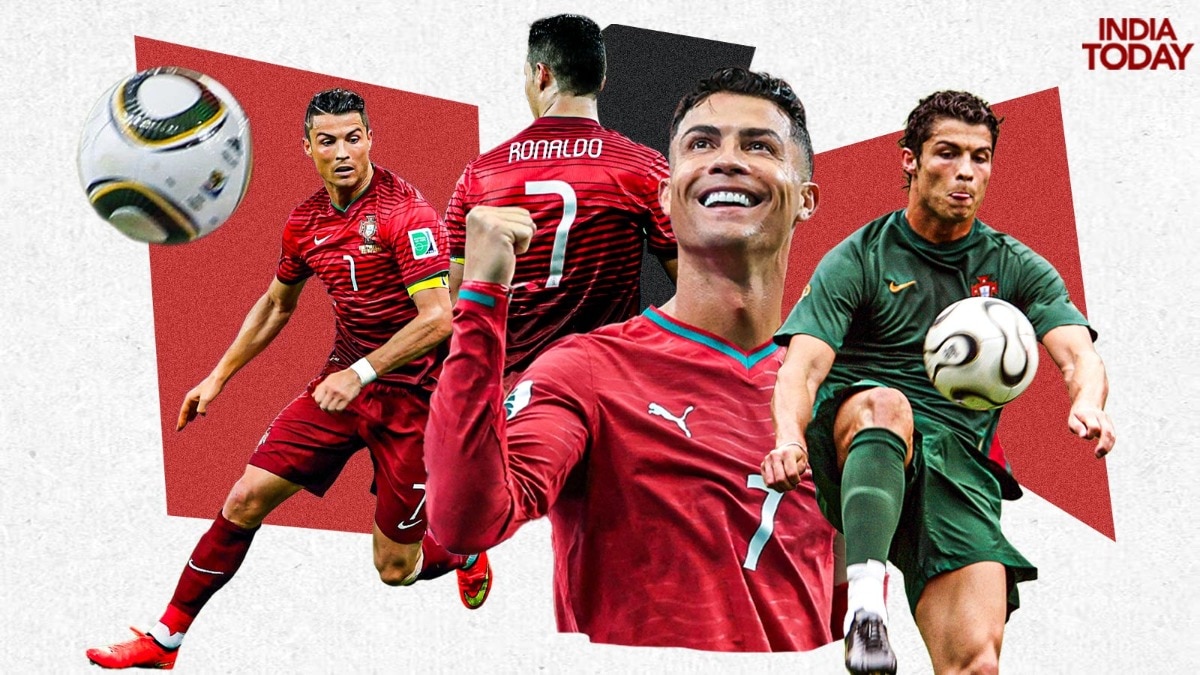
For the first time in more than two decades, football will be preparing for a World Cup without Cristiano Ronaldo.
That is going to take some getting used to.
An entire generation has grown up with Ronaldo turning up every four years, carrying the hopes of Portugal and, more often than not, carrying the conversation too. It never really mattered whether Portugal arrived as favourites or outsiders, whether Ronaldo was the quickest player on the pitch or, as was the case in the United States, the oldest outfield player left standing.
Portugal vs Spain, FIFA World Cup 2026 Round of 16: Highlights
Long before Portugal kicked a ball in America, Ronaldo’s last, the debate had already begun. Should a 41-year-old Cristiano Ronaldo still be leading the line? Had Portugal held on to their greatest player for one tournament too many?
They were fair footballing questions because, for perhaps the first time in Ronaldo’s international career, Portugal arrived with a squad that looked capable of carrying itself. Bruno Fernandes, Bernardo Silva, Vitinha, Rafael Leao, Nuno Mendes, Diogo Costa and Goncalo Ramos represented the present and, more importantly, the future. If there was ever a World Cup where Portugal could finally move beyond Cristiano Ronaldo, surely this was it.
The thing with Cristiano Ronaldo, though, is that football has spent more than ten years trying to decide when he should finally finish. Football has been wrong far more often than it has been right.
They questioned him when he crossed 30, then 35, when he left Real Madrid, when he moved to Saudi Arabia and almost every season after that. More often than not, Ronaldo answered in the only language he has ever really known—goals, records and an almost stubborn refusal to let someone else write the ending for him.
Maybe that was why, even at 41, millions still watched Portugal believing there could be one more magical World Cup night left in him. Others tuned in just as eagerly, convinced that time had finally caught up.
Everyone watched anyway.
Spain’s stoppage-time winner in Dallas eventually brought Portugal’s campaign to an end and, in all likelihood, closed the curtain on Ronaldo’s World Cup journey. As Mikel Merino’s goal settled the contest and the tears arrived after the final whistle, the conversation immediately drifted towards the one trophy that had always escaped him. It almost felt unfair.
More than twenty years in a Portugal shirt had somehow been reduced to one missing medal.
That has never felt like the fair way to tell Cristiano Ronaldo’s story.
Because while the World Cup remained beyond his reach, Ronaldo had already achieved something arguably just as difficult. Before he made his senior debut in 2003, Portugal had never won a major international honour. By the time he walked away from what is expected to be his final World Cup, they have lifted the European championship, the Nations League, twice and stopped travelling to tournaments hoping to compete. They travelled expecting to. That transformation wasn’t just built by Cristiano Ronaldo alone, but no footballer shaped it more than the man who became the most-capped player in men’s football history and international football’s all-time leading goalscorer.
Cristiano Ronaldo never lifted the World Cup.
For more than twenty years, he lifted Portugal.
PORTUGAL NEVER REPAID RONALDO
For most of his international career, Portugal needed Cristiano Ronaldo because they simply didn’t have another footballer capable of deciding games the way he could.
When matches drifted away from them, teammates looked towards Ronaldo almost out of instinct. Need a goal? Find Ronaldo. Need someone to shoulder the pressure? Give it to Ronaldo. Need someone to drag Portugal through another impossible night? He had been doing exactly that since his early twenties.
This World Cup was supposed to be different.
Portugal finally arrived with a squad deep enough to ensure their greatest player no longer had to carry the entire burden. Bruno Fernandes had become one of Europe’s finest creators, Bernardo Silva and Vitinha controlled games with remarkable intelligence; Rafael Leo could turn defenders inside out, Diogo Costa had quietly established himself among the world’s safest goalkeepers and Nuno Mendes looked every bit the elite full-back many already believe he is.
For the first time, Portugal had enough quality to carry Cristiano Ronaldo.
Instead, they somehow ended up asking him to carry them again.
The criticism Ronaldo faced throughout the tournament wasn’t entirely unfair.
At 41, he was never going to sprint away from defenders for 90 minutes or press like he once did. This wasn’t the player who ripped Spain apart with a hat-trick in 2018 or bulldozed through midfields in his prime. Even someone as obsessive about fitness as Ronaldo couldn’t outrun time forever.
But there was another side to that conversation.
Three goals in six matches was hardly the return of a player surviving on reputation. His brace against Uzbekistan reminded everyone that his instincts inside the box remained razor sharp, while the decisive penalty against Croatia dragged Portugal into the Round of 16. The explosive runner may have faded, but the goalscorer never really left.
Portugal simply never figured out how to make the best use of the version of Cristiano Ronaldo they still had.
That is where Roberto Martinez’s World Cup campaign will ultimately be judged.
Against Colombia in the group stage, Ronaldo repeatedly dropped into midfield because Portugal struggled to progress the ball. Against Spain, the same picture unfolded again. Watching Ronaldo receive possession forty yards from goal almost felt backwards. Portugal’s greatest goalscorer was becoming Portugal’s build-up midfielder, not because he wanted to, but because somebody had to make things happen.
Every time Ronaldo wandered away from the penalty area, Spain became more comfortable.
Then came the moment that made you wonder what exactly Portugal’s plan had been all along.
Goncalo Ramos, the striker many believed should have started ahead of Ronaldo, never even got off the bench. If Portugal believed Ramos represented the future, this was the perfect game to let him share the burden. If they believed Ronaldo was still their best striker, then the team should have been built around getting him into goalscoring positions.
Portugal somehow chose neither.
That indecision became the story of Roberto Martinez’s spell with the national team.
The Spaniard inherited arguably the deepest Portugal squad ever assembled, yet too often the football never reflected the talent on the pitch. It was a criticism that followed him with Belgium’s golden generation, where Kevin De Bruyne, Eden Hazard, Romelu Lukaku and Thibaut Courtois somehow left without the major trophy many believed they deserved. Portugal hoped history would not repeat itself.
Instead, it felt painfully familiar.
Against Spain, Portugal defended heroically for almost ninety minutes. Ruben Dias and Renato Veiga were outstanding, throwing themselves into challenges and ensuring Diogo Costa wasn’t left to fight alone. Nuno Mendes once again produced a superb performance against Lamine Yamal, frustrating Spain’s brightest young star before a hamstring injury forced him off.
The game changed almost immediately.
Luis de la Fuente responded with fresh attacking legs, Fabian Ruiz threaded Ferran Torres into space and Torres returned the favour with a perfectly weighted pass for Mikel Merino to ghost into the one gap Portugal had left all night. It was a brilliant move, but also a cruel reminder of how fine the margins had become.
Portugal’s World Cup was over.
So, almost certainly, was Cristiano Ronaldo’s.
WILL A MISSED WORLD CUP DEFINE RONALDO
After the defeat, Ronaldo admitted he was heartbroken.
“I’m sad to be leaving the World Cup like this. I gave it my all. I did my best and I’m leaving with a clear conscience.”
Looking back at everything he gave Portugal, it is difficult to argue otherwise.
Years ago, Ronaldo perhaps summed up his own career better than anyone else ever could.
“I am not a perfectionist, but I like to feel that things are done well. More important than that, I feel an endless need to learn, to improve, to evolve.”
Everything about Cristiano Ronaldo makes sense when you read those words again.
The endless gym sessions. The strict diets. The obsession with recovery. The refusal to accept decline. Even when he had already won Ballons d’Or, Champions Leagues and the European Championship, Ronaldo kept behaving like someone with everything still to prove.
Maybe that was always why the World Cup mattered so much.
Not because he needed it to become one of football’s greatest players.
Because he simply never stopped chasing the next challenge.
One day the debates will fade. The GOAT arguments will lose their edge. Children will discover Ronaldo through old highlights rather than live broadcasts. Stadiums filled with nearly 100,000 people rising together before roaring “Siuuu” may become memories rather than weekly rituals.
Portugal, though, will remember something else.
They will remember the teenager from Madeira who grew into the face of a footballing nation.
They will remember the captain who led them to their first major international trophy and a footballing identity.
FIFA World Cup | FIFA World Cup Schedule | FIFA World Cup Points Table | Football News
– Ends



