


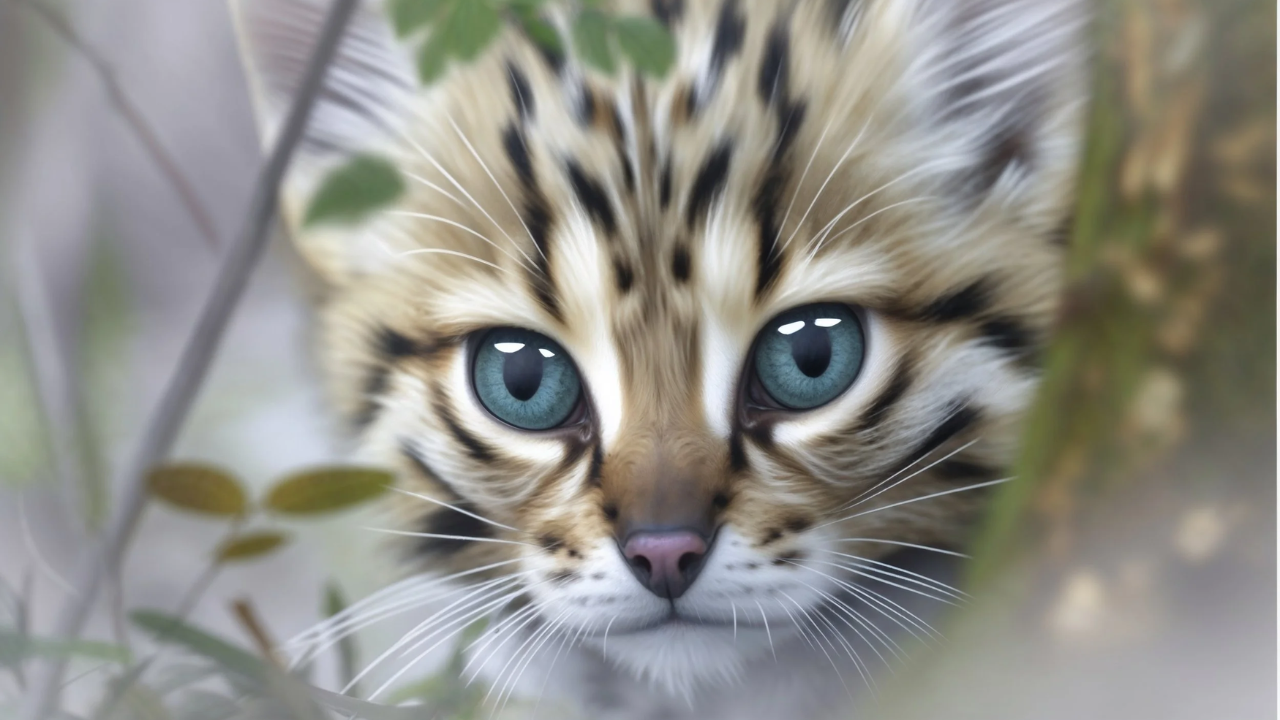
Scientists in China just found something amazing. It’s the world’s smallest cat fossil found in China, and it belongs to a brand-new species of extinct leopard cat. This tiny cat was so small, it could fit right in your hand.Archaeologists have unearthed the tiniest known cat fossil at an ancient human site in eastern China, identified as an extinct species of leopard cat, and this amazing feline was so petite that it could comfortably fit in the palm of anyone’s hand. So how small is that, really? The ancient kitten’s size was comparable to that of the smallest existing feline species, that is the rusty-spotted cat and black-footed cat which is much smaller than the modern leopard cat. Those two cats are already the tiniest on Earth today, which gives you a good idea of just how small this ancient cat truly was.
What makes the 300,000-year-old cat found in China so unique
The fossil turned up in a very famous spot. As reported by the Chinese news website Xinhua Net, researchers from the Institute of Vertebrate Paleontology and Paleoanthropology (IVPP) under the Chinese Academy of Sciences unearthed the fossil from a cave at the Hualongdong site in eastern China’s Anhui Province. This cave is already well known to scientists for its ancient human remains, so finding a tiny cat fossil there was an unexpected thing.The new species now has an official name Prionailurus kurteni, or P. kurteni, according to a study published in BioOne Digital Library, titled ‘Prionailurus kurteni (Felidae, Carnivora), a new species of small felid from the late Middle Pleistocene fossil hominin locality of Hualongdong, southern China’, this isn’t just a general discovery either, it actually solves a real scientific mystery. Molecular biology research notes that the leopard cat, domestic cat and Pallas’s cat share a common ancestor, however, no fossil evidence had been identified before the discovery. In simple terms, scientists already believed these three cat types were related, but they never had proof until now.Big cat rescue described the find in a similar way, explaining that scientists unearthed a fossilised jaw fragment in China’s Hualongdong Cave, revealing a new species of ancient leopard cat, Prionailurus kurteni, and this feline, dating back over 300,000 years, was so small it could fit in the palm of your hand, comparable in size to today’s rusty-spotted cat.
The science behind identifying Prionailurus kurteni
You might wonder how researchers can learn so much from one small jaw piece. The answer is in the teeth. The fossil shows an inclined first molar, providing evidence from the jawbone and teeth that support the common ancestry of the three species, according to the study. That one tooth shape was enough to link this ancient cat to today’s leopard cats, domestic cats, and Pallas’s cats.Finding this fossil at all was actually a bit of luck. Cat bones don’t usually survive long enough to turn into fossils. Preserving fossils in the forest habitats where leopard cats lived has proven to be challenging. The cave likely protected this cat’s bones from the weather and decay, which is probably why it survived when so many others didn’t.So why was this tiny cat hanging around a cave full of ancient humans? The lead researcher has a theory. “The food scraps of ancient people at Hualongdong site might have lured rats and those small leopard cats as well,” said Jiangzuo Qigao from the IVPP, the first author of the paper. Basically, the leftovers attracted rats, and the rats attracted the cats.But did the humans actually eat these cats? It doesn’t look that way. “It’s unclear whether these cats constituted part of the Hualongdong cave dwellers’ diet, due to the absence of human butchery marks on the fossil’s jawbone,” he added. No cut marks means there’s no sign the cat was hunted or eaten, it likely just shared the same space as the humans.Researchers have found approximately 20 individual ancient human fossils, including a relatively complete skull, over 400 stone artefacts, numerous bone fragments with evidence of artificial cutting and chopping, and more than 80 vertebrate fossils.
Why this ancient cat fossil is more important than it looks
This discovery is much more than an interesting story about a tiny cat. It changes what scientists know about the evolution of small wild cats.According to the study, the identification of P. kurteni suggests there was a much greater diversity of leopard cats during prehistoric times than previously believed. In simple terms, many more species of small wild cats may have existed than scientists once thought.The fossil also offers valuable clues about life at Hualongdong. “Discovering animal fossils at the Hualongdong site can help shed light on the environment, diet and potential threats faced by the ancient people,” said Jiangzuo.Every animal fossil found at the site helps researchers build a clearer picture of how early humans lived, what they ate and the challenges they faced in their environment.



