


There are national holidays, and then there is Ferragosto: the one day in August when Italy appears to agree that the only sensible response to the heat is to stop working, leave the city and find somewhere good to eat. Beaches fill, shutters come down and families head for the coast or countryside with enough food for lunch to drift comfortably into dinner.
Its roots are considerably older than the modern summer holiday. The name comes from the Latin Feriae Augusti, or “the holidays of Augustus”, a period of rest introduced by Emperor Augustus in 18BC after the hard work of the harvest. The celebration originally fell at the beginning of the month, before becoming entwined with the Catholic feast of the Assumption on 15 August. What has survived is the central idea: a pause at the height of summer, best spent outdoors, at a table, with other people.
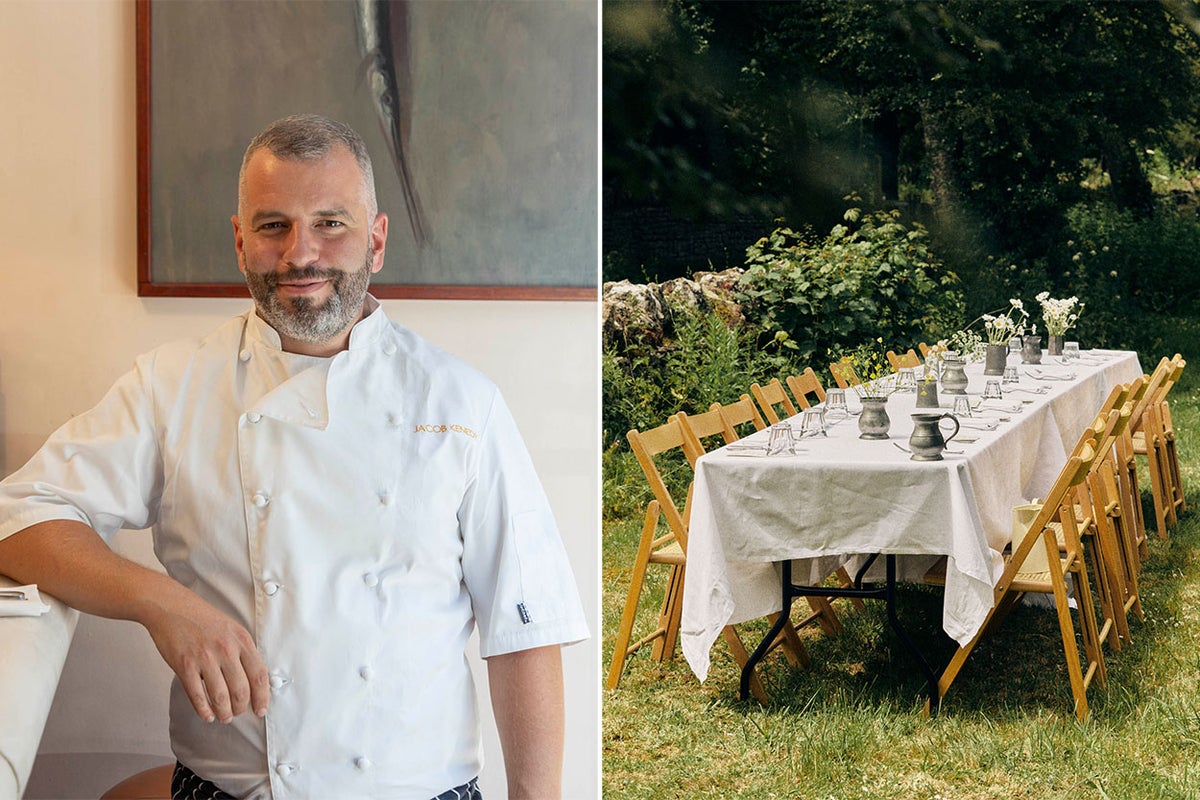
That is the spirit Bocca di Lupo is bringing to Somerset this August. For two evenings, the Soho restaurant will leave Archer Street for Wyke House near Bruton, a Grade II-listed Georgian house surrounded by six acres of countryside. Fifty guests each night will sit shoulder to shoulder at long tables in the field, passing dishes family-style as the light begins to soften and the evening stretches out.
Bocca di Lupo has made a career of showing that there is no single Italian cuisine. Since Jacob Kenedy opened the restaurant in 2008, its menu has travelled between all 20 regions, treating the cooking of Rome, Sicily, Piedmont and Puglia as distinct traditions rather than variations on the same theme. For “Bocca in the Field”, Kenedy and his team are joining Merlin Labron-Johnson, Marc Ackland and Zsuzsanna Toth of Pharmacy Field Kitchen, the new events project from the team behind The Pharmacy in Bruton. The collaboration brings Bocca’s regional Italian cooking together with produce from Somerset and the south west, much of it shaped by the farms and landscape around them.
The menu moves through Italy while keeping both feet in the field. There will be Modenese tigelle with mortadella, pesto and garden giardiniera, Roman courgette flowers filled with mozzarella and anchovy, Sicilian caponata and a rich porcini risotto. Tuscan-style Dexter beef fiorentina forms the centrepiece, with Puglian tomato and purslane salad, beans cooked slowly in a fiasco and whole lettuces dressed simply with oil and lemon. Dessert stays suitably generous: peaches in wine and crisp cannoli filled with local Westcombe Dairy ricotta.
The recipes below offer a taste of that journey, from the brittle shell of a freshly fried courgette flower to caponata’s sweet-sour depth, the earthiness of porcini and the crunch of a cannolo filled at the last possible moment.
Bocca in the Field takes place on Saturday 15 and Sunday 16 August from 5.30pm. Tickets cost £140 per person and include all food and drink, with a vegetarian menu available. You can book for Saturday here, and Sunday here. Places are limited, which is probably as it should be: Ferragosto has always been about escaping the crowd, then finding the right table.
Fried courgette flowers
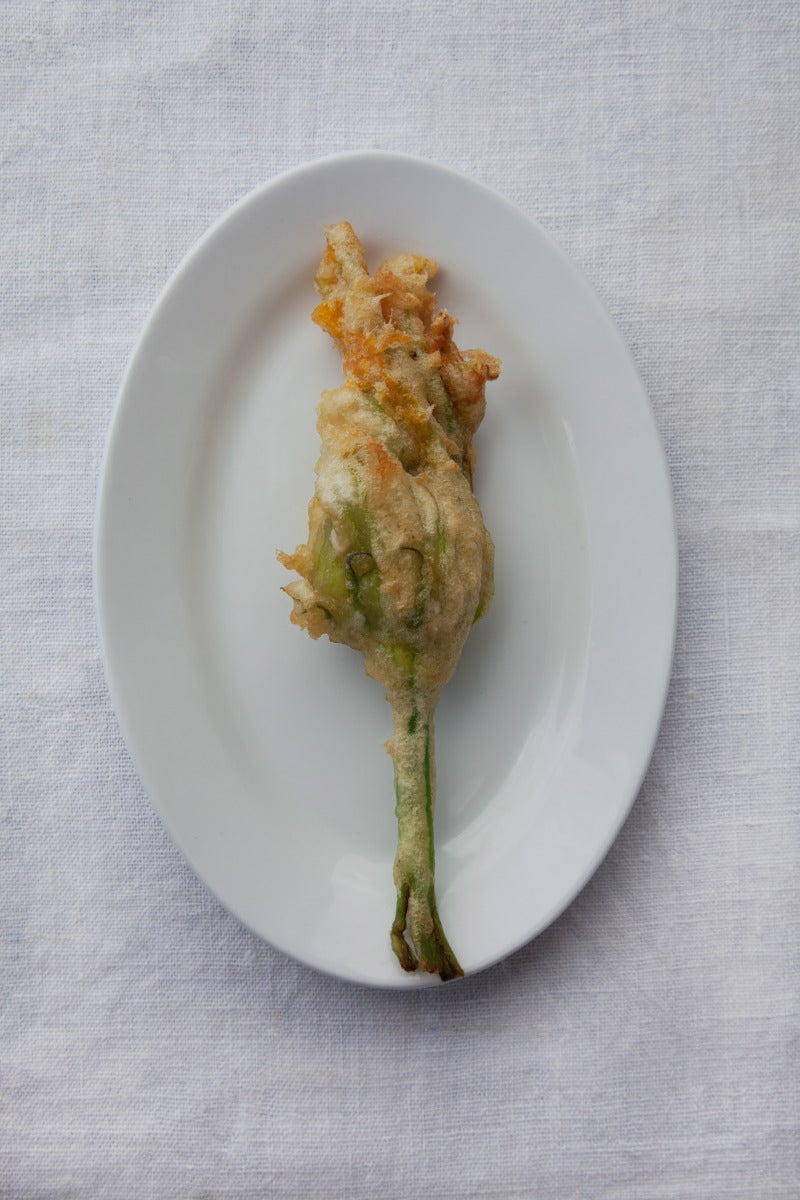
The flowers of almost any edible pumpkin or squash are suitable for this dish, although courgette flowers are the most traditional and easiest to find. Male flowers are ideal, as harvesting them does not reduce the courgette crop and they have a lighter texture. While they can be stuffed with a variety of fillings, this Roman classic combines mozzarella, anchovy and basil.
Serves: 4 as a starter
Ingredients:
8 courgette flowers (male if possible)
120g mozzarella
4 anchovy fillets
4 basil leaves
Freshly ground black pepper
For the batter:
100g plain flour
50g cornflour
20ml extra virgin olive oil
10g dried yeast (or 20g fresh yeast)
250ml tepid water
Method:
1. Combine the plain flour and cornflour in a bowl with the olive oil and yeast. Stir in enough of the tepid water to form a thick, smooth paste, then gradually whisk in the remaining water. Leave to rise for 1 hour until light and airy. Once risen, the batter will keep at room temperature for up to 5 hours.
2. Remove the yellow stamens from the centre of each flower, taking care not to tear the petals. Leave the stems attached.
3. Cut the mozzarella into 8 pieces. Halve the anchovy fillets and basil leaves.
4. Place one piece of mozzarella, one piece of anchovy and half a basil leaf inside each flower. Season generously with black pepper and gently twist the petals together to enclose the filling.
5. Heat at least 4cm of frying oil to 190C.
6. Dip each flower into the batter, allowing the excess to drip away so only a thin coating remains. Holding the flower by the stem, lower it into the oil for a few seconds before releasing. Fry until golden and crisp, turning once if necessary.
7. Drain on kitchen paper and serve immediately.
Caponata
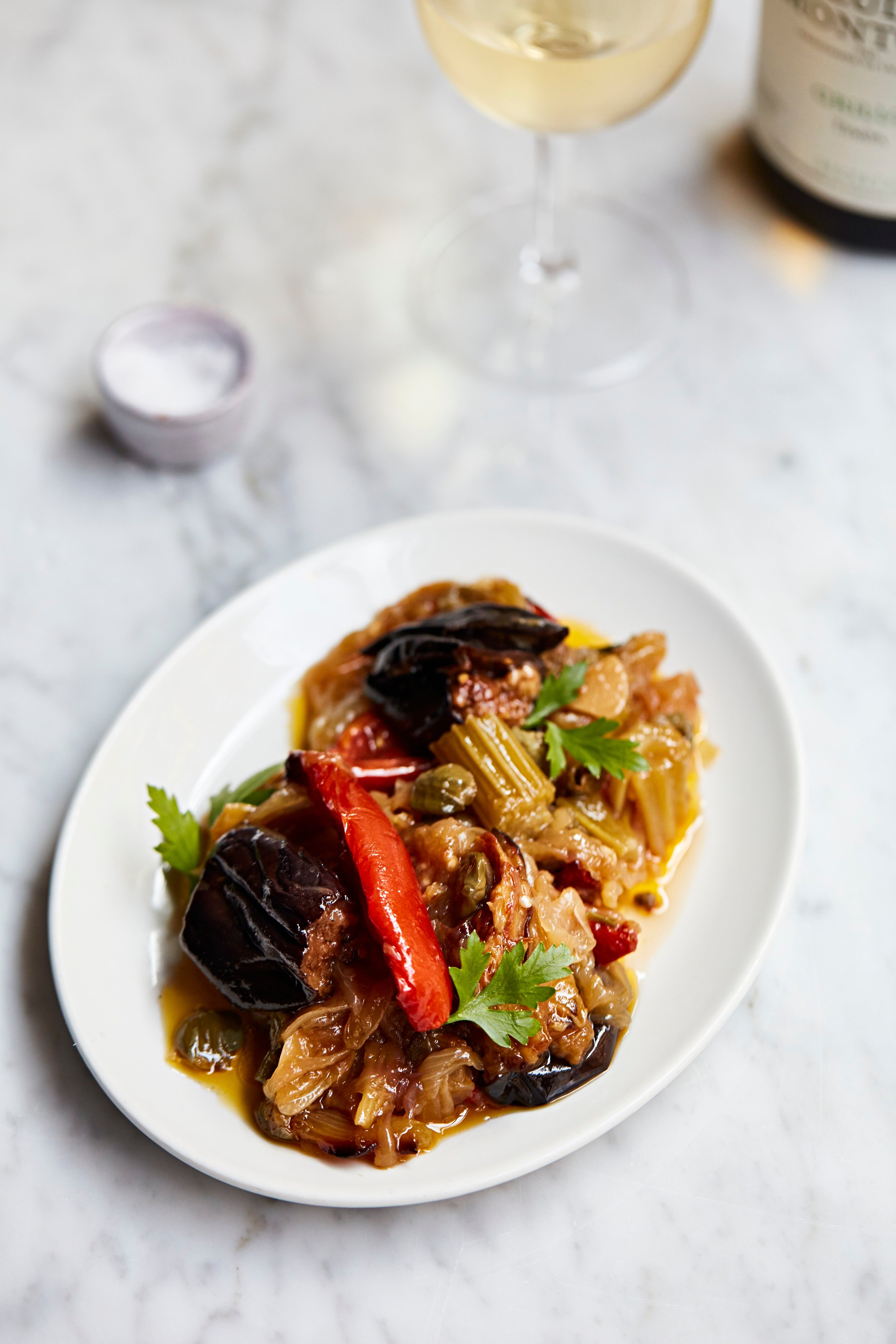
Every Sicilian has their own version of caponata, but this recipe balances sweet, sour and savoury flavours while allowing the vegetables to retain their individual character.
Serves: 4-6 as a starter or side, or 2-3 as a main
Ingredients:
2 large aubergines, cut into 3cm chunks
Vegetable oil, for frying
2 medium onions, sliced
4 tbsp extra virgin olive oil
1 head celery, cut into 3cm pieces
2 tbsp salted capers, soaked and drained
2 garlic cloves, thinly sliced
700g plum tomatoes, quartered
6 tbsp caster sugar
4 tbsp red wine vinegar
2 tbsp chopped flat-leaf parsley
3 anchovy fillets, halved lengthways (optional)
Salt and freshly ground black pepper
Method:
1. Lightly salt the aubergine and leave for 10 minutes.
2. Heat 3cm of vegetable oil to around 190C and fry the aubergine until golden brown. Drain well on kitchen paper.
3. Meanwhile, heat the olive oil in a wide pan. Cook the onions over a medium heat for 5-10 minutes until beginning to soften, adding a pinch of salt to help them cook. Add the celery, capers and garlic and cook for another 10-15 minutes, until the onions are completely soft while the celery remains bright and slightly crisp.
4. Transfer the vegetables to a roasting tin in an even layer. Arrange the fried aubergine on top, followed by the tomatoes, cut side up. Season with salt and pepper, then sprinkle over the sugar and vinegar.
5. Bake at 160C (140C fan/gas 3) for 1½ hours, until the juices have reduced to a rich syrup and the tomatoes are partly dried.
6. Taste during cooking and adjust if needed so the sweet, sour and salty flavours remain balanced.
7. Allow to cool before serving. Caponata is best enjoyed slightly warm or at room temperature. Toss together with the parsley before serving and top with the anchovy fillets, if using. Stored in the refrigerator, caponata will keep well for up to a week.
Porcini risotto
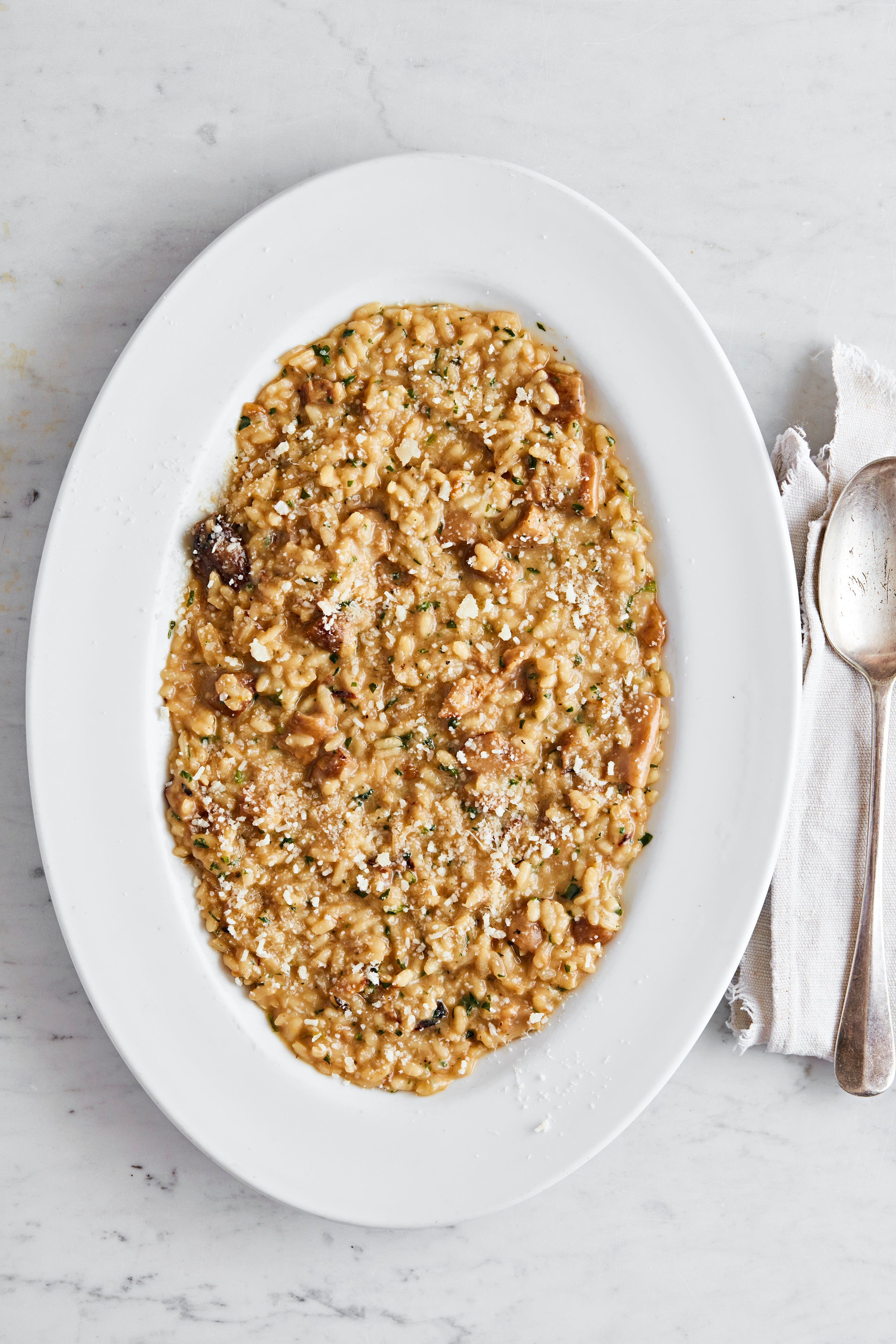
Fresh porcini mushrooms give this classic Italian risotto an intense, earthy flavour. Smaller porcini are ideal for their firmer texture and more delicate taste.
Serves: 3-4 as a starter or 2 as a main
Ingredients:
1 medium onion, finely chopped
1 garlic clove, finely chopped
75g butter
200g fresh porcini mushrooms, diced
160g Carnaroli rice
120ml white wine
400ml chicken or mushroom stock
60g Parmesan, freshly grated
Salt and freshly ground black pepper
Method:
1. Cook the onion and garlic in 50g of the butter over a medium heat with a pinch of salt for about 10 minutes until soft.
2. Add the porcini and cook for 5-10 minutes until the mushrooms have released their moisture and the mixture looks rich and concentrated.
3. Stir in the rice, season with salt and pepper and cook for 2 minutes.
4. Pour in the white wine and cook until fully absorbed.
5. Gradually add the hot stock, one ladle at a time, stirring continuously and allowing each addition to absorb before adding the next. Continue until the rice is al dente and the risotto is creamy.
6. Remove from the heat and stir through the Parmesan and remaining butter.
7. Taste and adjust the seasoning before serving immediately.
Cannoli
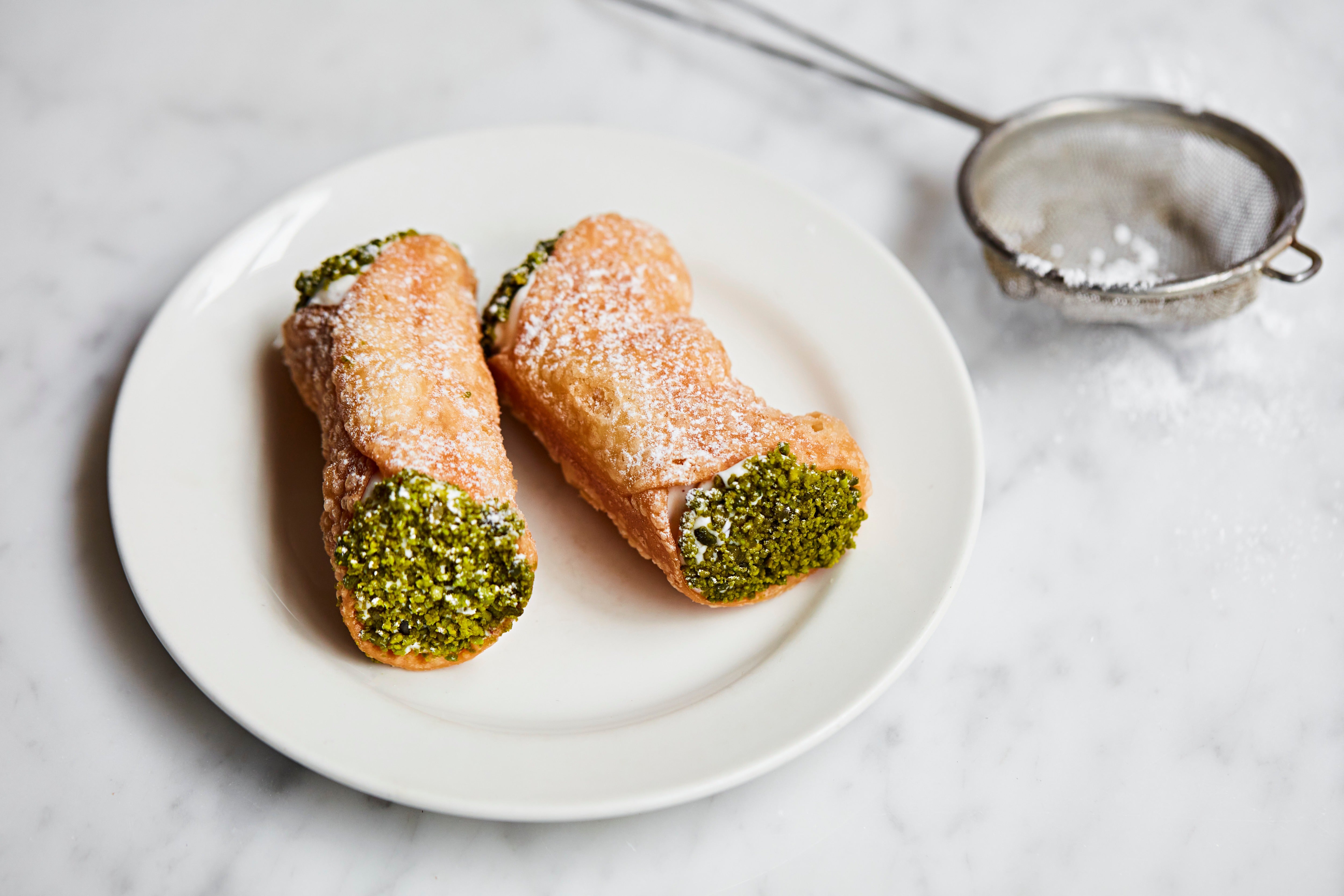
These crisp Sicilian pastry tubes are best filled just before serving so they stay perfectly light and crisp. This recipe makes around 40 small cannoli shells, with enough filling for 6-8 people.
Serves: 6-8
Ingredients:
For the cannoli:
200g plain flour
40g unsalted butter, softened
30g caster sugar
70ml sweet Marsala (or sweet sherry)
Vegetable oil, for frying
1 egg, beaten, for sealing the pastry
For the filling:
500g cow’s milk ricotta (or sheep’s milk or a mixture)
150g sheep’s milk ricotta (or cow’s milk or a mixture)
165g caster sugar
40g bitter chocolate, very finely chopped
To serve:
50g candied orange peel, finely diced
40g peeled pistachios, chopped (optional)
Icing sugar
Method:
1. Combine the flour, butter, sugar and Marsala and knead until you have a smooth dough. Cover and leave to rest for 30 minutes.
2. Meanwhile, make the filling by puréeing the ricottas with the sugar until completely smooth in a food processor. Stir through the finely chopped chocolate and refrigerate for at least 30 minutes.
3. Roll the dough to about 1mm thick, ideally using a pasta machine. Cut into 8cm rounds, re-rolling any trimmings as needed. For the lightest texture, leave the discs to rest for 30 minutes before frying, although they can be used immediately if necessary.
4. Heat at least 4cm of vegetable oil to 150C.
5. Lightly oil the outside of the cannoli moulds. Wrap each pastry disc around a mould, sealing the overlapping edge with a little beaten egg.
6. Fry until the pastry is golden brown, blistered and crisp. Carefully remove each cannolo from its mould while still warm, using a cloth to protect your hands. Drain on kitchen paper and leave to cool completely.
7. The shells are best eaten on the day they are fried but can be stored in an airtight container for a short time.
8. To serve, spoon the ricotta filling into a serving bowl and scatter with the candied orange peel and pistachios, if using. Arrange the cannoli shells on a platter, dust generously with icing sugar, and allow guests to fill their own just before eating.
Bocca in the Field takes place at Wyke House near Bruton on Saturday 15 and Sunday 16 August from 5.30pm. Tickets cost £140 per person and include all food and drink, with a vegetarian menu available. Book Saturday’s dinner here and book Sunday’s dinner here. Places are limited.



