


Travel advice has been updated for Jordan after missiles were intercepted in the vicinity of Aqaba’s airport and seaport. The UK government is currently advising against all but essential travel to that area.
Jordan, Bahrain and Kuwait have reported intercepting Iranian drones and missiles as attacks across the region have intensified.
At least two US service members were killed in action in Jordan while defending against Iranian ballistic missile and drone attacks.
The strike escalation comes over a month since the UK’s Foreign Office (FCDO) decided to remove its blanket advice against non-essential travel to Jordan, opening up opportunities for tourists to return to the country from 3 June.
Holidaymakers who have trips booked in the region are advised to follow the advice of the FCDO on what to do if they are heading to or are currently in a country in the Middle East.
Live: Iran-US war
Is it safe to travel to Jordan?
Since 3 June, the FCDO no longer advises against all but essential travel to Jordan, but continues to advise against all travel within 3km of the border with Syria.
On 19 July, the advice was updated to advise against all but essential travel to Aqaba international airport and seaport. This is due to missiles being intercepted in the vicinity of the airport and seaport.
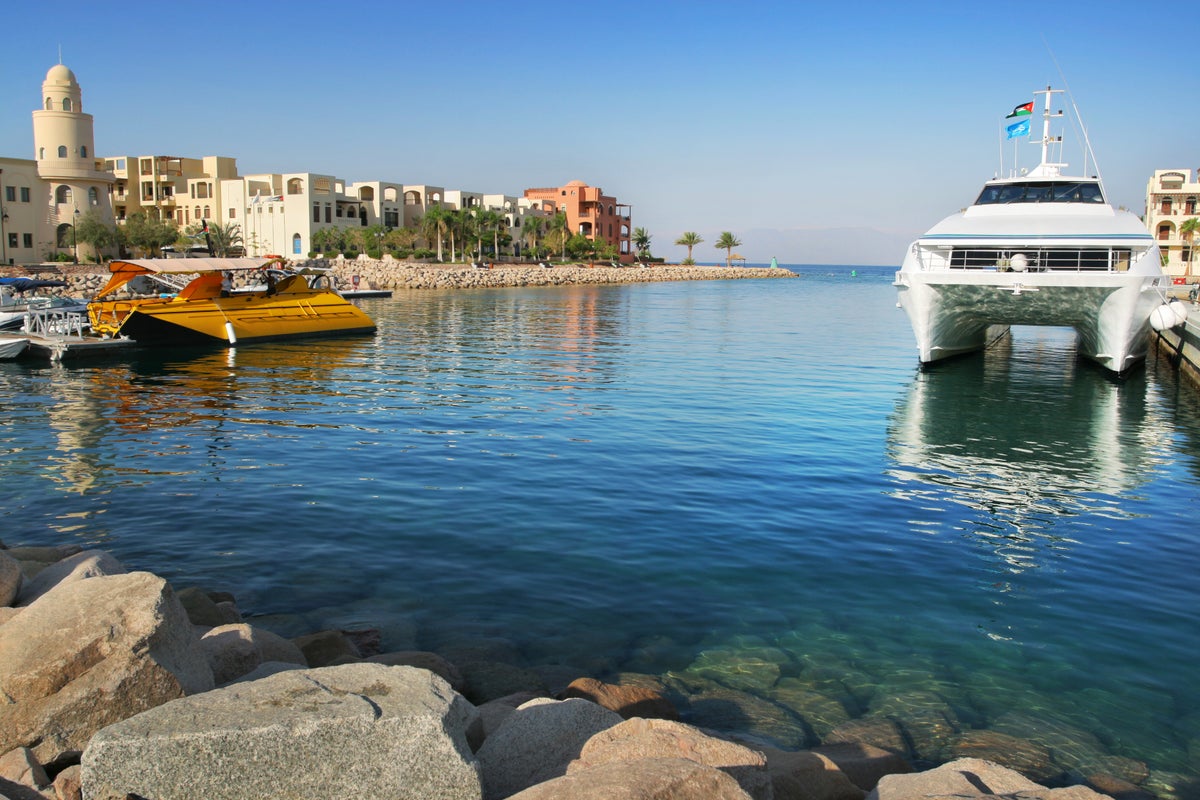
Aqaba’s airport, known as King Hussein International Airport, is a small base near the banks of the Gulf of Aqaba. It’s within a few miles radius of the borders of Israel, Egypt and Saudi Arabia.
There is currently only one airline operating out of Aqaba, Royal Jordanian, which runs flights to Amman and Cairo.
The small number of flights departing and arriving at Aqaba continued to operate on Sunday and into Monday.
What is the UK government’s advice if you are in Jordan?
The FCDO is still displaying advice for people should any hostilities resume. It warns that “the situation remains unpredictable” with Iran having carried out further attacks on Jordan in recent weeks, and “could do so again at short notice”.
It says that British nationals should read the “if you are affected by a crisis abroad” document, follow advice from local authorities and sign up to FCDO travel advice email alerts.
The FCDO also advises that if conflict resumes, to stay away from areas around security or military facilities, keep departure plans and travel documents up to date and stay indoors if advised to take shelter.
“Before the 8 April ceasefire, the Iranian regime had stated its intention to target locations in the Gulf associated with the US and Israel,” the FCDO added.
“This included US-linked organisations, businesses, facilities and institutions. Iran has previously targeted civilian infrastructure across the region such as ports, hotels, roads, bridges, energy facilities, oil production sites, water systems, and airports.”
Will it be easier to book a holiday to Jordan now?
As the FCDO no longer warns against non-essential travel to the majority of Jordan, your travel insurance is likely to be valid if you now decide to book a trip. Your travel insurance is at risk of being invalidated if you travel against advice from FCDO. However, it is important to check individual policies.
Package holidays are likely to start operating as usual. There are currently no grounds for travellers to expect a refund if they cancel, nor to claim the money back through travel insurance.
If FCDO advice changes to advising against all travel, you can cancel a package holiday without penalty for a full refund.
Read more: Trump now says US left Iran’s military ‘alone’ after weeks of boasting that he destroyed its forces



