


For over two decades, truck driver Joe Macken spent his spare hours crafting a massive scale model of his native New York City using balsa wood and foam board.
When the project was complete, his daughter persuaded him to share the sprawling basement creation — which features more than 800,000 structures — on TikTok. The short video clips became an immediate viral sensation.
Now, Macken’s creation is featured in an exhibit at the Museum of the City of New York. The institution contacted him after observing his TikTok posts rack up more than 10 million views in a single week. Titled “He Built This City,” the exhibition opened in February along Manhattan’s museum row near Central Park and runs through Oct. 12.
“I never really thought about finishing it because I had so much fun building it,” he said during a recent visit to the display.
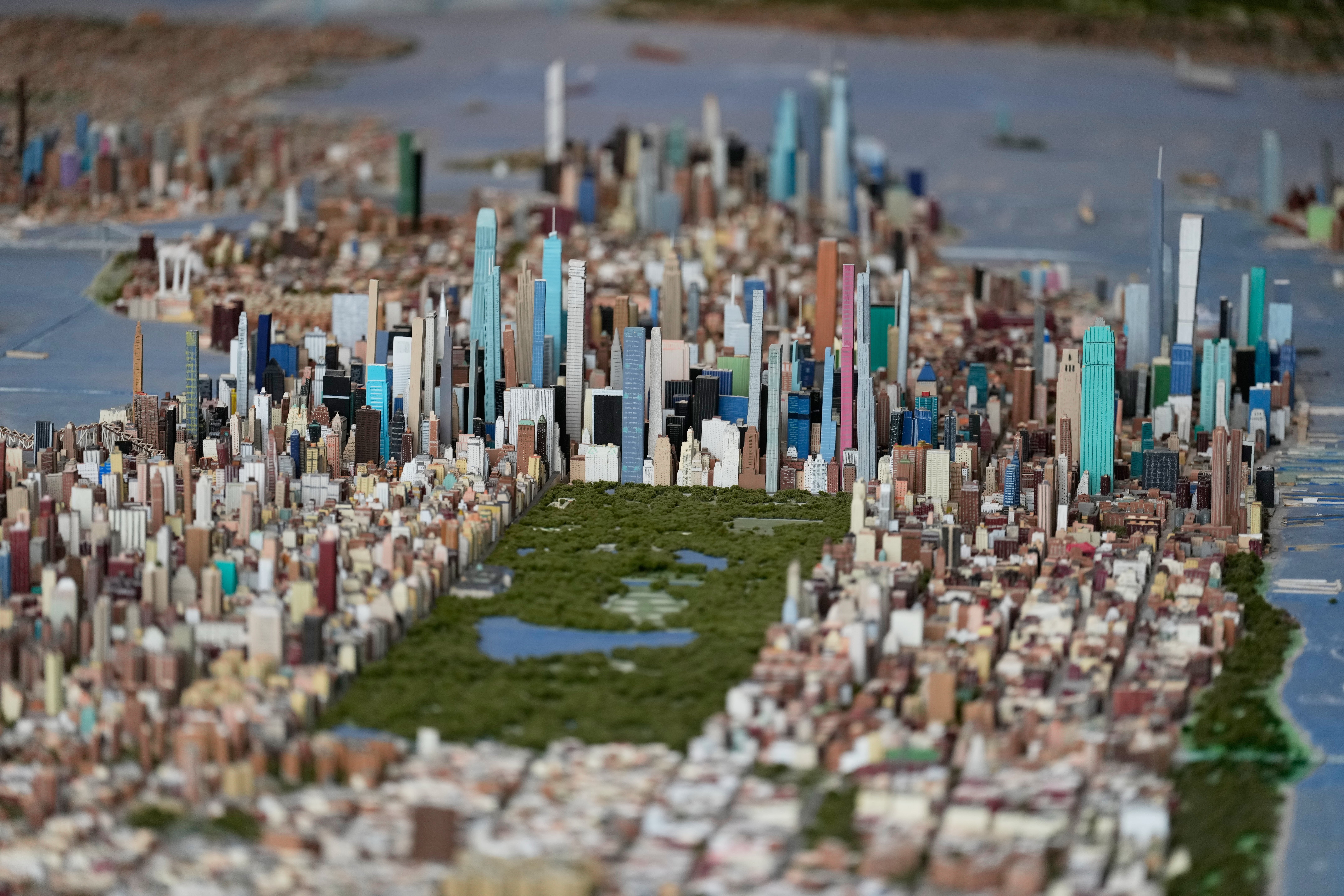
Elisabeth Sherman, the museum’s chief curator, noted that the model is a rare piece that engages both digital social media users and traditional museum patrons.
“I think people always want to get their arms around this whole city, this city that is impossible to know, impossible to grasp, and this is a way to see it from a bird’s-eye view,” she said. “We rarely have anything these days that reaches everyone in that way. We love that kind of energy it brings.”
All five boroughs, as well as portions of New Jersey and suburban Long Island, are set out in street-level detail across more than 300 large foam boards, joined together like a giant jigsaw puzzle. The entire layout measures 50 feet (15 meters) long and nearly 30 feet (9 meters) wide, with every single inch representing approximately 160 feet (49 meters).
The vast majority of the 800,000-plus structures are fashioned from light balsa wood, encompassing everything from Manhattan’s soaring skyscrapers to modest single-family houses in Queens, alongside major landmarks like the Statue of Liberty, Yankee Stadium and the Brooklyn Bridge.
Macken traces his inspiration back to an elementary school class trip to the Queens Museum to view the Panorama of the City of New York, the famous scale model created for the 1964-1965 World’s Fair, which featured an overhead gondola ride.
Yet it was not until he was in his 40s that the Queens native actually began the work. By then, Macken and his young family had relocated north from Long Island to the Albany area in upstate New York.
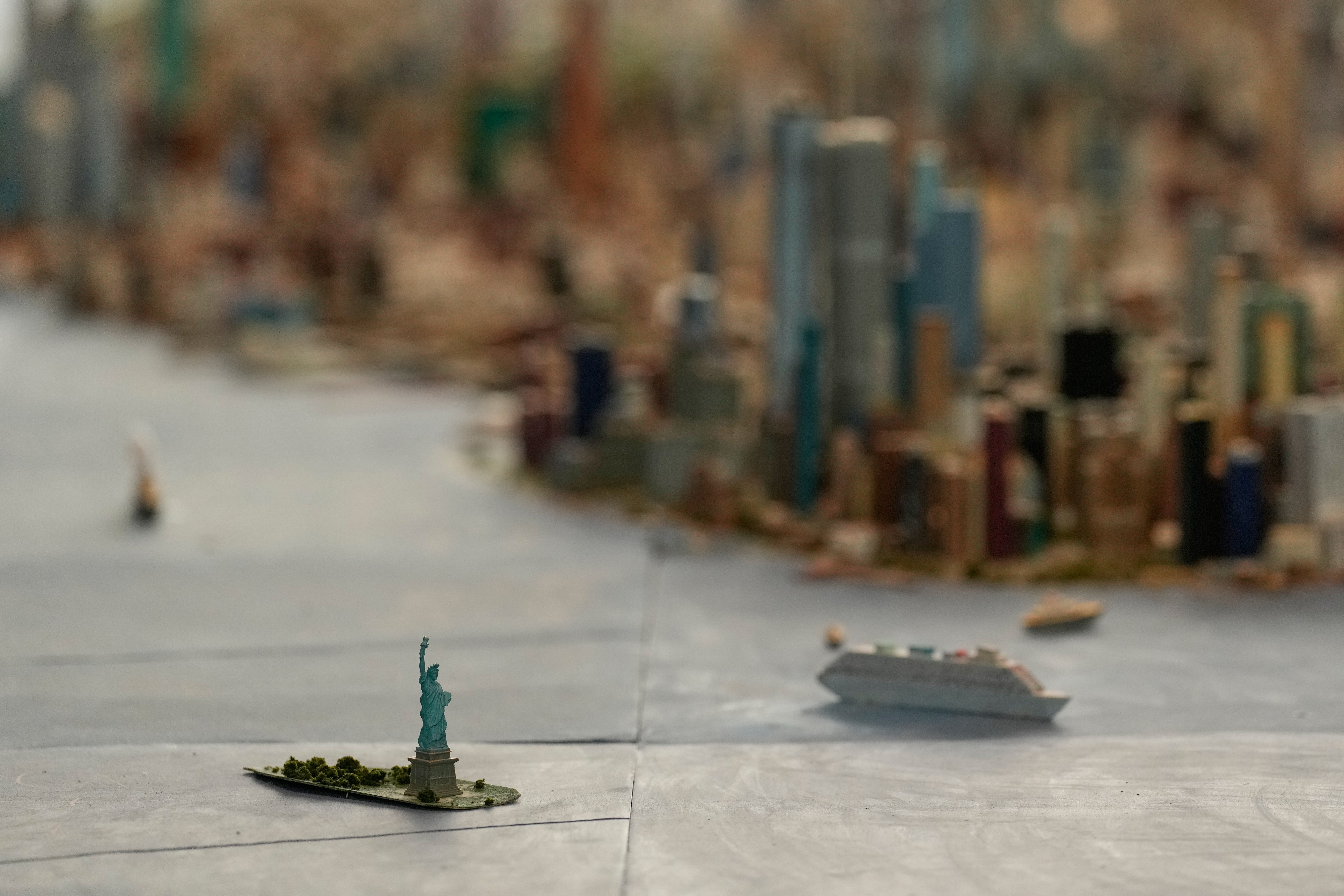
“I think, subconsciously, I might have missed New York,” he said.
Working with simple items bought at hobby stores, Macken started with Rockefeller Center and its prominent main tower, “30 Rock.”
From that starting point, he spent roughly ten years constructing Midtown Manhattan. The detailed Art Deco spire of the Empire State Building proved to be the most challenging element.
“I wanted to make it perfect,” Macken said. “People are gonna be looking at it.”
Macken possesses no formal training in architecture, design, or model making, joking that his only background was playing with Legos and Lincoln Logs as a child. Yet as he labored, his process became much faster and more efficient.
“I wish I would have done it 20 years earlier, knowing that I would have enjoyed it so much,” he said. “I can build one of the buildings in my sleep right now where it took me hours when I first started.”
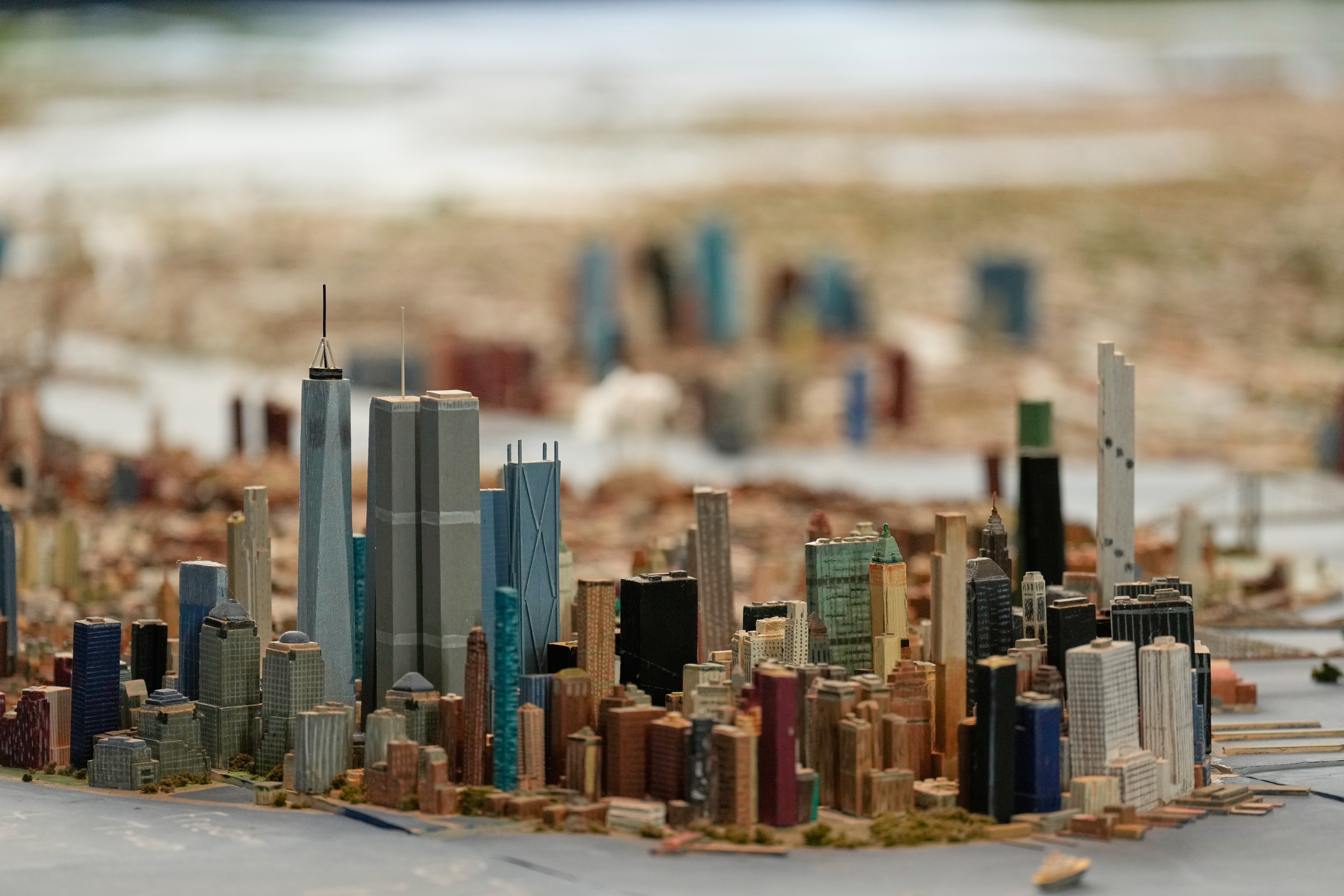
Macken devoted nearly all of his free time to the model. He carried his building supplies along on summer family vacations to the New Jersey shore and worked during downtime while driving a bus on weekends.
“It was just something that I couldn’t stop doing,” he said.
As the model neared completion, Macken admitted the project became all-consuming.
“Before bed, I’d be so tired sometimes, and I wind up being there for four hours, falling asleep at the table,” he said. “It got bad. It was an obsession. It still is.”
The miniature metropolis is not an exact present-day replica. Out in his model of Queens, Macken chose to recreate his favorite childhood diner rather than the modern high-rise building that now occupies the location. He also preserved the old Kosciuszko Bridge connecting Brooklyn and Queens, despite its 2017 demolition and replacement.
In lower Manhattan, the original twin towers of the World Trade Center remain standing in Macken’s mini Gotham, situated beside One World Trade Center and the other contemporary skyscrapers constructed following the 2001 terror attacks.
“I kept a lot of my own parts of the city,” Macken said. “Just for me.”
During a recent weekday morning, a steady stream of visitors entered the gallery on the first floor. They stepped up to the edge of the elevated platform, searching for recognizable landmarks or their former neighborhoods.
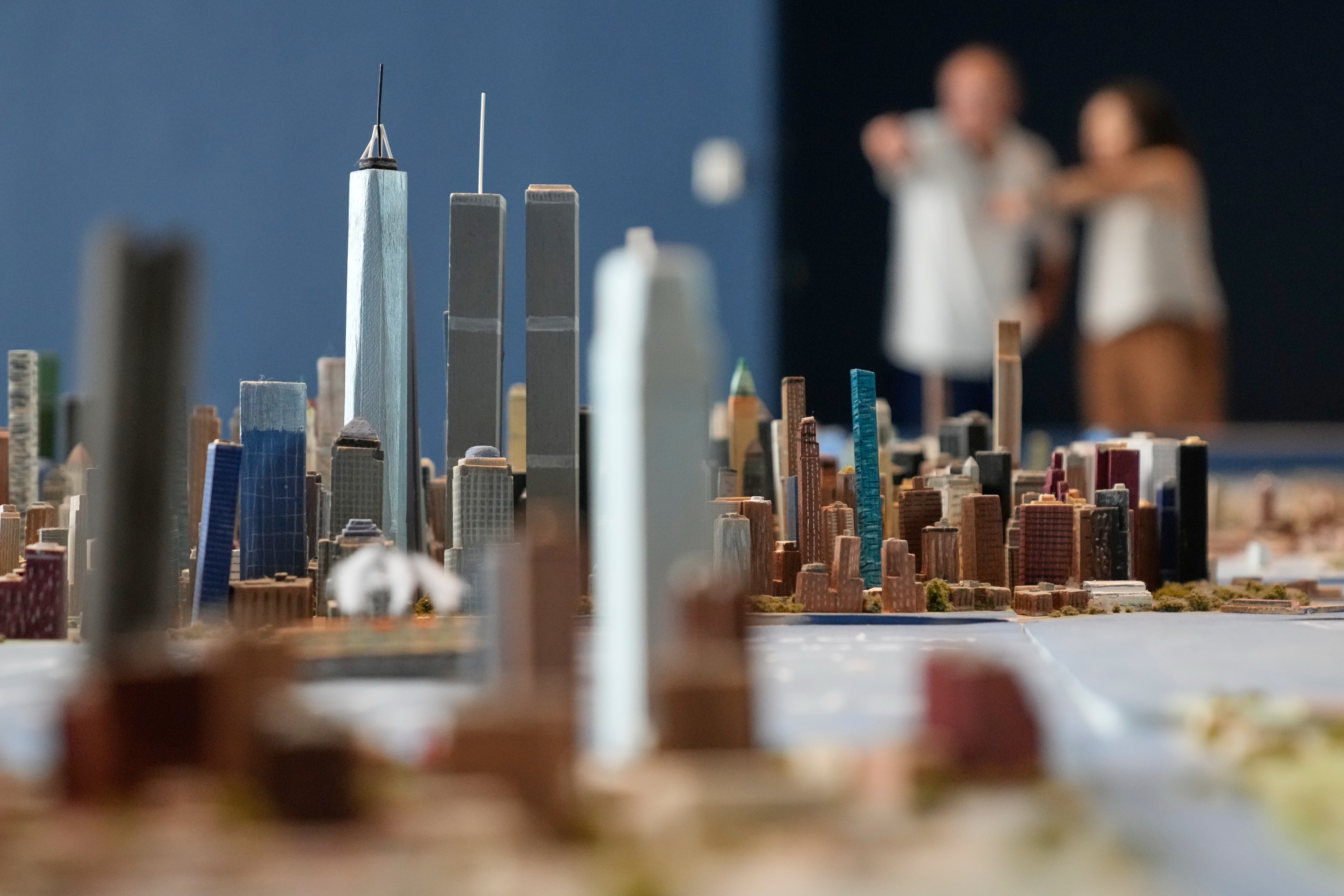
Some used pairs of binoculars offered for closer viewing, while others simply squinted and gestured into the distance.
Jonathan Skolnik stood at the corner of the display closest to lower Manhattan, tracing his family’s history across the five boroughs as his son, Tosha, listened carefully.
Skolnik highlighted his father’s first address in America on Manhattan’s Lower East Side near the Williamsburg Bridge, the Queens neighborhood where he was born, and the cemetery where several family members are buried.
“I’m trying to do it all from memory,” the Washington, D.C. area resident said. “I don’t have it all exact.”
After spending decades working on the project quietly at home, Macken hopes to display the model at another location once the museum exhibit concludes on Columbus Day.
In the meantime, he plans to expand the layout into Long Island and New Jersey while adding more than 50 new structures.


