




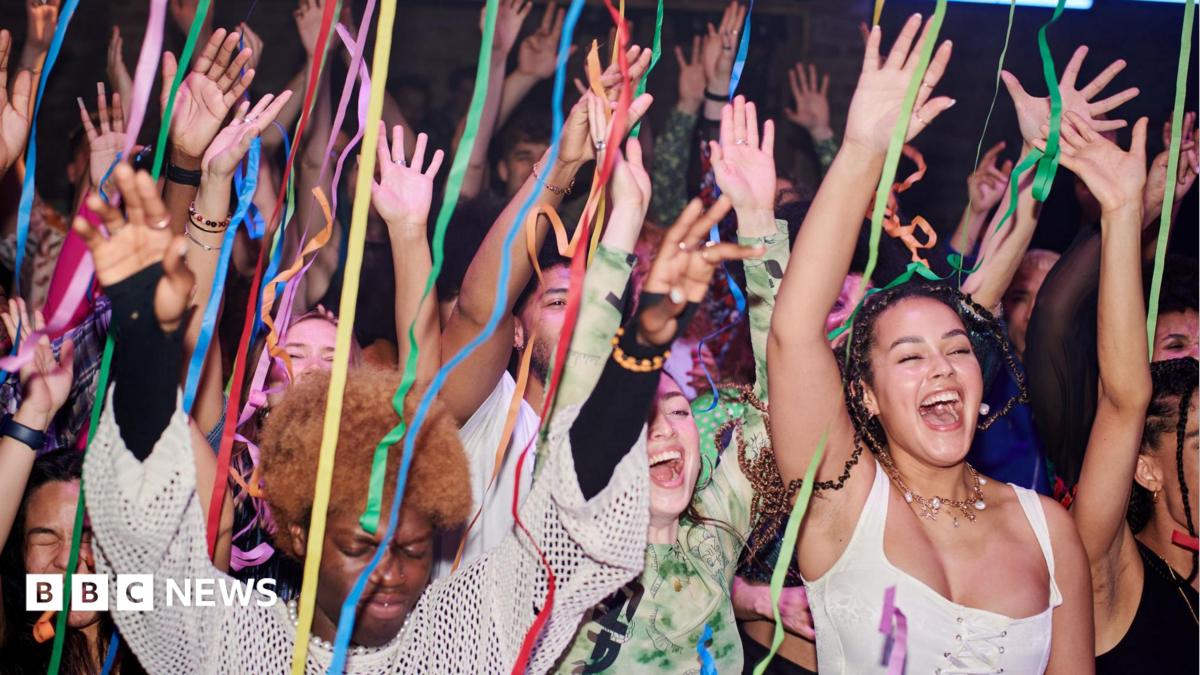







I trusted my ears to take me towards Chueca, where, around 2 a.m., I popped into LL Bar just as a drag queen started a rendition of the Macarena, prompting the jersey-wearing audience to join in. This was not an image I might have seen in recent years, according to Miguel Sanz Castedo, the director general of Turespaña, Spain’s head of tourism. Sanz Castedo said that what he loved most about this year’s World Cup was seeing so many more women, girls, and members of the LGBTQ+ community watching the matches and joining the celebrations. He credited the team with embodying the power of the collective, emphasizing collaboration over individual glory and inviting a broader audience into the sport. Football culture, he noted, has come a long way, even if there is still considerable ground left to cover. With this victory, Spain became the first nation in history to reign as both men’s and women’s world champions at the same time. “In the past in Spain, it felt like football was for the macho men,” Miguel said. “This time, it feels like it’s for everyone.”
At 3:30 a.m., I made a pit stop for a classic Madrileño dessert of chocolate con churros at the iconic 24-hour churcrería, Chocolatería San Ginés. On the walk back to my hotel, I noticed how many buildings and monuments had been illuminated in red and yellow. Car horns still echoed through the streets as people danced in circles, weaving around cleanup crews already hosing down the pavement and gathering debris with such efficiency that, by morning, there would be little trace that a parade of this scale had ever taken place. That, too, was a point of pride for many Spaniards: despite the intensity of the celebrations and millions in the streets, the night had unfolded free of violence or vandalism.
While the abundance of flags may feel familiar for a national team celebration elsewhere, it’s something noteworthy in Spain, according to my friend Ignacio de los Reyes, a reporter for The Bubble. “Waving the flag isn’t something people do here in the same way they would in the United States,” he said. “We simply don’t have the same relationship with our national symbols.” Spain’s history, he explained, has left many people wary of conspicuous displays of nationalism. During the World Cup, however, he sensed something shifting.
“We’re living through a moment where so many Spanish cultural figures are succeeding internationally. I think we’re showing the world that we’re creative, diverse, emotional, and also incredibly talented in the way we work and present ourselves. And now we’re doing the same through sport,” he noted. “That’s the kind of national pride I connect with. It’s not about feeling superior to anyone else. It’s about celebrating who we are becoming and seeing a more diverse, modern, and confident Spain reflected back at us.”
At 4:30 a.m., I finally crawled into bed at the Four Seasons, unable to tell whether the refrain of “!Yo soy Español, Español, Español!” was still reverberating outside or had simply lodged itself in my head. From the serenity of my room, I thought back over the previous 24 hours, and over the six weeks of the World Cup itself: the songs, the rituals, the tears, the fleeting moments when an entire stadium, street, or country seemed to move as one.
Spain had won a second star, but collectively, we all seemed to win so much more.




