


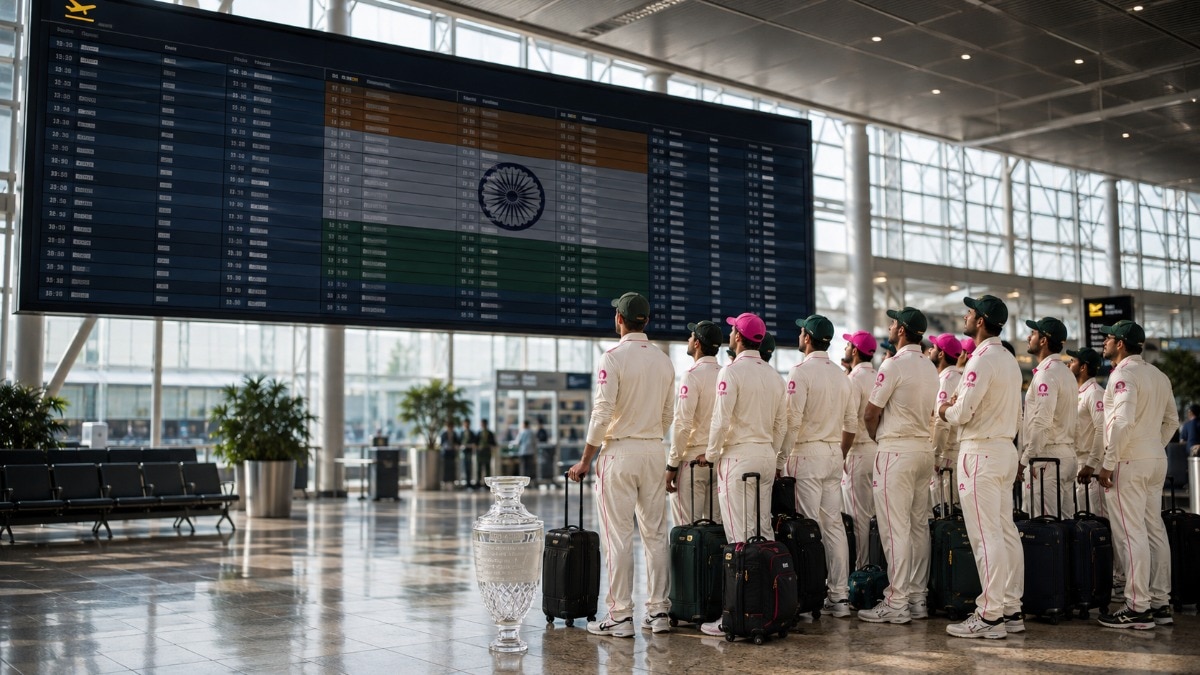
There was a time when the world’s cricketing compass pointed firmly west. England was the game’s custodian, protecting traditions that stretched back nearly a century and a half. Away from the west, Australia represented relentless excellence, producing generations of champions who redefined the sport.
The West Indies, meanwhile, brought flair, intimidation and an enduring romance that captivated cricket lovers across continents. India, for all its unmatched passion, remained largely a participant rather than the game’s principal power broker.
Fast forward to 2026 and that landscape has transformed beyond recognition.
Today, cricket’s commercial success, broadcasting strategies, sponsorship ecosystem and, increasingly, its international calendar revolve around one country. The sport has always followed its audience, but in the 21st century it has begun following India’s audience more than anyone else’s. No nation commands television ratings, digital engagement, sponsorship revenues or commercial leverage on the same scale. For broadcasters, advertisers and administrators, India is no longer simply cricket’s biggest market—it has become the market that shapes the game’s economic future.
Few recent developments illustrate this dramatic shift better than two proposals that would have seemed almost unthinkable only a decade ago.
The first is Cricket Australia’s decision to stage the opening match of the 2026-27 Big Bash League (BBL) season in Chennai. The second is the growing conversation around taking the 150th anniversary Ashes Test to India. The fact that they are even being discussed demonstrates how profoundly cricket’s centre of gravity has shifted.
For generations, cricket’s most iconic events travelled outward from England and Australia. Today, two of those cricketing institutions are actively looking towards India.
That is not coincidence. It is recognition.
Former England spinner Monty Panesar believes these discussions represent far more than isolated commercial ventures.
“I think, at the moment, these are temporary commercial experiments. But they also represent the beginning of a long-term realignment of cricket’s global architecture,” Panesar told India Today.
“If the BBL opener is played in India and an Ashes Test is eventually hosted there, it could become a regular feature in the future. The commercial upside is enormous. Imagine a Big Bash opener in Chennai—we don’t yet know what the media rights valuation could be because of India’s massive consumer base.
“An Ashes Test in India could become one of the most commercially valuable Test matches ever. India is now an undeniable economic and political centre, and everything is shifting towards the subcontinent. The discussions around an Ashes Test in India and a BBL opener there show that people are beginning to recognise this major power shift.”
His assessment captures the moment perfectly. Cricket is witnessing more than a commercial boom. It is experiencing a redistribution of influence unlike anything in its modern history.
WHEN EVEN THE ASHES LOOKS EAST
For all the money and commercial success that modern cricket generates, the game’s greatest currency has always been tradition.
No rivalry embodies that better than the Ashes.
For nearly 150 years, England and Australia have contested one of sport’s oldest and most celebrated bilateral series. It has survived world wars, political upheavals and sweeping changes to the game itself. Lord’s, The Oval, the MCG and the SCG are woven into cricketing folklore, while legends such as Don Bradman, Ian Botham, Shane Warne, Glenn McGrath and Ben Stokes have ensured the rivalry remains the pinnacle of Test cricket.
That is precisely why the idea of staging the 150th anniversary Ashes Test in India carries such significance.
For generations, the Ashes has symbolised cricket’s traditional power structure, with England and Australia at its heart. The rivalry has never needed to leave its own shores to capture the world’s imagination. Its appeal has always rested on history, heritage and fierce competition rather than commercial ambition.
Yet the fact that administrators are even willing to explore the possibility of taking the game’s oldest rivalry to India underlines how dramatically cricket’s landscape has changed.
The proposal is no longer driven simply by the desire to celebrate a historic occasion. It reflects the growing recognition that India is now the sport’s largest audience, its biggest commercial market and its most influential economic force. A commemorative Ashes Test in Ahmedabad, Chennai or Mumbai would almost certainly become one of the most watched Test matches in history, attracting unprecedented television audiences, sponsorship interest and broadcast revenues.
That is why discussions surrounding the Ashes and the Big Bash are so significant. They are not merely about moving matches to a new venue; they are about the sport’s oldest institutions acknowledging where cricket’s greatest opportunities now lie.
Panesar believes the debate should not be viewed as tradition versus innovation.
“We have to preserve competitive balance and the traditions of international cricket. India must continue to field its strongest XI because the quality of cricket drives commercial success. Historic rivalries like India-Australia, India-England and the Ashes must remain at the highest standard.”
His point is an important one. Cricket can embrace new commercial frontiers without losing sight of the rivalries and traditions that made the sport what it is. But whether or not an Ashes Test is eventually staged in India almost feels secondary.
The bigger story is that cricket’s oldest and most iconic rivalry is now looking beyond England and Australia in pursuit of the game’s biggest market. Twenty years ago, that conversation would have been unimaginable. Today, it feels entirely plausible.
THE AUDIENCE THAT CHANGED EVERYTHING
Neither the proposed Ashes Test nor the Big Bash opener in Chennai exists in isolation. Both are products of the same reality: the world’s biggest cricket audience now resides in India.
With well over a billion cricket followers, India has become the sport’s single largest consumer market. Every major ICC event reinforces that reality. Indian matches routinely attract television audiences running into hundreds of millions, while streaming platforms record unprecedented engagement whenever the Men in Blue take the field.
Roughly, cricket has over two billion followers globally, with India accounting for more than a billion of them. Every major ICC event reinforces that reality. Indian matches routinely attract television audiences running into hundreds of millions, while streaming platforms record unprecedented engagement whenever the Men in Blue take the field. The 2023 ODI World Cup, hosted in India, became the most digitally watched ICC tournament in history, and the trend has continued with subsequent global events.
Those numbers explain why broadcasters continue investing extraordinary sums into Indian cricket.
The IPL’s media rights cycle for 2023-27 fetched nearly Rs 48,390 crore, making it one of the richest broadcasting agreements in world sport on a per-match basis. India’s bilateral media rights have also generated record-breaking valuations, underlining the premium attached to access to Indian audiences.
For Cricket Australia, therefore, taking the BBL to Chennai is less about exporting Australian cricket than embracing cricket’s biggest economy. Instead of expecting Indian audiences to discover the Big Bash from thousands of kilometres away, administrators are taking the product directly to the market that offers the greatest commercial upside.
FROM LIBERALISATION TO GLOBAL LEADERSHIP
India’s rise to cricketing supremacy was not inevitable. Nor did it happen overnight.
Its foundations were laid during the economic reforms of the early 1990s, when liberalisation transformed India’s consumer economy and satellite television revolutionised sports broadcasting. Cricket entered millions of homes that had previously lacked access, while advertisers quickly realised that no sporting property delivered consumers quite like Indian cricket.
The BCCI recognised the opportunity before almost anyone else.
As television revenues exploded, the board steadily evolved from a domestic governing body into one of the wealthiest sporting organisations in the world. Tours involving India became financial lifelines for host nations. Television networks competed aggressively for broadcasting rights, sponsors fought for visibility during Indian matches and multinational corporations increasingly viewed Indian cricket as one of their most valuable marketing platforms.
By the early 2000s, one reality had become impossible to ignore.
Whenever India toured, everyone benefited financially.
THE IPL CHANGED CRICKET FOREVER
The transformation accelerated further in 2008 with the birth of the Indian Premier League.
Initially dismissed by some traditionalists as cricket’s answer to entertainment television, the IPL fundamentally altered the sport’s economic model. It combined elite international talent, city-based franchises, entertainment, aggressive marketing and prime-time broadcasting into a global spectacle unlike anything cricket had previously experienced.
Franchise valuations climbed into billions of dollars. International investors entered the sport. Domestic players found themselves earning life-changing contracts, while overseas stars began reshaping their calendars around the tournament.
The IPL did not merely become cricket’s biggest league.
It became the blueprint.
South Africa launched the SA20. England introduced The Hundred. Major League Cricket arrived in the United States. The UAE expanded the ILT20, while franchise ecosystems across the Caribbean and elsewhere drew inspiration from the IPL’s commercial success. Several overseas competitions now even feature franchises owned by IPL investors, extending India’s influence far beyond its own borders.
Panesar believes this was the moment cricket’s power equation fundamentally changed.
“Since the IPL was introduced and franchise cricket expanded globally, we’ve seen an India-centric model emerge. You now have leagues like the SA20, the Caribbean Premier League, The Hundred, and even discussions about the Big Bash opening in Chennai.
“India is the financial engine of world cricket. With the BCCI receiving around 38.5 per cent of ICC revenue distribution, it naturally has greater influence over the game’s direction.
“India also has significant administrative influence. Whether it’s scheduling franchise leagues or international fixtures, the BCCI plays a major role in decision-making. It may appear like a monopoly to some, but it also reflects India’s growth as a cricketing and economic powerhouse.”
That influence extends far beyond media rights and sponsorship deals. International calendars are increasingly designed around the IPL window. Global tournaments are scheduled with Indian broadcasters firmly in mind. Even bilateral cricket, once shaped almost entirely by tradition, now reflects commercial realities driven by the world’s largest cricket market.
Yet, as Panesar points out, such influence also comes with responsibility.
“With such a large share of ICC revenues, India also has a responsibility to help drive the global growth of the game.”
That responsibility—and the opportunities and challenges that accompany it—will define cricket’s next chapter.
BENEFITS AND RISKS OF INDIA’S DOMINANCE
That growing dominance has inevitably fuelled another debate.
Can a global sport remain healthy if so much of its financial stability depends on one nation?
It is a question that divides administrators, players and broadcasters alike.
Supporters argue India’s success has elevated the entire sport. Broadcasting standards have improved dramatically. Women’s cricket has received unprecedented investment. Associate nations benefit from increased ICC funding. Franchise leagues have created year-round professional opportunities for hundreds of cricketers who once struggled to earn a sustainable living.
In many respects, India’s prosperity has lifted the game’s overall financial health.
Yet dependence carries undeniable risks.
Panesar believes both sides of the argument deserve equal attention.
“It’s a fascinating debate. On the positive side, India’s financial strength can help support smaller nations such as the Netherlands, Scotland, Ireland, Oman, the UAE and Hong Kong.
“We’re also seeing the growth of a global franchise ecosystem, which brings investment in infrastructure, women’s cricket and provides players with guaranteed earning opportunities across multiple leagues.”
Few would disagree.
The growth of franchise cricket has transformed careers across the world. Players from emerging nations now share dressing rooms with the sport’s biggest stars. Coaches, analysts and support staff have found opportunities that scarcely existed two decades ago. Investment has improved facilities, academies and high-performance programmes across multiple countries.
But Panesar also identifies the vulnerabilities that accompany such rapid growth.
“But there are risks. If the Indian market changes its viewing habits or becomes saturated with franchise cricket, it could affect leagues around the world.
“There’s also the danger that bilateral cricket involving smaller nations becomes less attractive commercially. Fans may prefer watching franchise leagues rather than traditional international series.
“Everything is increasingly aligned with the Indian broadcast calendar. If consumer preferences change within India, that could create challenges for the global cricket economy. That’s the downside of relying so heavily on one market.”
His concerns highlight a challenge confronting every major cricket board.
How do you embrace India’s commercial power without allowing international cricket to become overly dependent upon it?
That balance may prove to be the defining administrative challenge of the next decade.
International cricket remains the sport’s emotional foundation. World Cups, the Ashes, the Border-Gavaskar Trophy and iconic bilateral rivalries continue to define legacies.
For all the financial rewards India has brought to cricket, preserving that equilibrium may ultimately become its greatest contribution to the sport.
FROM DOMINANCE TO RESPONSIBILITY
India’s rise has unquestionably transformed the sport. The IPL has redefined cricket’s commercial landscape, television revenues have reached levels once considered unimaginable, and investment has flowed into women’s cricket, high-performance programmes and franchise leagues across the globe. Associate nations now receive greater financial support, while players from emerging cricket countries enjoy opportunities that scarcely existed two decades ago.
The challenge now is ensuring India’s dominance strengthens the global game rather than creating an ever-widening divide between cricket’s richest and poorest nations.
Monty Panesar believes that should be the BCCI’s next great mission.
“We have to preserve competitive balance and the traditions of international cricket.
“India must continue to field its strongest XI because the quality of cricket drives commercial success. Historic rivalries like India-Australia, India-England and the Ashes must remain at the highest standard.
“At the same time, the ICC should consider revising its revenue distribution so that smaller boards receive more funding. That would allow countries such as the West Indies, Pakistan and Sri Lanka to better retain their players for international cricket instead of losing them to franchise leagues.
“If smaller nations are financially stronger, they’ll be able to maintain higher standards in international cricket, which benefits the global game.”
His comments strike at the heart of cricket’s biggest dilemma.
The sport needs India.
But it also needs strong opponents for India.
International cricket derives its value from compelling contests, historic rivalries and competitive uncertainty. If financial inequality continues to widen unchecked, the quality of those contests could gradually erode.
Stronger support for smaller Full Members and Associate nations would not weaken India’s position—it would strengthen cricket as a whole.
CRICKET WITHOUT BORDERS?
The next decade could witness changes that once belonged only in imagination.
An IPL fixture in Australia.
A Border-Gavaskar Trophy Test at Lord’s.
These ideas would once have been dismissed as fantasy. Today, administrators openly discuss them because cricket has become an increasingly global entertainment product.
Panesar believes the sport should embrace innovation—provided it never loses sight of its foundations.
“I think Australia could eventually host an IPL match. That would show Cricket Australia is thinking ahead and trying to expand the game globally.
“Imagine an IPL match at Lord’s—you’d attract huge expatriate audiences and maximise stadium revenues.
“I also think India could play bilateral series at neutral venues. India-Pakistan in the United States would be enormous. You could even imagine a Border-Gavaskar Trophy Test in England.”
It is an ambitious vision, but one that reflects the changing nature of modern sport.
Football has taken league matches abroad. Formula One continues expanding into new markets. The NFL has successfully built regular-season fixtures outside the United States.
Cricket is now exploring similar possibilities.
Yet Panesar is equally clear that expansion should never come at the expense of international cricket’s most cherished contests.
“However, it’s essential to protect dedicated windows for international cricket. The Ashes, the Border-Gavaskar Trophy and other major bilateral series must remain the priority.”
That balance between innovation and preservation may ultimately determine how future generations remember this era.
BUILDING A TRULY GLOBAL GAME
Panesar’s vision extends beyond India’s commercial dominance.
He believes cricket still has enormous untapped potential if administrators invest wisely.
“I’d also like to see the ICC create an ODI Super League, similar to the World Test Championship, where smaller nations regularly face the bigger teams. Imagine Nepal beating Australia—that’s the kind of upset that excites fans and helps grow the game globally.”
It is a reminder that while India’s rise has transformed cricket economically, the sport’s long-term health depends on expanding meaningful opportunities beyond its traditional powerhouses.
The Olympic Games in Los Angeles in 2028 offer another significant opportunity. Cricket’s return to the Olympic movement could introduce millions of new fans in North America, while continued investment in the Middle East and Europe may further diversify the game’s commercial footprint.
Even so, Panesar expects India’s influence to become even stronger.
“India is already central to world cricket, and I think that position will only become stronger over the next 10 to 20 years.
“The gap between the BCCI and other boards is likely to widen. The IPL could even expand its calendar because of its commercial success.
“At the same time, there are exciting growth opportunities in the United States through cricket’s inclusion at the Los Angeles Olympics, as well as in the UAE, Saudi Arabia and Europe.
“But overall, the BCCI’s influence is only going to grow. If that gap becomes too large, it could become a worrying prospect for other boards because India could eventually dominate almost every aspect of the global game.”
Whether one views that prediction with optimism or concern, few would dispute its central premise.
India is no longer simply participating in cricket’s future.
THE NEW HEARTBEAT OF CRICKET
The BBL opener in Chennai and discussions over a commemorative Ashes Test are more than eye-catching headlines. They reflect a sport adapting to a new economic order—one where commercial opportunity increasingly shapes decisions once guided solely by tradition.
Cricket’s greatest rivalries will always belong to venues such as Lord’s, the MCG and The Oval. The Ashes will remain the pinnacle of Test cricket, while the Border-Gavaskar Trophy will continue to captivate fans across the world. But history alone no longer determines the game’s direction.
Today, the biggest decisions in world cricket are driven by audience scale, broadcasting power and commercial value. On each of those fronts, India stands unrivalled. That does not diminish the legacy of England, Australia’s excellence or the West Indies’ enduring contribution. It simply reflects a changing reality.
The proposals to take the BBL to Chennai and potentially stage a landmark Ashes Test in India are not isolated experiments. They are milestones in cricket’s ongoing evolution. For more than a century, the game’s influence flowed from England and Australia. Today, its commercial heartbeat lies in India.
The next chapter of cricket will still be written at Lord’s, Melbourne, Sydney and countless other iconic venues. But the decisions that shape that future will increasingly be influenced by audiences in Mumbai, Chennai, Bengaluru and Ahmedabad.
Cricket’s centre of gravity has not merely shifted—it has been redrawn. The world once looked west to understand where the game was headed. Increasingly, it is looking east.
Towards India.
– Ends



