


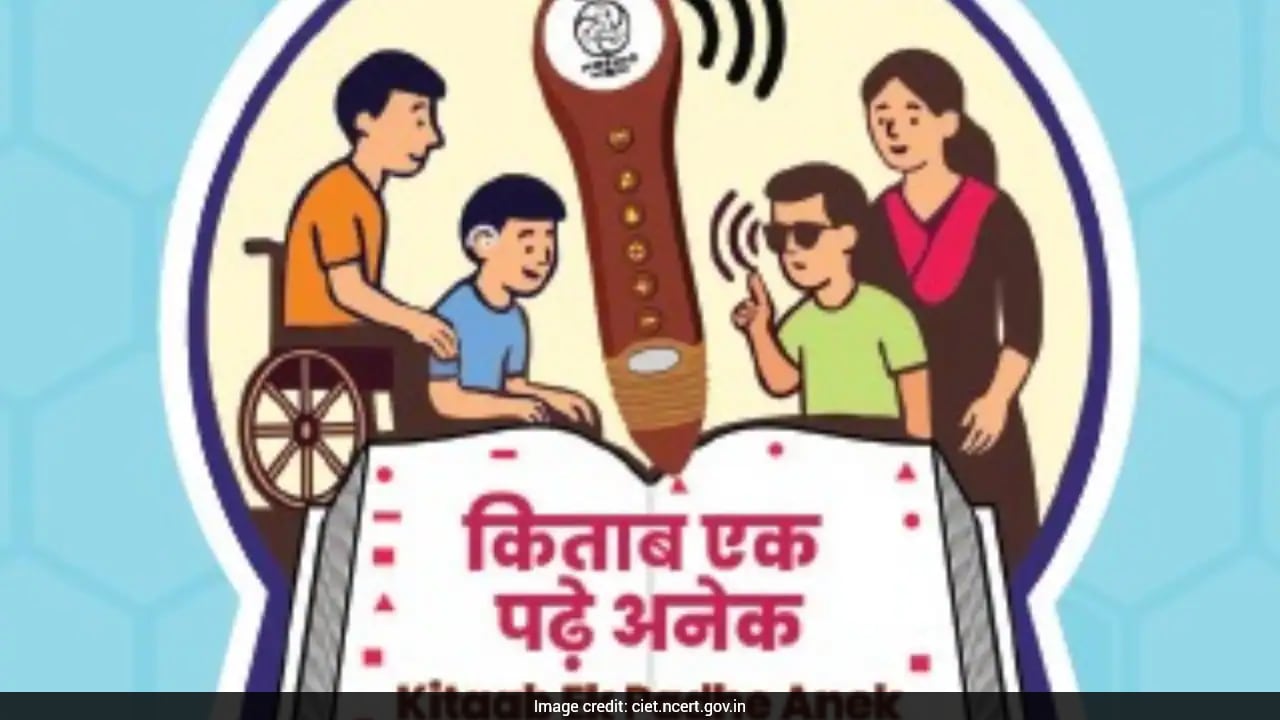
Shedding light on strengthening inclusive education for Children with Special Needs (CwSN), the Ministry of Education highlighted the ‘Kitab Ek Padhe Anek’ initiative by the National Council of Educational Research and Training (NCERT) that reimagines textbooks through principles of Universal Design for Learning (UDL). By integrating touch-and-sound technology with curriculum-aligned printed textbooks, the scheme ensures equitable access to learning for all children, the ministry noted.
According to the Central Institute of Educational Technology’s official website, ‘Kitab Ek, Padhe Anek (KEPA)’ is a comprehensive programme developed by CIET, NCERT, based on the principles of Universal Design for Learning. The programme aims to make learning resources accessible to all learners, including Divyangjan (children with special needs) and learners from socio-economically disadvantaged backgrounds, the institute stated.
In a social media post, the Education Ministry stated:
“Kitab Ek, Padhe Anek (KEPA) provides a window of learning opportunities for Children with Special Needs.”
“Aligned with NEP 2020, it uses audio, print, tactile, Braille, Indian Sign Language and visual cues together in one textbook,” the post read.
Kitab Ek, Padhe Anek (KEPA) provides a window of learning opportunities for Children with Special Needs….
Aligned with #NEP2020, it uses audio, print, tactile, Braille, Indian Sign Language and visual cues together in one textbook.#Education4All #InclusiveEducation #NCERT… pic.twitter.com/mndwJLzUKJ
— Ministry of Education (@EduMinOfIndia) August 22, 2026
According to CIET, the initiative provides both printed and digital learning resources that work with handheld devices and touch-enabled speaking pens. The printed books contain interactive touch-sensitive areas (tactile points), as per the official information.
When a compatible talking pen touches these points, it reads the text aloud and provides detailed audio descriptions of pictures, illustrations, and learning activities.
According to the central government, designed to support diverse learning needs, KEPA embeds audio, print, tactile, Braille, Indian Sign Language (ISL) and visual cues within a single textbook, enabling children with visual, hearing, learning, physical or attention-related challenges to learn alongside their peers using the same book.
KEPA empowers learners to explore content independently, confidently and at their own pace, while supporting teachers with ready-to-use, accessible textbooks, the ministry had stated earlier in January 2026. The programme is aimed towards building truly inclusive classrooms, according to the central government.


