


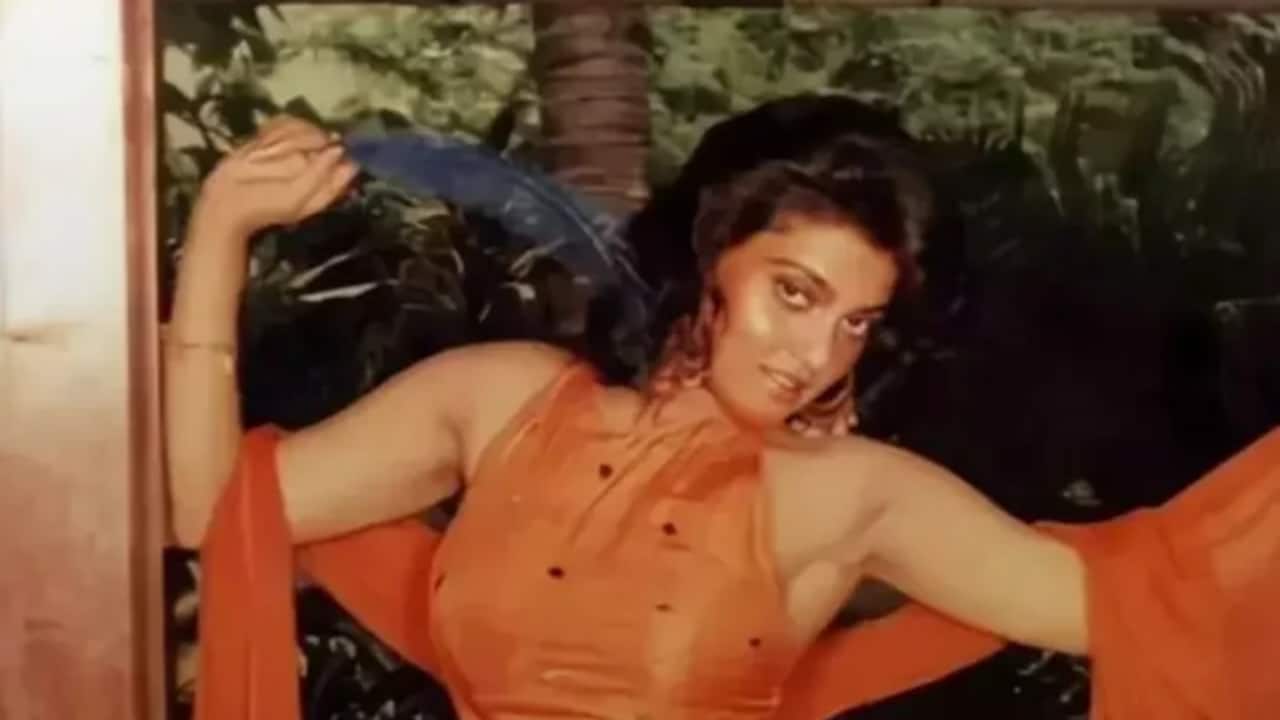
Silk Smitha wanted to talk.
On the night of September 22, 1996, she called actress Anuradha and asked her to come over. There was something important she wanted to discuss. Anuradha could not make it that evening. They would meet the following day.
Smitha also tried to reach actor Ravichandran. He was shooting, and poor connectivity prevented them from speaking.
By morning, the news had reached them both.
Silk Smitha was dead at her Chennai home. She was 35.
Those conversations would remain unfinished. What she had wanted to say became a question her friends would carry long after the industry had moved on.
For years, filmmakers had known exactly what they wanted from Silk Smitha. A dance. A scene. Her name on a film that needed buyers.
The woman behind that name was harder to see.
Born Vadlapati Vijayalakshmi on December 2, 1960, in Kovvali village in Andhra Pradesh, she grew up in a family struggling to make ends meet. School ended after the fourth standard. At 14, she was married to an older man.
According to accounts of her early life, the marriage brought abuse from her husband and in-laws. Within two years, she left.
She eventually reached Chennai, where she lived with her mother and found work as a touch-up artist. Before the lights came on and the cameras rolled, she attended to another actress’s make-up.
It was a modest foothold in an industry she would eventually help sell.
Small acting roles followed. Malayalam filmmaker Antony Eastman gave her an early leading role in Inaye Thedi and the screen name Smitha. Director Vinu Chakravarthy took an interest in her career, helping her learn English and dance.
The Birth Of Silk
Then came Vandichakkaram.
She played a character called Silk. The film succeeded, and the name stayed.
Vijayalakshmi had become Smitha. Now Smitha was becoming an image.
Across Tamil, Telugu, Malayalam, Kannada and Hindi cinema, she appeared in more than 450 films during a career spanning roughly 18 years. Her dance numbers became attractions in their own right. Producers reportedly turned to her when films struggled to find buyers.
She could make a film more marketable merely by appearing in it.
But success narrowed the parts she was offered. Cabaret dancer. Vamp. The woman whose arrival changed the temperature of a scene.
The industry kept asking her to repeat what it already knew would sell.
Her work in Balu Mahendra’s Moondram Pirai, and later its Hindi remake Sadma, offered glimpses of an actress with more to give than the image allowed. Both films featured Sridevi and Kamal Haasan, with Smitha reprising her role in the remake.
Yet opportunities to escape the familiar mould remained limited.
Her popularity was immense. Her freedom to define herself was considerably smaller.
Behind the screen, accounts of her life described financial difficulties and troubled relationships. After her death, these would become pieces in an explanation that never quite held together.
Then There Were The Calls
Anuradha later recalled that Smitha had wanted to discuss something serious on September 22. She had expected to see her the next day.
Ravichandran remembered repeated attempts to reach him.
“I was busy shooting that day and was surprised to see Smitha trying frantically to reach me a few times.”
He tried to speak to her, but the connection failed.
“I thought it was a routine call. However, the next day, to my horror, I realised that Smitha had killed herself.”
He would continue to wonder what she had wanted to tell him.
Neither friend could have known what the following morning would bring. Their recollections establish that she sought contact. They cannot tell us what a conversation might have changed.
The Suicide Note Found At Her Home
A note recovered from her home appeared to offer another window into her distress. But accounts of the document have differed. Some reports said parts could not be deciphered. Translations circulated over the years have added further uncertainty about its precise wording.
In those reported versions, Smitha described working hard to become an actress and feeling that people had taken advantage of her. She spoke of loneliness, broken promises and a future she had waited years to share with someone.
The letter reportedly referred to Dr Radhakrishnan, whom she called “Babu”, describing affection followed by alleged betrayal. Accounts of its contents mentioned jewellery, property and promises of a life together.
These remain allegations attributed to the reported letter, rather than independently established findings.
What emerges from those accounts is distress. They do not provide a complete explanation for her death.
Smitha’s death was treated as suicide. Over time, reports about her relationships and finances encouraged speculation, including claims that she might have been murdered.
No conclusive evidence established those theories.
The unanswered questions persisted, but uncertainty itself was never proof of foul play. Nor could one failed relationship, financial setback or missed conversation account for everything she might have been experiencing.
A Life Remembered Through Cinema
Years later, cinema returned to the woman it had helped turn into a spectacle.
The 2011 film The Dirty Picture, starring Vidya Balan, drew comparisons with Smitha’s life and screen image. Producer Ekta Kapoor maintained that it was not officially based on her. Smitha’s family objected to the portrayal.
Other films followed, including the Kannada Dirty Picture: Silk Sakkath Hot and the Malayalam Climax.
Her life continued to supply stories.
But the outlines were often familiar: the sensual star, the troubled woman, the early death. Less space remained for the schoolgirl whose education ended, the teenager who left an abusive marriage, or the worker who entered cinema carrying someone else’s make-up.
She had lived all those lives before becoming Silk.
On her final night, she reached out to people she knew. What she wanted to say remains unknown.


