


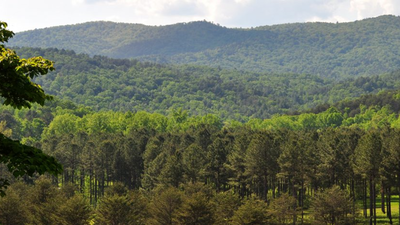
A major land purchase in Georgetown County, South Carolina, is moving ahead as local officials support plans to turn 4,148 acres in Carvers Bay into a new state forest. According to a report by the Coastal Observer, the Georgetown County Board of Education voted to send formal letters of support to the South Carolina Forestry Commission for its planned purchase of the large tract on Eaddy Road, outside Dunbar Landing in the western part of the county. The 4,148-acre parcel is part of a larger 8,000-acre forest bought for $34.2 million by two nonprofit organisations, The Conservation Fund and the Malone Family Land Preservation Foundation. The property had attracted strong interest from commercial developers before the conservation groups stepped in to protect it. Under the proposed state plan, the remaining part of the 8,000-acre property along the Black River will become part of the Wildlife Management Area program run by the South Carolina Department of Natural Resources.
Revenue sharing and public access
The school board’s support also has a direct financial connection to state forest operations. Under South Carolina law, the Forestry Commission gives 25 percent of the gross revenue from timber harvesting and state forest management to the local county. The money helps support public schools. School Board Member Eileen Johnson welcomed the proposed acquisition during the board meeting. She said development pressure in the southern part of the county is already limited by protected areas such as the Francis Marion National Forest. “We’ve got to preserve everything we can,” Johnson said, according to the Coastal Observer. “I’m all about stewardship of our land.” Johnson also said public recreational access would be an important part of the new Carvers Bay State Forest once the South Carolina Department of Administration completes the purchase.
More protection on the Waccamaw Neck
Along with supporting the Carvers Bay project, the Georgetown County School Board also backed a separate conservation purchase involving the 3,492-acre Arcadia East tract on the Waccamaw Neck. Supporting the Arcadia East purchase means the school district will give up possible future tax income from a large residential and commercial development that Georgetown County originally approved in 2002. The long-term development plan allowed for 2,451 homes, a 500-room resort hotel and large amounts of office and commercial space. A county study from 2002 estimated that fully developing Arcadia East could have produced as much as $153.8 million in total tax revenue each year. The development would have made its residents and businesses the largest taxpayers in the county. However, the estimate did not include school taxes, which historically made up about two-thirds of local property tax bills. It also did not account for inflation or changing infrastructure costs. Last year, the Arcadia East property generated about $5,200 in combined county and school district taxes.
Nonprofit support and funding
The Department of Natural Resources plans to acquire Arcadia East with help from the South Carolina Office of Resilience and two nonprofit conservation organisations, the Open Space Institute and Ducks Unlimited. The nonprofit groups will hold the property title until all required state funding approvals are completed. The Georgetown County Council has also formally supported the Arcadia East deal, joining the school board in backing the purchase. “We’re thrilled to have support from both the county and the school board,” Emily Purcell, director of conservation programs for Ducks Unlimited, told the Coastal Observer. “We’re excited to hopefully work towards a great conservation outcome in Georgetown County.” The new effort builds on other conservation work in the area. In 2007, a permanent conservation easement was placed on 3,612 acres of the Arcadia West property west of U.S. Highway 17. Ducks Unlimited also holds and manages that easement. Responding to concerns about the possible loss of tax revenue from taking thousands of acres out of future development plans, Johnson said long-term land protection is more important than short-term tax income. “We’ve got plenty of land. I’m not worried about taxes right now,” Johnson said.


