



Want to bookmark your favourite articles and stories to read or reference later? Start your Independent Membership today.
Already a member?
Log in
Air travelers who try to squeeze everything they can into a carry-on bag to make for an easier airport experience may soon be in for a rude awakening — because the Transportation Security Administration has a new toy.
The TSA is introducing state-of-the-art CT scanners that the agency says have better capabilities, thereby making it easier to process travelers as they move through pre-flight security checkpoints.
However, the agency warned that not all carry-on items may fit through the new machines, and if they do not, some travelers may have to check their carry-ons.
A TSA spokesperson told FOX 13 that the new CT scanners have a smaller opening than older scanners. The spokesperson insists that the smaller opening is necessary to make sure the machine works correctly.
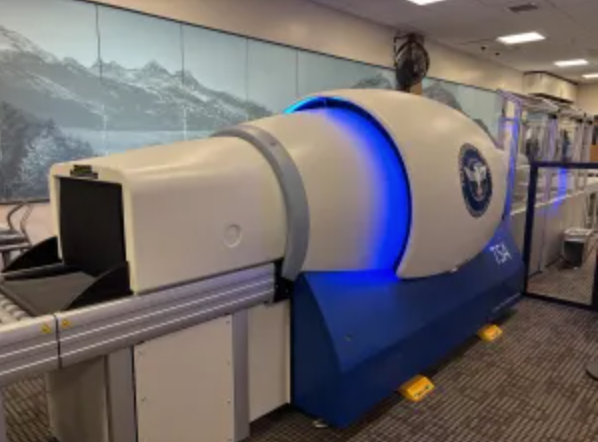
“This design is necessary to accommodate the advanced imaging technology and ensure optimal performance,” Velez explained. “TSA officers are available to assist travelers with larger items or special needs to help ensure a smooth screening process.”
Most airlines allow for carry-on bags that are measured at 22″ x 14″ x 9″, but anyone who flies knows that some passengers bring carry-on bags that far exceed that size. Bags that adhere to the airlines’ carry-on size requirements will fit the scanner, but once they exceed that size, they may have trouble entering the machine.
It’s not all bad news, however. The new scanners can check bags without the need for them to be opened, eliminating the need for travelers to unpack their laptops and other electronic devices before putting they’re scanned.
The scanners also provide a three-dimensional view of the objects inside a passenger’s checked bag, meaning it’s less likely that TSA agents will have to manually open travelers’ bags for inspections.
“A TSA officer can view the 3-D X-ray image on a monitor and manipulate the image to get a better view of the bag’s contents, ultimately reducing the number of carry-on bags that need to be opened and manually inspected,” the agency said in a post on its website.
The TSA strongly recommends that travelers adhere to airlines’ suggested bag sizes —and avoid a possible travel headache.


