


Ian Montone has spent a quarter of a century building artists’ careers on his own terms.
The founder of Los Angeles management company Monotone (and a partner with Rick Yorn’s film and TV shingle LBI Entertainment) has stayed defiantly independent in a business that keeps trying to consolidate: no company website, no social media… answerable to no one but the artists he represents.
A former music lawyer turned Grammy-nominated producer, Montone’s company houses one of the industry’s most fiercely curated rosters: Jack White, Vampire Weekend, LCD Soundsystem, The Shins, Angie McMahon, Briston Maroney, Spacey Jane, This Is Lorelei, So!YoON!, The Kills, Still Woozy, Pete Yorn, Solomonophonic, and Chanel Beads among them.
A champion of artists owning their rights, Montone helped shift the paradigm away from traditional label ownership. He got started managing a two-piece from Detroit called The White Stripes; he was later Jack White’s best man.
The last time MBW sat down with Montone, in 2019, he warned that the industry had started chasing “music for algorithms” at the expense of great artists – insisting that music was “fundamentally important to people… not disposable.”
Seven years on from that discussion, the majors are publicly listed, catalogs trade like commodities, and AI can spin up a passable sound-alike. The world around Montone has been rewired – but his principles have stayed exactly where they always were…
What’s the scariest thing about the music business in 2026?
Being honest, there’s nothing particularly scary about the music business. Most of us aren’t operating in war zones; we have what are essentially make-believe jobs. Often stressful, but a privilege. And for the artists we manage, there’s really no choice; this is their calling.
Industry-wise, it feels like we’ve been in a period where music has become too safe and conservative, a byproduct of algorithmic playlists. Artists, often unconsciously, began making music for algorithms; now algorithms are making music for algorithms, shaping an entire generation whether they realize it or not. Everything’s a bit too polished, too formulaic.
Lyrically, much of it isn’t really about anything. Call it the commoditization of culture or the industrialization of taste; the result is that everything gets safer and less interesting. There’s always been a cycle in music culture: pioneers, then artists who broaden the appeal, then copycats of copycats with one last commercial push… then imitators who kill the genre outright. That’s not new – what’s different now is the speed at which it happens.
“We’ve been in a period where music became too safe, a byproduct of algorithmic playlists.”
Part of the conservatism I see is that few artists want to take a stand, fearing cancellation, demonetization, or alienating fans. Nearly everyone plays it safe – not just in music, but in comedy, journalism, and news. There are exceptions, but there’s been a real chilling effect on art. I’m not saying all music should be protest music – of course not – it’s just noticeably harder to find.
What’s the good news?
Plenty of interesting artists are filling the void – artists who aren’t making decisions based on streams or algorithms, but by making really distinctive work and doing their own thing: Cameron Winter, Dijon, SAULT, Caroline Polachek, YHWH Nailgun, King Gizzard & the Lizard Wizard, and Saya Gray, to name a few. There’s many more and that’s really exciting – this is the space [Monotone] lives in with our artists.
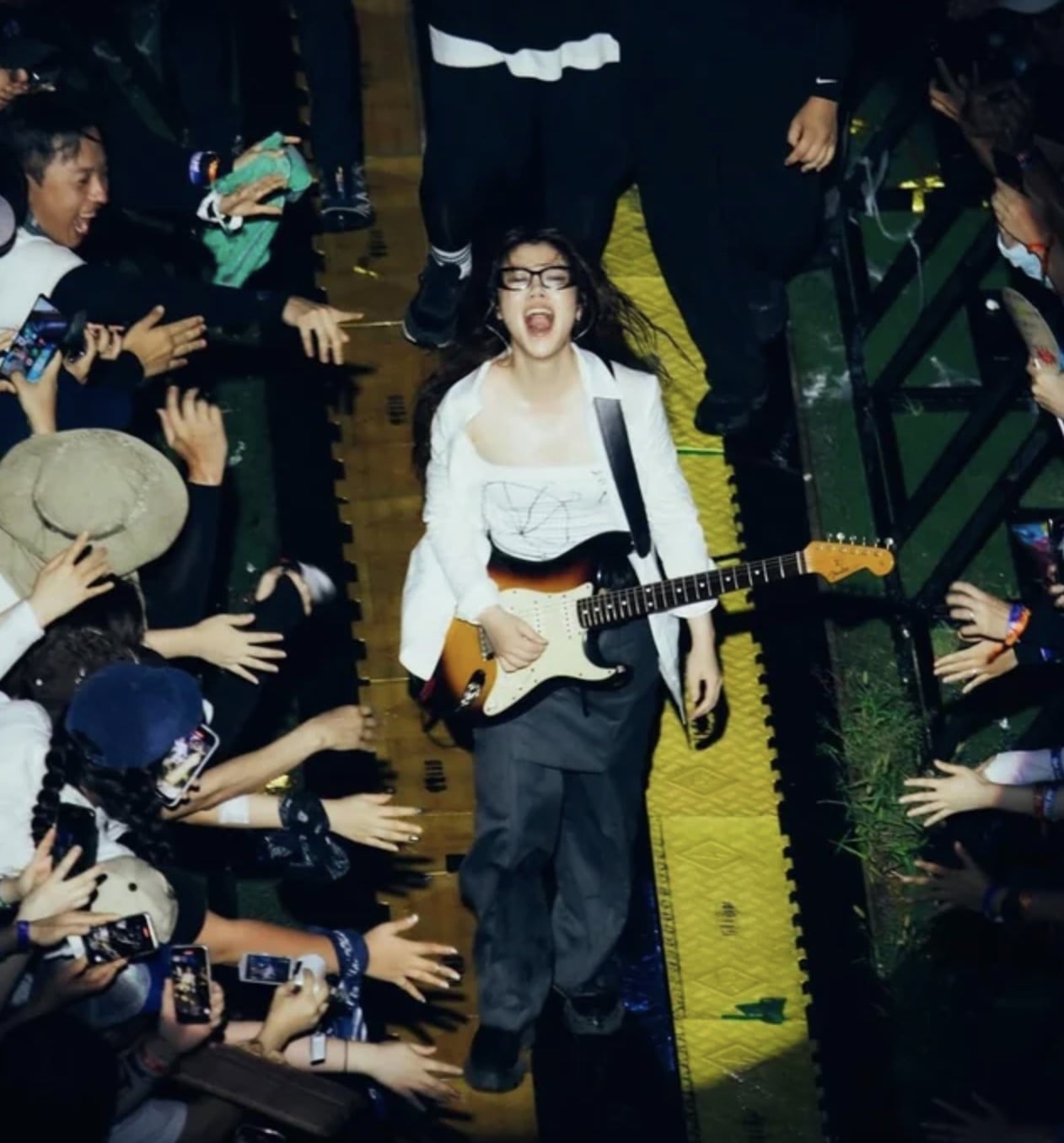
Artists also seem to be re-embracing craft and musicianship and focusing on their live shows. That’s exciting; every city has a real scene of real players. Maybe it’s part of a broader hunger for what’s authentic? Maybe it’s a human need to physically interact with a tangible instrument. Nobody wants to see anyone at a party pick up a computer and “prompt”.
I don’t think the younger generation’s rediscovery of music from the past is simply nostalgia. It’s because it’s genuinely good, and these artists can play. I see more and more new artists moving this way – honing their craft, being great live, and using that to build what people are actually yearning for: community.
Plenty of managers will tell you privately that streaming matters less to their artists’ livelihoods than it did five years ago. Where does streaming rank for your artists now?
Streaming matters less for our clients’ businesses, but we don’t ignore it; it’s still a rough gauge of who’s listening, and if you’re in a label deal where your partner only participates in royalties, you can’t afford to ignore it. No one complains when a song takes off! But I don’t really think of it as streaming versus everything else.
Our job is to build careers that sustain over decades, and the shape of that is different for every artist. Touring is something our artists, and this company, happen to be very good at, and it’s often the foundation. But we’re just as deliberate about merch, sync, vinyl and physical, and finding new ways for an artist to reach the people who actually care.
What runs through all of it is building a meaningful connection with a fanbase. Anyone willing to hire a babysitter, pay for parking, buy a ticket, and give an artist a few hours of attention – that’s a real fan. That’s a genuine time and financial commitment. Fostering that relationship is hard work, but it’s far more important than pre-saves and clicks.
“It’s not ‘labels versus managers’. It’s about building the best team around any artist.”
As an industry, we’ve confused followers with community. They’re not the same thing. Music is supposed to bring people together, and that’s gotten harder. Virgin Records started as a record store; people went there to discover music and connect.
Third Man still builds that kind of universe; so do the great independent record stores. Live music can do it too, especially once people put their phones away for a couple of hours. We’ve convinced ourselves that real community exists online; I don’t buy it. It’s the difference between texting and talking, between data transfer and communication.
Online is less about community and more about being a target group – one being sold to, and ultimately having its data sold. To feed that, distraction has been monetized. But people are catching on, and that’s a good thing.
Just as important for us is who’s paying attention to our artists – not whether they’re on SNL, but whether they’re becoming part of the cultural conversation. That’s hard to quantify. Sometimes you just feel it. And when we feel it, even before others do, we go to work making others believe it too. That’s the essence of management: we believe in what our artists believe, and we amplify it.
You built Monotone with in-house radio, DSP, touring, licensing, and production teams – a ‘label services’ infrastructure before that phrase was fashionable. Where does that leave the traditional label in 2026?
I built it this way because I more or less had to. Part of it is the artists we work with, and what I touched on earlier – making people believe. That takes people and resources.
In the early White Stripes days, I had a map of the US and Europe with pushpins, working out city-to-city distances – “van tour or bus tour?” That’s crucial stuff, but I’m not great at it; other people are, and I’m better used elsewhere. So we built an in-house touring and production team. Same with radio. I realized I needed my own ‘translator’ [for that corner of the industry], so I hired my own team, and their role now goes well beyond radio and streaming.
I never wanted to be dependent on someone with a different agenda, or for our artists to live or die by label politics. Our artists were never going to be priorities at a major, and most independents didn’t have the resources. So we built what made sense for us, because moving culture toward our artists’ vision requires it.
There’s an advantage: working across touring, marketing, licensing, DSPs, and development gives us an unusually broad view of what’s happening – not just in music, but in the world. I just see us as a comprehensive, well-resourced company.
Good labels also do a lot of what we do – but everyone knowing their lane is paramount.
The best music companies now are “everything companies.” It depends on the label and the team around a given artist, especially where there’s trust on both sides. Interscope can effectively manage some of its artists because they’re that close to them – no surprise, given the caliber and tenure of its senior staff, which is rare.
John Janick used to manage artists at a high level; we’ve actually both managed M.I.A. at different points. Rob Stringer has impeccable taste and artists value his opinion. He’s not afraid to have a hard conversation with an artist – they trust him.
All the best label and publishing people have that in common. When there’s trust all around and everyone has the artist’s best interests in mind, you’re all pushing in the same direction.
At that point, I don’t really care what someone’s title is or where the traditional lines are. I welcome the help and interaction; I’m not threatened by it. Best case, we plug into each other and play to each other’s strengths – sometimes leading, sometimes following, but working as a team. Where there’s crossover, labels generally welcome the extra resources. It’s not ‘labels versus managers’ anymore. It’s about building the best team around any artist.
Live Nation and Firebird have been rolling up management companies – Firebird with investment from Raine Group, Ares, and Goldman Sachs. You’ve stayed proudly independent. When you see a company acquiring management firms at scale, what does that tell you about where the industry’s heading?
The first thing it tells you is that good managers have real value and play a crucial role in orchestrating success. Funds can allocate capital wherever they want, so it’s no surprise they’re interested in buying management companies – if we’re doing our jobs well, we’re often at the center of an artist’s career. It also tells you that very few companies are truly independent, whether they admit it or not. Look under the hood: eventually, somebody is reporting to somebody else, and usually expected to generate a return on someone’s investment.
I don’t want to be in that position for the artists we represent. I don’t want to report to anyone but our artists – let alone explain to a banker why an artist is taking another year to make a record, or, especially, why a two-piece band with a guitarist and a drummer doesn’t need to add a bass player.
“I don’t want to explain to a banker why an artist is taking another year to make a record.”
This is a broader trend across lots of industries. Roll up businesses, create scale, and hope scale creates better service. Maybe it does, maybe it doesn’t. Personally, I’m not convinced bigger means better. [Monotone has] all the scale and culture we need – and culture takes time to build. Artists don’t hire us because we’re the biggest; we aren’t, and don’t want to be.
They hire us because they know exactly who they’re getting. Could a much bigger company have more leverage? Of course. But that also creates priorities and agendas – somebody must decide which artists get more attention and more resources, or offer a better return. An artist who’d be the biggest client at a smaller company can become just another client inside a much larger one.
None of that is necessarily wrong. It’s just not who we are.
At the other end of the spectrum, superstar artists – Bruno Mars, Beyoncé, etc. – are dispensing with the commission-based manager and bringing management in-house. What’s your view of that?
Whatever works for those artists and their teams is great. It’s just not how I’m personally programmed. I got into management because I didn’t want something that felt like ‘a job’. If I’d wanted that, I probably would have stayed a lawyer, or done something more stable.
As artists grow, we maintain our independence. As they become more successful, the circle of people willing to tell them the truth generally gets smaller. Our job is to always be at the center of that circle, even when the truth is uncomfortable. Being a salaried employee can compromise that.
I’ve always thought of myself as much more of a ‘partner’ to an artist than a ‘manager’. When our artists make money, we make money; when they don’t, we don’t – we carry risk alongside them. People think commission is simply how managers get paid, but it also aligns everyone’s incentives. I don’t think a salaried model creates that same alignment.
Both UMG and Warner are now public companies, answerable to shareholders. As someone who sits across the table from them, have you noticed a change in how they operate?
Honestly, not really. It’s probably made things a little more transparent from my perspective. Transparency can be painful in a business as unpredictable as ours – but it’s good for everybody.
One thing I like about public companies is that they tell you a lot about themselves if you’re willing to do your homework. I read the annual reports. I listen to the earnings calls. I pay attention because it’s another way to understand how a company thinks and what pressures it’s under. It’s helped me understand the people across the table, because – as we’ve discussed – someone is always reporting to someone. With public companies, it’s the shareholders!
What always makes me smile in these annual reports is that, notwithstanding all the business-speak, there’s often a line buried somewhere saying that so-and-so’s album release has shifted by a quarter, or that an artist’s album didn’t hit expectations – and it becomes apparent these things are big drivers of a company’s earnings. I find that empowering.
You can build all the systems you want and make everything more efficient, but this all runs on music. In the end, it still comes down to whether an artist creates something people want. The artists still drive everything else.
As a manager and a trained lawyer, how do you respond when a fund offers your artist a big-money catalog deal?
A lot has changed since the Bowie Bonds in the late ‘90s, though the core concept holds. The catalog has always been the bedrock of what made publishers and labels valuable; Wall Street has simply caught up. Artists shouldn’t forget that, for most of them, their catalog is what they pass on to their family.
I’ve always believed artists should own their recordings and publishing when possible, so I naturally hesitate to encourage clients to sell. But it’s a personal decision, and if it’s informed, I’ll support it. Many of our clients own 100% of what they’ve created, which puts them in a stronger position than most artists.
There are more buyers in the market than five years ago; whether there are more qualified buyers is a different question. Sell to someone who genuinely understands music and knows how to build on your catalog? That’s one thing. Sell to someone who sees it purely as a financial asset? That’s another.
“The market can tell you what something is worth; it can’t always tell you why it matters.”
The real question isn’t just who’s offering the highest multiple, but who’s going to take care of these songs ten years from now. Great songs don’t exist in a vacuum – someone must look after them, introduce them to the next generation, make thoughtful calls on licensing, film and TV. An ambivalent owner can do real damage. Copyrights, contrary to popular music-business opinion, do complain – and if they’re being mismanaged, rightfully so.
It’s good that artists now have more choices; that gives creators power. The only thing I’d be careful about is confusing financial value with cultural value. The market can tell you what something is worth; it can’t always tell you why it matters.
The AI music debate has exploded. As someone who manages artists defined by singular creative vision, how do you think about AI’s place in this business?
Honestly, I think more about AI’s impact on humanity than on the music business. As far as artists are concerned, I’m not worried about the genuinely creative, imaginative artists who are ahead of the algorithm.
They’re the ones influencing what’s next and being copied. A human, lived experience can’t be replaced – it’s what gives music its soul. But we also have the luxury of working with artists like Jack White, Vampire Weekend, LCD Soundsystem, and others who are all visionaries in their own right. But things are changing so quickly, I have no idea what we’ll encounter next.

Almost every opinion feels immediately dated. What we do need to think about is how artists’ music is valued, particularly when it’s being used to train AI platforms and labels are being compensated in return. The artists need to participate in that value too. Some argue that AI is simply the next evolution of the musical instrument.
Once upon a time, drum machines ‘weren’t drums’; sampling ‘wasn’t playing an instrument’; DJs ‘weren’t musicians’; Pro Tools was ‘cheating.’
We’ve been moving the line forever, and eventually someone does something incredible with each new tool and the arguments become irrelevant. But there’s an important difference: a guitar doesn’t have an agenda. With AI, people are creating through a handful of platforms that somebody else owns, trains, and controls. That concerns me.
It also raises important questions about how we value human contribution. Nothing comes from nowhere. Jack White plays a riff and another artist hears it years later, it sparks something in them, and they take it somewhere completely different.
That’s how culture has always worked. One thing influences another, which influences another. There’s a lineage to it. AI complicates that lineage, but it shouldn’t make it invisible.
We can’t forget that AI is learning from human ideas, human work, and human culture. If we can understand how the machine got from A to Z, and which artist’s work and ideas were meaningful building blocks, credit and compensation can flow back through the chain.
That’s a more interesting place to start than pretending AI creates out of thin air.
“AI hasn’t fallen in love, lost a parent to cancer, or stood on stage in front of 10,000 people.”
Something else I think about: Are artists expressing themselves through AI, or is AI slowly teaching artists how to express themselves? That’s really the same concern I have with algorithms generally. The danger isn’t necessarily that technology replaces human creativity. It’s that we think we’re making completely independent choices, while the technology is quietly narrowing our options.
Artists with real imagination already shape what AI can do; everything it makes, it learned from someone. The human brings experience, intention, and most importantly, taste. AI hasn’t fallen in love, lost a parent to cancer, had a song inexplicably make you cry, been bullied, or stood on a stage in front of ten thousand people. That still belongs to the artist. AI can learn patterns, but it can’t live a life.
In 2019 you predicted the majors might pull their catalogs off the DSPs and build their own platforms. That didn’t happen. With hindsight, did they miss a window, or was the incentive never really there?
What’s happened is actually much more interesting. The streaming companies have largely settled into being incredibly effective global distribution platforms. Record companies have increasingly expanded into label services.
Meanwhile, many artists have smartly adopted a direct-to-consumer model. I underestimated who would become the direct-to-consumer brand. I thought it would be the major labels; instead, it was the artists.
The real value isn’t where somebody streams a song – it’s who owns the relationship with the fan. Who’s selling the concert ticket? Who’s launching a festival, like Olivia Rodrigo’s Daisy Chain Fields? Who’s building direct relationships through something like The Vault?
The Grateful Dead probably understood this before almost anybody. They were building a community long before anyone called it ‘direct-to-consumer.’ That ties back to where we started: community. The smartest artists have always understood it. They don’t just make music – they create universes, and invite people to join them.
What about the modern business would most surprise your younger self – and what hasn’t changed at all?
This business is always changing, but the thing that hasn’t changed is the only part I’ve ever really cared about. The legendary film producer Larry Gordon said something to me years ago that’s stuck with me ever since: “It’s all about having something that other people want.”
That’s still the business. I don’t particularly care about the pipes, or the delivery mechanism. I care about making sure the art exists – and that people get the chance to fall in love with it.
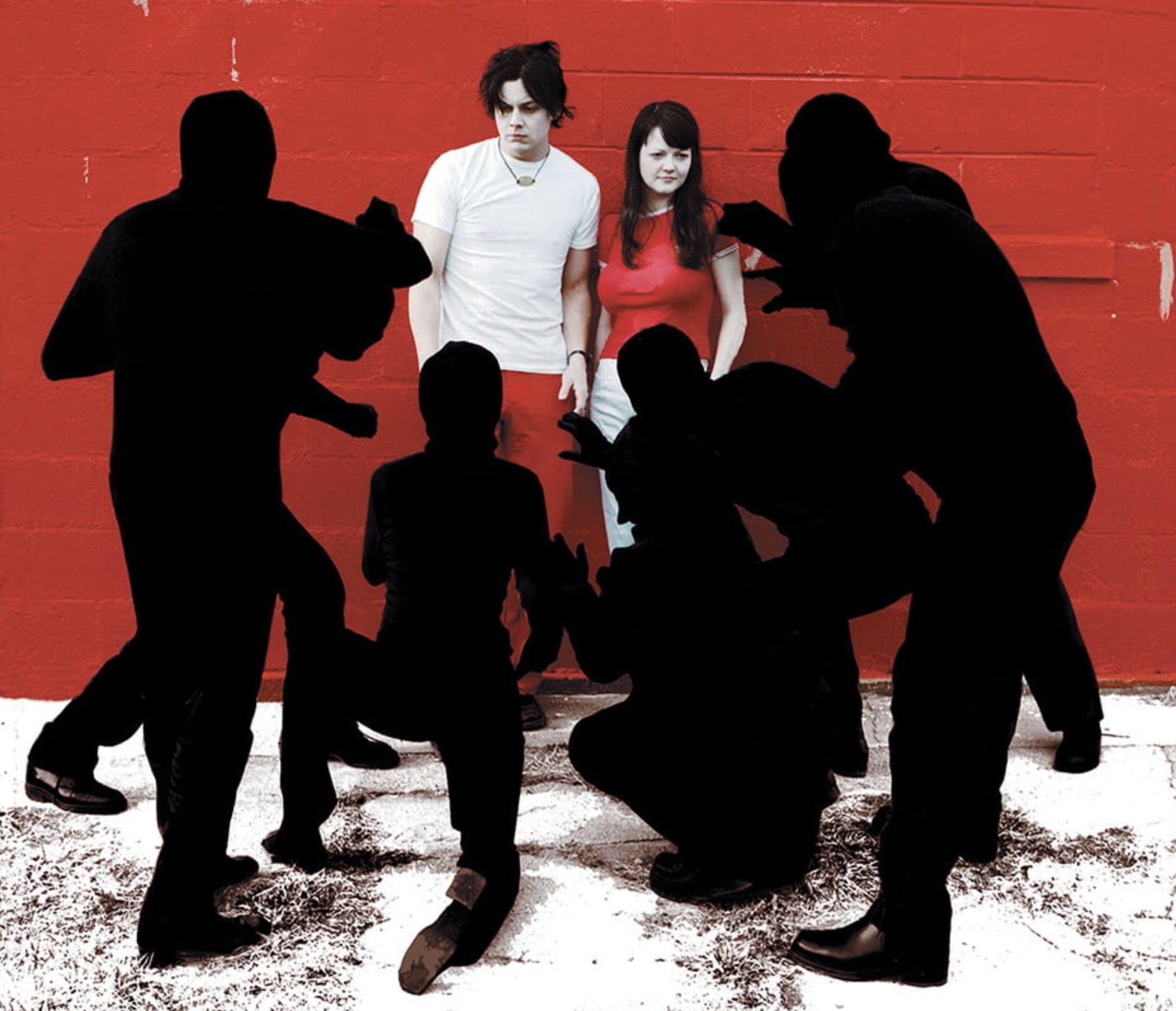
‘It’s great to see artist ownership become more commonplace’
The White Stripes broke through to mainstream recognition 25 years ago with classic third album, White Blood Cells, featuring hits like Fell In Love With A Girl.
The LP was released via Third Man Records with V2 in the United States as well as XL in UK/Europe, but, unusually for a label-priority record at the time, the underlying masters remained within the band’s ownership – a pattern that the duo would repeat for later records Elephant, Get Behind Me Satan, and Icky Thump.
Ian Montone played a pioneering role in securing the band ownership of their copyrights, years before such deals became standard practice – something that’s since become the norm for many of Monotone’s artists.
Says Montone: “As a manager I try to create freedom – be that creative or financial – and optionality for my clients. And when an artist is in control of their recordings it gives them both.
“As a young music lawyer, I worked at a firm [Davis, Shapiro, Lewit, Montone & Hayes] that represented talent as well as a handful of labels. I always wondered why artists didn’t own their recordings. It was something no one ever asked for, as if it were simply set in stone. As a manager, with Jack and Meg, we made a decision to make ownership part of any broader deal. And to their credit, they had the courage to stand by it, turning down lots of money in the process. We already had control of the first two albums, so it made logical sense. XL and V2 weren’t afraid to think outside the box.”
Adds Montone: “As someone who’s always been a champion of artists’ rights, it’s great to see ownership become more commonplace. And if that’s played a role in labels building more service-focused businesses within their larger ecosystems, in turn giving artists more options, then that’s also a great evolution.
“That’s not to say this is how it should work across the board. Labels often take significant financial risk, and generally lose money on more records than they make money on. There are lots of ways to structure these relationships. Whatever the structure, it needs to make sense and be fair to both sides.”
All MBW+ subscribers get digital access to our Music Business Worldwide magazine, with six issues released each year. Music Business Worldwide


