


The United States is willing to extend the bilateral trade truce set to expire on Nov. 10 or explore a wider trade deal put forward by Beijing.
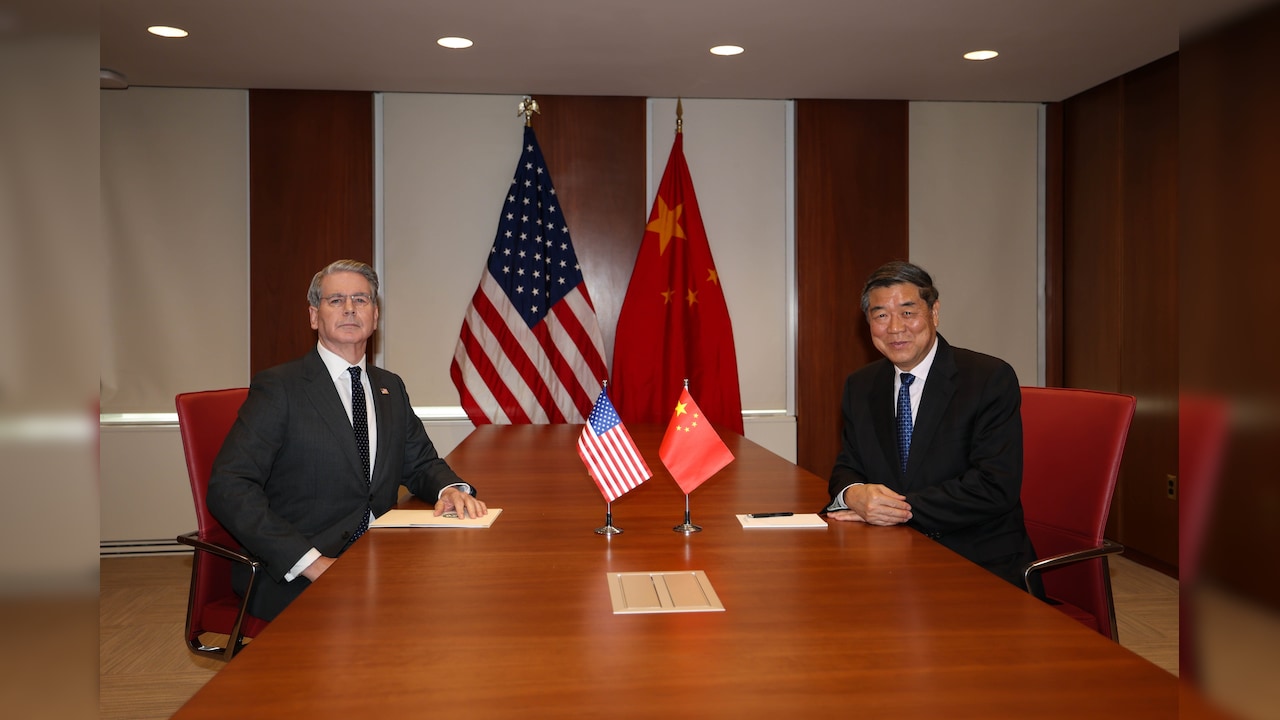
US Treasury Secretary Scott Bessent made this announcement on Wednesday, after a pivotal meeting in Washington with Chinese Vice Premier He Lifeng.
Bessent provided no specifics regarding a possibly larger US-China trade agreement after his second meeting with He within four days. US President Donald Trump and Chinese President Xi Jinping are anticipated to delve deeper into the issues during their meeting at the White House on Thursday.
Also Read | Layoffs Are Rising In Tech, But These Skills Are Helping People Unlock Better Pay
ALSO READ: US-China AI Deal To Open Communication ‘Hotline’; Trump To Take Final Call: Report
“The Chinese on Sunday came up with the idea of a bigger deal, and given that this could be a historic year where the leaders meet up to four times — this being the second meeting, in Shenzhen and then in Miami — we’re open to the idea of just continuing the Busan arrangement or examining the bigger deal,” Reuters quoted Bessent as telling reporters. “We’re fine with both, and we’re going to do what’s best for the American people.”
Today in Washington, Vice Premier He Lifeng and I held substantive discussions on the U.S.-China economic relationship ahead of President Trump’s meeting with President Xi. Our discussions continued to focus on securing meaningful commitments that protect American workers,… pic.twitter.com/YgBBr2LT4W
— Treasury Secretary Scott Bessent (@SecScottBessent) September 23, 2026
Bessent previously characterised the meeting at World Bank headquarters in Washington as addressing some “unfinished business” prior to the Trump-Xi summit, stating that the Trump administration sought strategic stability grounded in “reciprocity and fairness.”
But his remarks following the meeting were the most definitive indication to date that extending the trade truce agreed last year in Busan, South Korea, was likely to be a topic at the Trump-Xi summit.
Bessent, along with US Trade Representative Jamieson Greer, met in New York on Sunday to lay the groundwork for possible trade and artificial intelligence agreements that the two leaders might review.
Bessent has described those talks as “successful,” stating that both sides had agreed to establish a communications “hotline” to alert each other about AI safety incidents.
China’s reaction to the AI hotline proposal remained ambiguous, as state-run news agency Xinhua confirmed only that the two parties discussed artificial intelligence.
US-China analysts note that expectations for AI collaboration remain low, stemming from a lack of mutual trust in the technology and the absence of serious willingness from either side to curb its advancement.
In fact, Trump has stated the contrary, asserting he would “not stifle” AI growth and would preserve the US lead over China in what he now refers to as “super intelligence.”
ALSO READ: US Energy Secy Rejects Diesel Export Ban Despite $6.5/Gallon Price Shock: ‘Definitely Doesn’t Work’
The Bessent-Greer-He meeting on Sunday failed to resolve the future of a trade truce between Washington and Beijing that has lasted nearly a year and ends on November 10.
The truce significantly reduced bilateral tariff rates, which had rapidly climbed into the triple digits following mutual retaliatory measures in response to Trump’s tariff increases last year. China also agreed to resume the flow of rare earth magnets and other vital minerals that it had previously restricted severely.
Essential Business Intelligence,
Sharp Market Insights,
Practical Personal Finance Advice, Daily Fuel, Gold and Silver Prices and Latest Stories — On NDTV Profit.


