


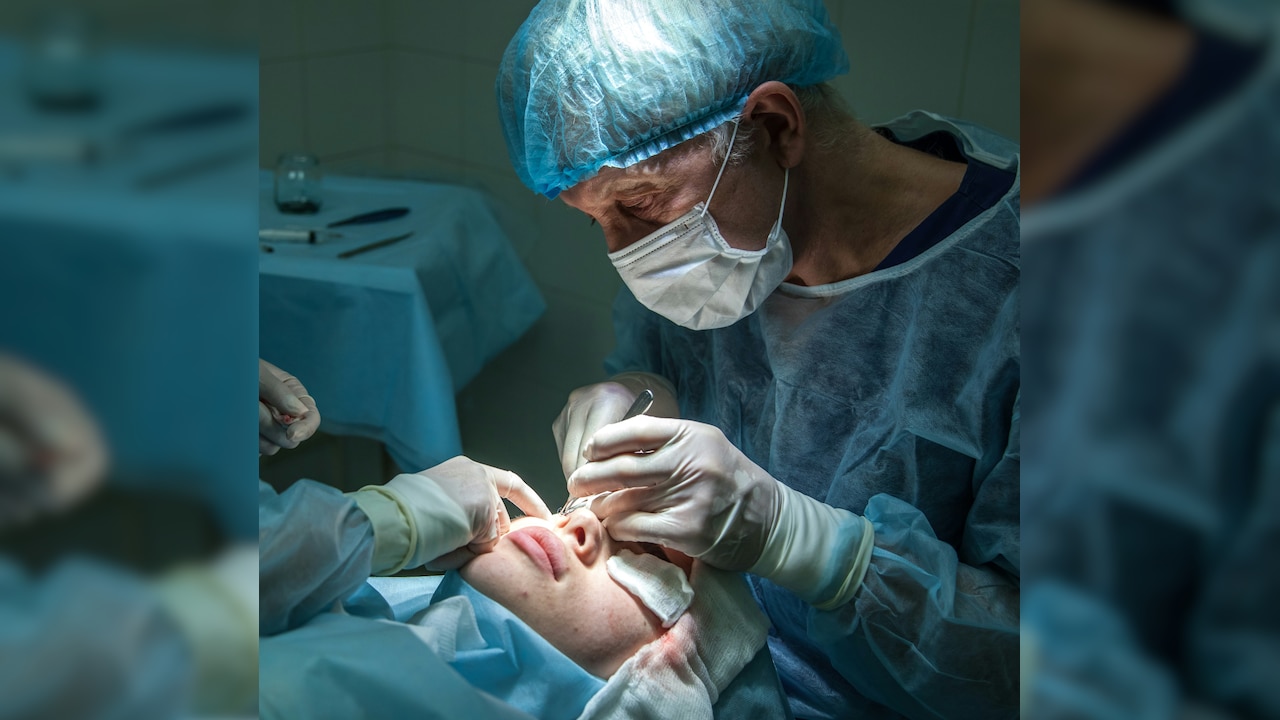
A growing number of women are seeking medical help after experiencing serious complications following low-cost eyelid surgery abroad, including infections, excessive scarring and an inability to fully close their eyes. The procedure, known as blepharoplasty or simply a ‘bleph’, involves removing or reshaping excess skin around the eyelids. It has become increasingly popular as social media promotes cosmetic procedures that promise a more defined or youthful appearance.
But specialist eye surgeons are warning that cheaper treatment overseas can come with significant risks, particularly when patients return home and need follow-up care.
One of those patients is Nikita Morgan, a 31-year-old woman from Dublin, who decided to undergo an upper-eyelid procedure after seeing videos about blepharoplasty on TikTok. She had been quoted more than 4000 euros (Rs 4.3 lakh) for the surgery in Ireland but found a Dutch company, Faceland, for 750 euros (around Rs 82,000), BBC reported.
Nikita travelled to a Faceland clinic in Düsseldorf, Germany, in November 2025. She said she expected the procedure to be relatively straightforward, similar to other cosmetic treatments she had seen discussed online. However, she said she experienced intense pain despite being given a local anaesthetic when the surgeon began cutting and stitching the delicate skin around her eyes.
“I went into shell shock; it was horrible. When she was stitching me, I could feel the needle going through my skin,” she said, describing the experience.
Hours later, Nikita boarded a flight home. She said she struggled to see properly and noticed bleeding around her stitches. Medical experts advise against flying immediately after this type of surgery, and Faceland also says same-day flying is not recommended.
“I was struggling to see. If I looked up, my stitches would bleed, so it was like I was crying blood,” she said.
Nikita is among several patients who have described complications after undergoing affordable blepharoplasty overseas. Some patients told the BBC they later needed treatment in the UK because their wounds did not heal properly or they continued to experience pain.
“If I’d had the money or if I hadn’t listened to the spin on TikTok, I probably would have gone somewhere closer to home and not rushed into it,” she said.
One woman reportedly had to tape her eyes shut while sleeping after too much skin was removed, while another feared that complications were affecting her eyesight. UK oculoplastic surgeons have also treated patients who could not properly close their eyes after surgery abroad.
“When I closed my eyes for too long, the tension would cause my wounds to open up again. I was scared to go to sleep and was in constant agony,” Laura said.
A survey of 63 members of the British Oculoplastic Surgery Society (BOPSS) found that difficulty closing the eyes was the most commonly reported complication among patients who had undergone overseas eyelid surgery. Other problems included scarring, uneven eyes and wounds reopening.
Surgeons explain that eyelids need enough skin to fully cover and protect the eye. Removing too much can prevent the eyelids from closing properly, potentially leaving the eyes exposed and vulnerable to damage.
The demand for blepharoplasty has risen sharply online. BBC analysis found that videos about the procedure posted by UK social media accounts on four major platforms received almost 150 million views over the past three years – five times the number recorded during the previous three-year period.


