


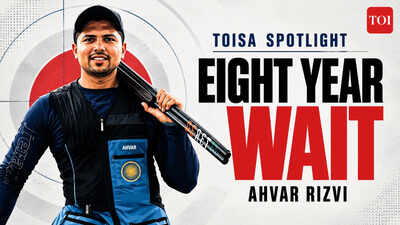
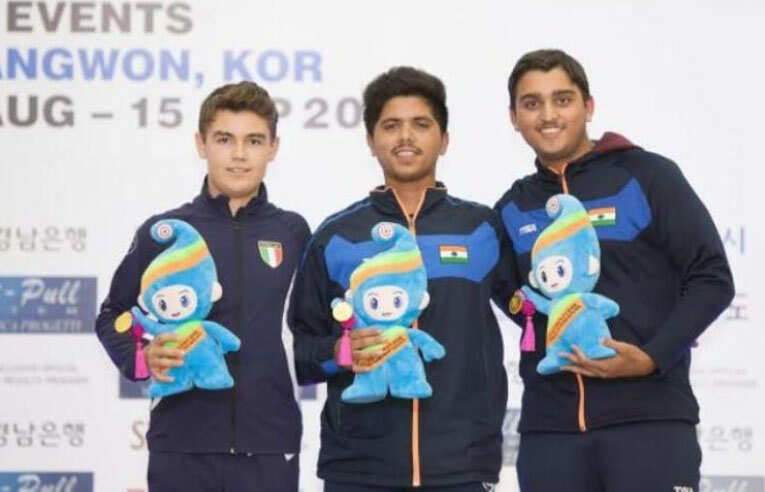
In 2018, Ahvar Rizvi missed India’s Asian Games selection by one point. He was competing in Double Trap then, an event in which he had established himself as one of India’s promising young shooters. At the World Championships in Changwon that year, Rizvi won the junior Double Trap title. The Asian Games place, though, went elsewhere.“I missed the Asian Games by one point,” Rizvi told TOI Sports. “I was very sad because there is a competition once every four years, and it is a big competition. You miss that, so then I didn’t understand what to do.”There was another problem. Double Trap was subsequently removed from the international programme, leaving Rizvi to move to Trap in 2019.“I struggled a lot when Double Trap was closed,” he said. “I had been in the team continuously for six or seven years, and then suddenly I was out of the team.”Asian Games Full Coverage | Medal Tally | ScheduleSeven years later, Rizvi is back in an Indian team for the Asian Games. This time, in Trap. The 26-year-old from Mahalgaon, Meerut, is preparing for his first appearance at the continental Games after making India’s 2026 men’s Trap squad alongside Kynan Chenai and Shapath Bharadwaj – the bronze medallist at the Juniors, in which Rizvi had claimed gold in 2018.“It took me seven or eight years to get here,” Rizvi said. “So this is my first international trap event and my first Asian Games. So I am feeling very proud. I am going to play for India. I will keep India’s flag high there.”
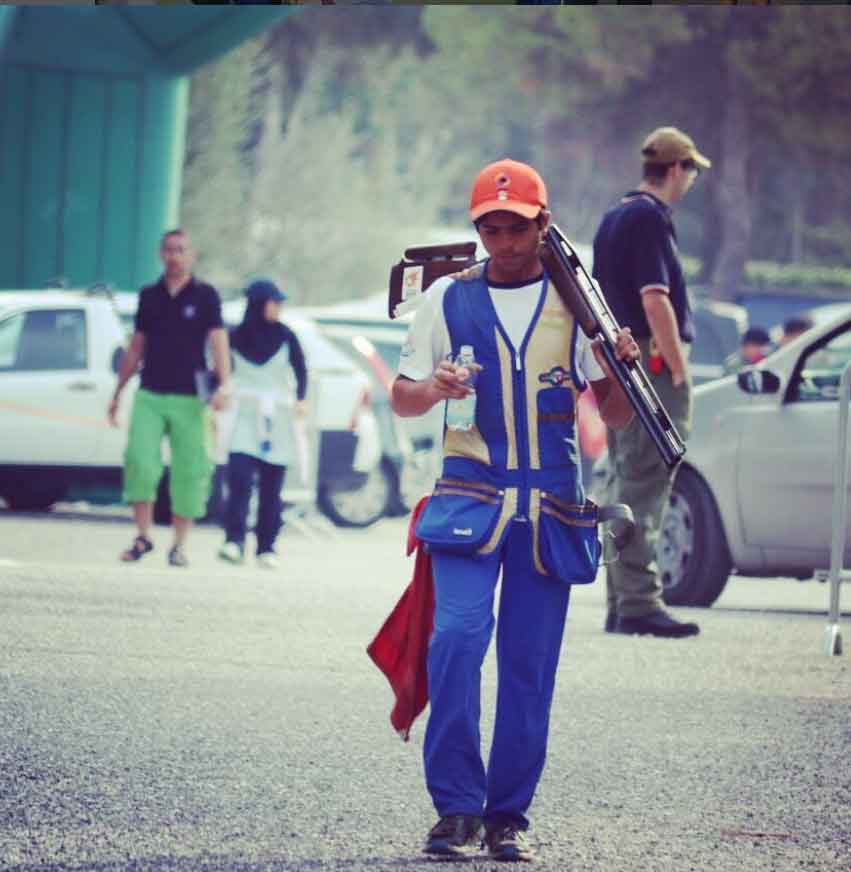
From a Double Trap gun to a borrowed Trap gun
Rizvi had started shooting because shooting was already part of the family. His father, uncles and cousins shot. As a child, he used air guns before asking his father if he could take up shotgun shooting. His father initially felt he was too young for the recoil of a 12-bore.“There was a lot of recoil in the 12-bore. I was small and very thin at that time, so my father told me not to do it yet,” Rizvi said.He went to his uncle instead. “When I came here, I qualified at the state level. When I reached home, all the family members were standing there with flowers for me. They welcomed me.”He then qualified for the pre-nationals and nationals. He still did not have his own gun. His cousin Raiyan Rizvi let him use his. “I didn’t have a gun, so my cousin Raiyan, whom I just told you about, used to let me use his,” he said.Rizvi was too young to have a licence. The gun was also physically large for him. “When I was competing in the nationals, the gun was bigger than me,” he said. “My cousin used to stand behind me. When the recoil came, he would push me back. So he used to stand behind me to support me.”
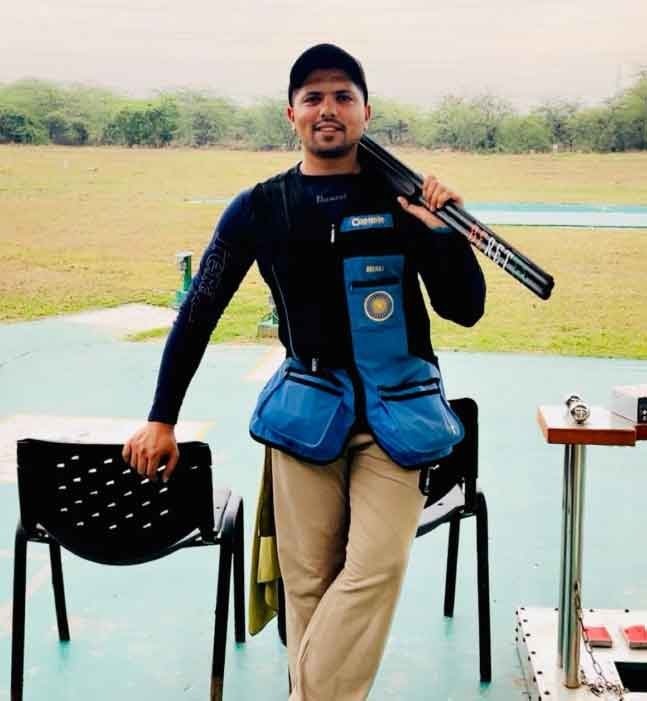
That was the beginning. The Indian team came next, followed by the junior world title in Double Trap in 2018. Then the event disappeared and Rizvi had to learn Trap.“I kept doing it, but my coach, Vikram [Singh Chopra] sir , who was always with me and supported me, never told me that I had shifted from double trap and that I couldn’t do it,” he said. “He always told me that I would be able to do it.”It took years before Rizvi felt he understood the new event. “After two or three years, I started to understand what trap was.”The scores still did not immediately follow. He missed selection by a few points in 2024 and again in 2025. There was also a point when he stopped shooting.“There was a point in between when I quit because it was not happening,” Rizvi said. “But when I represented India, I thought I would do it in the future.”
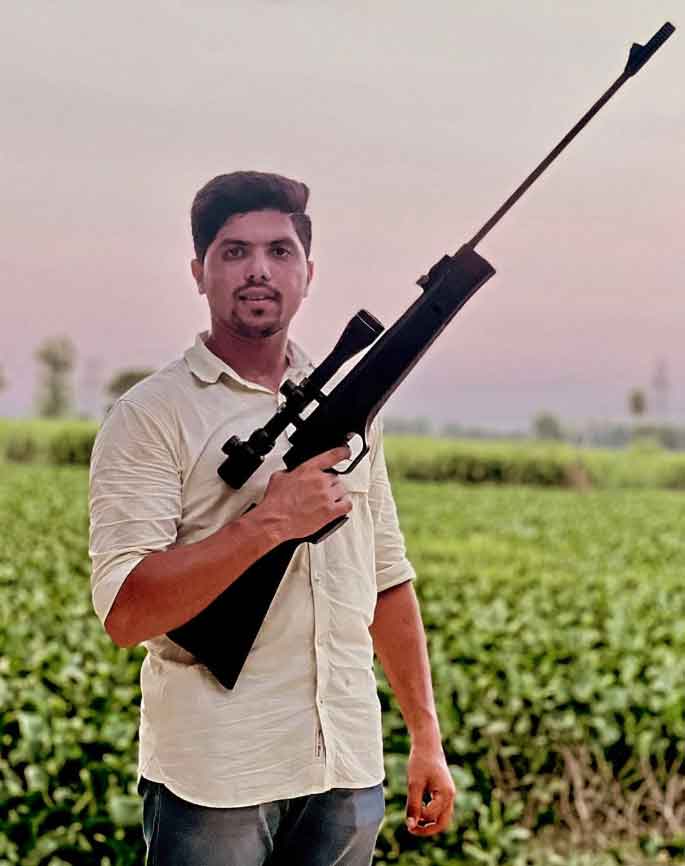
The borrowed gun that took him to the Asian Games
The equipment was another part of the rebuild. Rizvi’s old Double Trap gun could not simply be carried over to Trap. He eventually got a Trap gun from teammate Lakshya Sheoran, the Asian Games silver medallist, and used it in nationals and trials for a year.“Although I have a trap gun, this gun is not mine. This is my friend Lakshya’s gun. He is an Asian Games silver medallist,” Rizvi said.“So he has given me this gun. I have been competing in nationals and trials with his gun for a year.” Rizvi now has his own stock, made in Italy and adjusted for competition.“The stock is mine, and I have adjusted it for competition,” he said. “I am seeing a lot of improvement since I changed my stock.” The equipment was still being fine-tuned when he was preparing for the Asian Games.“Vikram Sir, when we were in Italy for the World Cup, and I got my stock set up,” Rizvi said. “I was a little worried about my equipment, but now I just have to focus 100 per cent on what I have to do.”
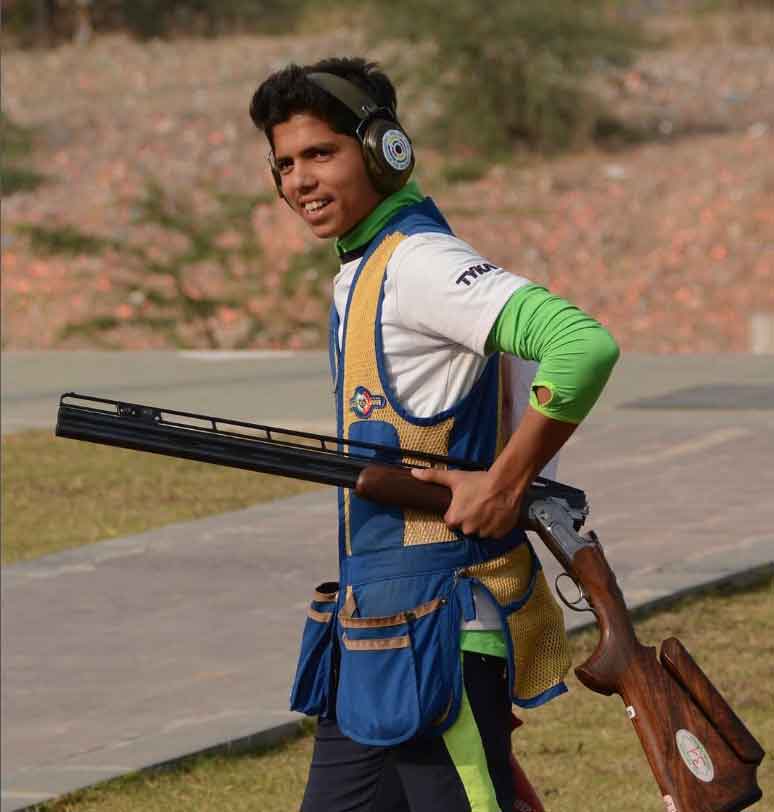
His 2026 international results show the work is still in progress. He finished 39th in Trap qualification at the Almaty World Cup with 115 and 47th at Lonato with 118. At Almaty, Rizvi and Pragati Dubey finished 23rd in the mixed team event with 130. The selection trials, though, gave him the opening he had been waiting for.And this time, there was no one-point calculation to make.“I never thought that if I had got that one point at that time, it would have been different,” Rizvi said of 2018. “It was just that I didn’t get it then, so I was a little sad. Then I put it behind me and started again.”
Away from the range, he is in the fields
His life away from shooting is rather different from what the range might suggest. Rizvi’s family has been involved in shooting for years, but farming remains part of his everyday life.“Ahvar Rizvi is a normal person. He is a son of a farmer, and if there is no shooting, he is in the fields with his father and elder brother,” he said.The Asian Games, though, have been the thing he has been waiting for.“We are in this game, and everyone’s expectation when we go to an event is to bring gold,” he said. “Gold will not come just because we are in the team. We have to work hard.”There will be nervousness. Rizvi expects that. “There is excitement and nervousness when we play a match. But the main thing is to control it.”His way of controlling it is to talk to his coach. “When I talk to my coach whenever I get nervous, I get a lot of relief and I stay focused.”
His first Asian Games comes after the competition he missed in 2018, the event he lost in Double Trap, the years spent trying to make sense of Trap and a selection process that finally went his way. He does not spend much time looking back.“I went back and never looked back,” he said. “Now it is 2028, and the Olympics are coming. Now I have my eyes on it.”For Nagoya, though, his instructions are simpler.“We get thoughts before shooting. We think when we are competing. Those thoughts come, but stopping them is very important.”“If the target is going to be left, let it come. But we have to break. We have to hit the target.”“Never give up. So this is my thought.”


