


A recent speech by Foreign Minister S Jaishankar at the Asia Society saw him in his element: scholar, diplomat and academic, with only a very light overlay of the politician. The conversation dealt with multiple issues, each important, including some blunt statements on relations with the US. While he talked of ‘bumps’ in trade negotiations and difficulties of dealing with the Trump administration et al, where he chose to come down heavily was to do with the US ignoring the ‘primary concerns’ of India on terrorism from Pakistan. That is undoubtedly worrisome, but there is another reality. Official Washington has a different take from ‘political’ Washington. It is important and useful to see how this is working out, and how much space this has in the face of Trump’s publicly declared appreciation for a lacklustre Pakistani general.
Those Annoying Politicians
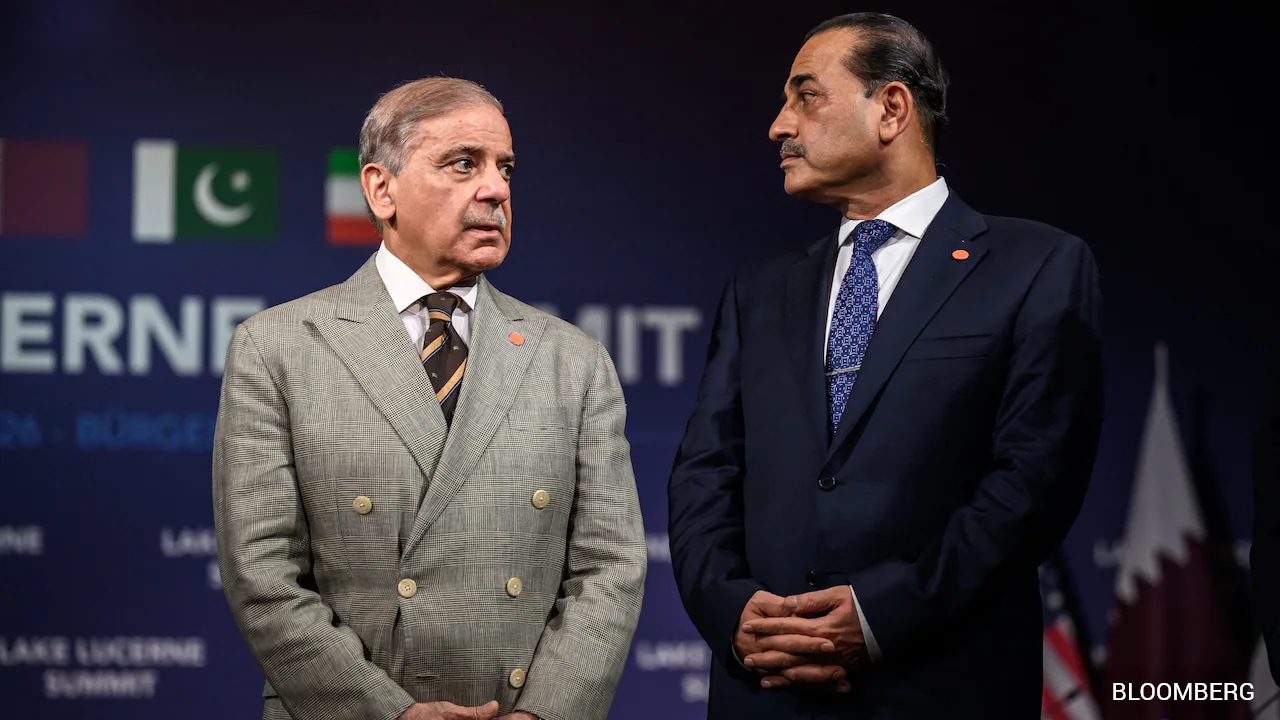
There is no doubt at all that in recent days, Washington has been extremely bothersome. Following the statement by US ambassador Sergio Gor that Kashmir was an ‘important part’ of India, which sent the Pakistan foreign office into a panic, it has now been reportedly confirmed that the US position remained unchanged, regarding it still as disputed territory. Unsurprisingly, therefore, Prime Minister Shabaz Sharif in his UN Address continued to invite mediation from the US with his fulsome praise of the President for ‘saving’ billions of people from certain nuclear war during Operation Sindoor. Clearly, any change here requires a political decision, and that is not yet forthcoming.
Advertisement – Scroll to continue
The Bureaucrats Do Their Job
Meanwhile, a Congressional Report of March 2026 continues to list terror groups operating from Pakistan, dividing them into five broad but not exclusive types: globally oriented, Afghanistan-oriented, India and Kashmir-oriented, domestically oriented, and sectarian (anti-Shia).
Notably, it observed that 12 of the 15 groups listed were designated as Foreign Terrorist Organizations (FTOs) under the US. It also noted with concern the spike in terrorism inside the country, the highest in 11 years. All that matters. It remains highly unlikely that any US company will invest in that turbulent country. ‘Interest’ in rare earths remains just that. Not a dollar is forthcoming. The International Monetary Fund (IMF) is not cutting it any slack either. It recently expressed its unhappiness at Pakistan’s apparent inability to take actions required for further disbursal of funds, particularly on laws relating to state-owned entities, long a cash cow for the government. Meanwhile, a rather deft move by the Finance ministry to ask the United States for a USD 10 billion exchange stabilisation facility has yet to see the light of day. A USD 10 billion commitment would constitute some 36% of the fund’s liquid assets of approximately USD 27.8 billion in February 2026. True, it could be given in tranches, but that would require financial bureaucracy to assess Pakistan’s financial credentials, which are palpably dire. It could be done through a written Presidential commitment according to US law, since the fund functions entirely under the Treasury Secretary with Congress assuming only an oversight role. Any such affirmative action would thus show a definite political slant to Islamabad. Remember, a ‘transactional’ President would want his pound of flesh. No freebies from the White House, not even a lunch to a richly decorated field Marshal.
Advertisement – Scroll to continue
Waiving of US Sanctions
Then there’s the continued placing of Pakistan as a ‘Country of Particular Concern’ on Religious Freedoms on the recommendation of the bipartisan US Committee on International Religious Freedoms (USCIRF), a designation from 2018. That has considerable diplomatic and political effect, with potential for sanctions. However, there is no evidence that any additional sanctions resulted from this designation in the past. In an important political signal, the US State Department redesignated Pakistan as a CPC but announced a national-interest waiver of the sanctions accompanying the designation in an apparent continuation of its policy since 2021. It is only fair, however, to note that while the USCIRF did call for the designation of India as a ‘Country of Concern’ in 2020 for the first time in 16 years, this was not accepted by the State Department. That’s bureaucracy putting its foot down.
Sanctions And How to Get Around Them
Even as Pakistan continues its mediation efforts, news unreported in its media noted that yet another Pakistani businessmen came under sanctions, in another listing released recently. That is mystifying. After all, the Pakistani government had announced publicly months ago that it was opening up six routes through Iran for transit trade, operationalising an agreement that was signed in 2018, and which Iran had refused to go ahead with given its Chahbahar agreement with India. The US Executive Order of February only bars purchase of Iranian goods and services, not supplying them. So, the route uses the loophole to trade through Iran and to Iran.
Notably, while Pakistan’s official order is for ‘ third country transit trade’ – which specifically excludes India – the bulk of this comes from China. As Jaishankar warned in his speech, the G2 issue – a coming together of the two superpowers China and US – is very real, though it is both competitive and cooperative in nature. Presumably, there is an ‘understanding’ that neither China or Pakistan will provide weapons aid. That is naïve, given clear evidence of the use of Chinese satellites for targeting by Iran.
The Trade Routes
Meanwhile, as of July, some 14,000 MT tons of cargo has moved across the existing Gabd-Rimdan corridor, which is technically a seamless, scanned route to Central Asia. Why Chinese cargo should go to its immediate neighbours via Pakistan is a mystery that needs explanation. Here’s another bit of information: the Pakistani order to open up routes was issued a day after the ‘conditional waiver’ for India to use Chahbahar expired. Whether coincidental or not, it hardly was a great signal to Delhi. Meanwhile, President Trump declared that he “knew all about’ the new trade routes.
Yet another threat, “Operation Economic Outcast” of August, while warning of “tremendous consequences” to countries that trade with Iran, is again restricted and includes only digital assets, shipping, aviation, gold and technology. The order also lists a range of Chinese companies that have provided just such assistance to Iran. For Pakistan, the problem is that any infringement will affect its banking system immediately, since the trade is done via encashable bank guarantees, leading to this being cut off from US correspondent banking services. What constitutes a sanctions violation is also open to interpretation by US authorities and may change at any time. It is all very risky. As of now, it appears that the other routes are yet to take off.
US legislation still applies
Meanwhile, in all matters, US legislation and practices continue to operate. Thus, the Foreign Account Tax Compliance Act (FATCA) and bilateral tax information exchange agreements weighed in when the Department of State demanded that Pakistan take measures to ensure that its executive budget proposal are made ‘publicly available’ within a reasonable period; disclose detailed information on government debt obligations, which is primarily to China and which Pakistan now doesn’t even include in its State Bank Reports; reveal similar information for State Owned Enterprises (as the IMF also demanded); and, most importantly, called for “Subjecting the military and intelligence agencies’ budgets to parliamentary or civilian public oversight”.
It is not that Parliament is going to exercise its due rights over this budgeting process – they would simply fall in line – but that it would be available in the open domain. Remember that the defence budget pegged at some PKR 3 trillion raised it 18% even as the rest of the budget was squeezed. That doesn’t include military pensions or income from other sources like the Fauji Foundation, listed as the top business house in Pakistan by a Pakistani think tank with a net worth of USD 5.9 billion. Nine other military-linked companies are each worth over USD 1 billion. Note also that it partners with China in a range of activities, including in fertilizer production recently. Its Askari Bank has a dedicated China desk heavily capitalised by Chinese corporate deposits and serves as a major financial facilitator for Chinese companies executing Belt and Road Initiative (BRI) projects across Pakistan. No wonder then that the US wants to know more.
Going The Legal Route
For India, the challenge is proving without doubt that the involvement of the Pakistan army is not just in relation to terrorism but also in related offences that are made punishable under US law. Two statutes sit at the heart of the Justice Department’s terrorist prosecution efforts. These – 18 U.S.C. and 2339A &B – are the most used for designation of terrorist with a common definition of the term “material support”, which has steadily expanded to include crime, training and “Expert advice and assistance”. Given Pakistan army’s evident presence in terrorist camps and in facilitation, these laws need to be studied in their entirety so that US Federal agencies are given workable material to sanction or otherwise act against the Pakistan army and its vast enterprises.
True, the President is entitled to give a waiver, but the idea is to make this more and more difficult to justify, especially since the US bureaucracy continues to recognise the presence of these groups there.
Meanwhile, nothing stops India from trading through Chabahar and using that route to reach Central Asia. Not a thing. Time to revive this route and maybe even import energy products from such heavily resourced countries like Kazakhstan and Uzbekistan. As Pakistan has shown, all things are possible for the desperate. Heed Jaishankar’s warning on the coming crisis in energy and food. Use your assets, all of them.
(Tara Kartha is a former Director, National Security Council Secretariat)
Disclaimer: These are the personal opinions of the author


