


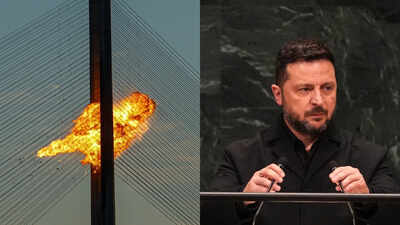
Ukraine has vowed to step up attacks on Russian oil refineries in response to what president Volodymyr Zelenskyy described as a new Russian strategy of targeting infrastructure across Ukrainian cities, including energy, transport and logistics networks.Zelenskyy told Reuters that Ukrainian intelligence had obtained documents indicating that Russian president Vladimir Putin had approved a broader range of targets ahead of the winter campaign, including infrastructure, roads, schools and hospitals. He said the aim was to disrupt daily life and pressure people to leave Kyiv and other cities.“We have to respond in any way we can. With their attacks on our energy, we have to respond on their energy. First of all, oil refiners etc: what gives money to them for this war,” Zelenskyy said.He said Ukraine would respond against Russian energy infrastructure but would not deliberately target civilian facilities.
From energy grids to bridges
The shift comes as Russian attacks on Kyiv have increasingly focused on infrastructure that keeps the capital functioning.Over the past week, Russian drones and missiles have struck energy and telecommunications assets as well as road and rail infrastructure. Russia has also targeted bridges over the Dnipro River connecting eastern and western Kyiv, marking a new pressure point on the city’s transport network.The attacks point to a broader form of infrastructure-based warfare in which the objective is not only to destroy military positions, but to disrupt the systems that allow a city to function: electricity, communications, transport, logistics and supply routes.Moscow says its strikes are retaliatory responses to Ukrainian attacks on Russian territory. Both sides deny deliberately targeting civilians.Zelenskyy, however, said Ukrainian intelligence documents showed the Russian objective was to make life in Ukrainian cities increasingly difficult.“They allow them to attack infrastructure, logistics, and especially to attack in the cities, in the villages, everywhere, roads, schools, hospitals,” he told Reuters. “To pressure people to leave the capital, leave different cities: this is the goal of the operation.”
Ukraine’s answer: hit what funds Russia’s war
Zelenskyy said Ukraine’s response would focus on Russian energy infrastructure, particularly oil refineries that generate revenue for Moscow’s war effort.The strategy also reflects Kyiv’s broader campaign against Russia’s energy sector. Ukraine has repeatedly targeted Russian oil facilities in an effort to disrupt fuel production and export revenues, although US president Donald Trump has urged Zelenskyy to stop striking Russian oil installations, arguing that the attacks were contributing to higher global diesel prices.Zelenskyy said he had seen no indication that Moscow was ready to resume meaningful negotiations or agree to a ceasefire covering energy infrastructure.The infrastructure fight comes as Ukraine prepares for another winter in which Russian attacks are expected to focus heavily on electricity and water systems.Ukrainian officials say Russia has stockpiled hundreds of ballistic missiles ahead of a new campaign. Last winter, Russian strikes repeatedly damaged energy infrastructure, leaving parts of the country without electricity and heating for extended periods.Russia has also expanded its use of faster jet-powered Shahed drones, which Ukrainian air defences have struggled to intercept. Zelenskyy said Ukraine was relying heavily on F-16 and MiG fighter aircraft to destroy them, but ammunition supplies for the aircraft were running low.Kyiv is therefore working on cheaper alternatives, including electronic jamming and new interceptor drones. Zelenskyy said two models had been tested but were achieving a success rate of only around 30% so far.The infrastructure campaign is unfolding alongside fighting over territory in eastern Ukraine. Zelenskyy said Ukrainian forces had recaptured around 140 sq km of Donbas in a counteroffensive code-named “Vivaldi”, while Russia continues to demand control of the entire Donbas as a condition for any peace agreement.


