


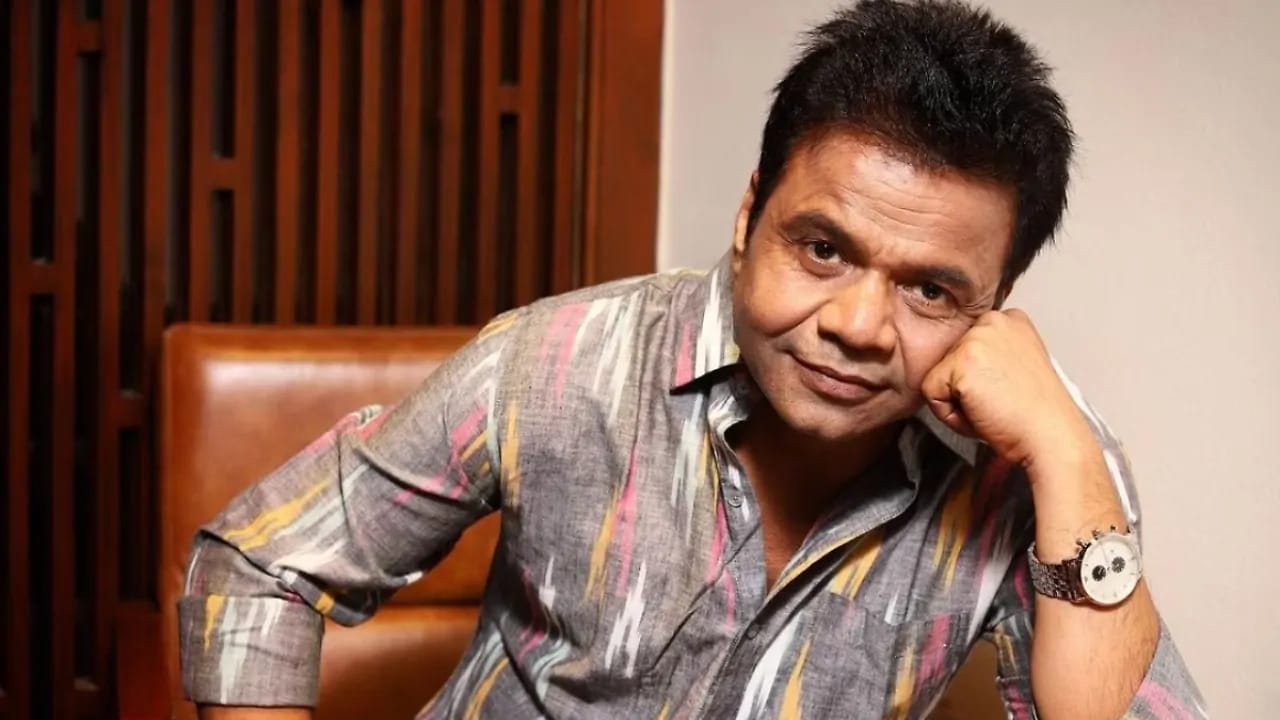
The Supreme Court on Monday pulled up actor Rajpal Yadav for failing to comply with its direction to deposit money in connection with a long-running cheque bounce case involving private firm M/s Murli Projects Pvt Ltd.
A Bench comprising Chief Justice of India Surya Kant, Justice Joymalya Bagchi and Justice V. Mohan is hearing the matter. The case pertains to seven cheque bounce cases linked to Murli Projects Private Limited.
The Delhi High Court had convicted Rajpal Yadav and sentenced him to three months’ imprisonment in each case.
What Was Discussed Between The Supreme Court And Rajpal Yadav
Chief Justice of India Surya Kant questioned Rajpal Yadav about how many projects he was working on these days.
Rajpal Yadav said, “I have done 250 films over the last 16 years. I invested Rs 5 crore in this film and ended up losing Rs 250 crore.”
CJI Surya Kant replied, “Make a good film. We have several advocates here who are good actors as well.”
There was another exchange in court where the CJI urged Rajpal Yadav to make a good film, saying that it would help rebuild his image.
Rajpal Yadav replied, “I have acted in 250 films. I have lost a lot of money. It was this Rs 5 crore investment that sank me and caused me immense losses. I have thought of a title: 16 Sawan Jhel Ke.”
Furthermore, Rajpal Yadav told the court, “I have already suffered losses in Ata Pata Lapata. I have lost Rs 17 crore. Send me wherever you want, whenever you want, I am ready. The total investment was Rs 22 crore. Not a single rupee was earned from it. The film could not even be released in a single theatre.”
Rajpal Yadav’s lawyer said, “I have brought both the buyer and seller of a piece of land belonging to Mr Rajpal Yadav. Both are present in court. Depending on the registration requirements, we can deposit the amount during the day through a demand draft.”
He added, “We already have Rs 1.15 crore. We also have a buyer for Rajpal Yadav’s ancestral property. The only difficulty is that Pitru Paksha is currently underway and people do not wish to complete registrations during this period.”
The lawyer further informed the court that the buyer was present in court and was willing to advance Rs 85 lakh so that the total amount reached Rs 2 crore. He explained that his client was not keen on having the sale documents registered immediately and would prefer to do so after Navratri begins on Monday.
What We Know So Far
During the previous hearing, the Supreme Court had expressed strong displeasure over Rajpal Yadav’s conduct, observing that the amount had not been deposited despite repeated court orders.
The CJI remarked that the court had been overlooking Rajpal Yadav’s conduct only to ensure that the complainant received some of the money due. Otherwise, the court was inclined to dismiss his appeal against the conviction.
The Supreme Court had granted Rajpal Yadav one day’s time to deposit Rs 2 crore.
The court had also told the actor that this would be his last opportunity.
Rajpal Yadav’s counsel informed the court that Rs 1.15 crore had been deposited so far. The Supreme Court directed that the Rs 1.15 crore be deposited today.
The court further ordered that the remaining Rs 85 lakh be deposited via RTGS by Monday.
What Is The Case About?
The case relates to financial assistance of Rs 5 crore that Rajpal Yadav allegedly received from M/s Murali Projects Pvt Ltd for a film in 2010.
According to the complainant, Rajpal Yadav later issued seven cheques of Rs 1.05 crore each towards settlement of the amount, but all the cheques were dishonoured.
The complainant also said that an agreement signed in 2012 stated that Rajpal Yadav, his wife Radha and their company had agreed to repay around Rs 11 crore, including interest.
The dispute has been going on for several years. On September 15, the Supreme Court had extended Rajpal Yadav’s exemption from surrendering until October 5 and gave him what it described as a last opportunity to come up with a payment proposal.
“He is perfect at doing drama… Earlier orders of the court have not been complied with,” the bench had said at the time, adding that Yadav’s conduct did not inspire confidence.
Appearing for Rajpal Yadav, senior advocate PS Patwalia had sought two weeks to work out a concrete proposal for clearing the outstanding amount. He had also said the actor would deposit Rs 2 crore to show his bona fides.
Patwalia told the court that Rajpal Yadav had spent four-and-a-half months in prison and that friends from the entertainment industry had helped bail him out.
Sinha, appearing for M/s Murali Projects Pvt Ltd, said the complainant was primarily concerned with recovering the money, as Rajpal Yadav had not honoured his commitments.
Delhi High Court Conviction
The Supreme Court had on September 8 issued notice on Rajpal Yadav’s plea and said that, subject to a deposit of Rs 5 crore with its registry, he would be exempted from surrendering.
Earlier, on July 10, the Delhi High Court upheld Rajpal Yadav’s conviction in multiple cheque-bounce cases and sentenced him to three months in prison.
The high court refused to condone a delay of 1,894 days – more than five years – in filing petitions challenging the conviction. It also directed Rajpal Yadav to pay more than Rs 1 crore to the complainant in each of the seven cases.
The court said around Rs 2 crore already paid by the actor would be adjusted against the dues. It also kept his sentence in abeyance for two months to allow him to approach the appellate court.
The High Court further directed Rajpal Yadav’s wife to pay around Rs 5.5 lakh as a fine to the complainant in each case. If she failed to pay, she would have to undergo simple imprisonment for three months.
The High Court’s verdict came on revision petitions filed by Rajpal Yadav and his wife against a 2019 sessions court order, which had upheld their conviction by a magistrate in April 2018.
The magistrate had initially sentenced Rajpal Yadav to six months in prison. The sentence was later reduced to three months.
ALSO READ | ‘Your Place Is In Jail’: Supreme Court To Rajpal Yadav Over Missing Deadline In Cheque-Bounce Cases


