



Want to bookmark your favourite articles and stories to read or reference later? Start your Independent Membership today.
Already a member?
Log in
There are plenty of things to dislike about autumn. The dark evenings, the sudden need for a coat, the realisation that it’s still several months until anyone can reasonably suggest eating dinner outside again.
On the other hand, it’s an excellent excuse to spend a Sunday afternoon in the kitchen, preferably with something bubbling away on the hob and a glass of red wine within reach.
For Alice Norman, chef and founder of Suffolk bakery Pinch, cooking with the seasons is less a fashionable philosophy than a way of life. Founded as a pop-up in 2021 on an organic farm in the Suffolk countryside, Pinch has become something of a destination for those who take their baked goods seriously.
Its Roman-style pizza is sold by the slice, crullers are made fresh to order and cream-filled maritozzi sit alongside house-churned gelato served in spelt cones. Nobody could accuse Norman of doing things by halves.
Her cooking at home follows much the same approach: good ingredients, plenty of flavour and little interest in cutting corners where a bit of patience will pay off.
These three recipes are particularly well suited to the colder months. There’s a Provençal-inspired pizza piled with slow-cooked shallots, anchovies and olives; a proper coq au vin, made with red Burgundy and ideally a richly flavoured cockerel, for the sort of evening that calls for mashed potatoes; and a wonderfully creamy buttermilk rice pudding, finished the Norwegian way with cinnamon, sugar and a little pool of melted butter.
Summer can keep its salads. There are worse ways to welcome the colder weather.
Pinch pizza dough
Makes: 1 large pizza
Ingredients:
250ml ice-cold water
2.75g yeast
12g fine sea salt
40ml extra virgin olive oil
700g 00 flour (we suggest organic Shipton Mill, ordered online)
Semolina, for shaping
Method:
1. Put the flour in a mixing bowl. With the mixer on low, slowly add the water until incorporated, then mix for 2-3 minutes and turn off.
2. Leave the dough to rest for 20-30 minutes (this improves gluten development and makes the dough easier to work with).
3. Add the yeast and mix, then add the salt and mix again.
4. Slowly add the olive oil, then speed up the mixer and mix for 20-30 minutes, until the dough is smooth, shiny and elastic and no longer sticks to the sides (check it hasn’t gone above 27C).
5. Transfer to an oiled container and refrigerate, flipping the dough after 2 hours and again after a further 2 hours.
6. Shape into a tight ball by folding the edges into the centre, flipping seam-side down, then rolling and dragging it on the counter to smooth it.
7. Refrigerate for at least 12 hours, ideally 24.
8. To cook, preheat the oven to its highest setting (around 245C).
9. Oil a large baking tray (roughly 40cm x 30cm; cast iron is ideal).
10. Place the dough on a heavily semolina-dusted surface, dust the top too, and dimple it all over with your fingers without pressing too hard.
11. Gently stretch it to the size of the tray, then transfer it, pressing lightly into the corners without knocking out the air.
12. Then add your toppings, such as…
Pissaladière-inspired
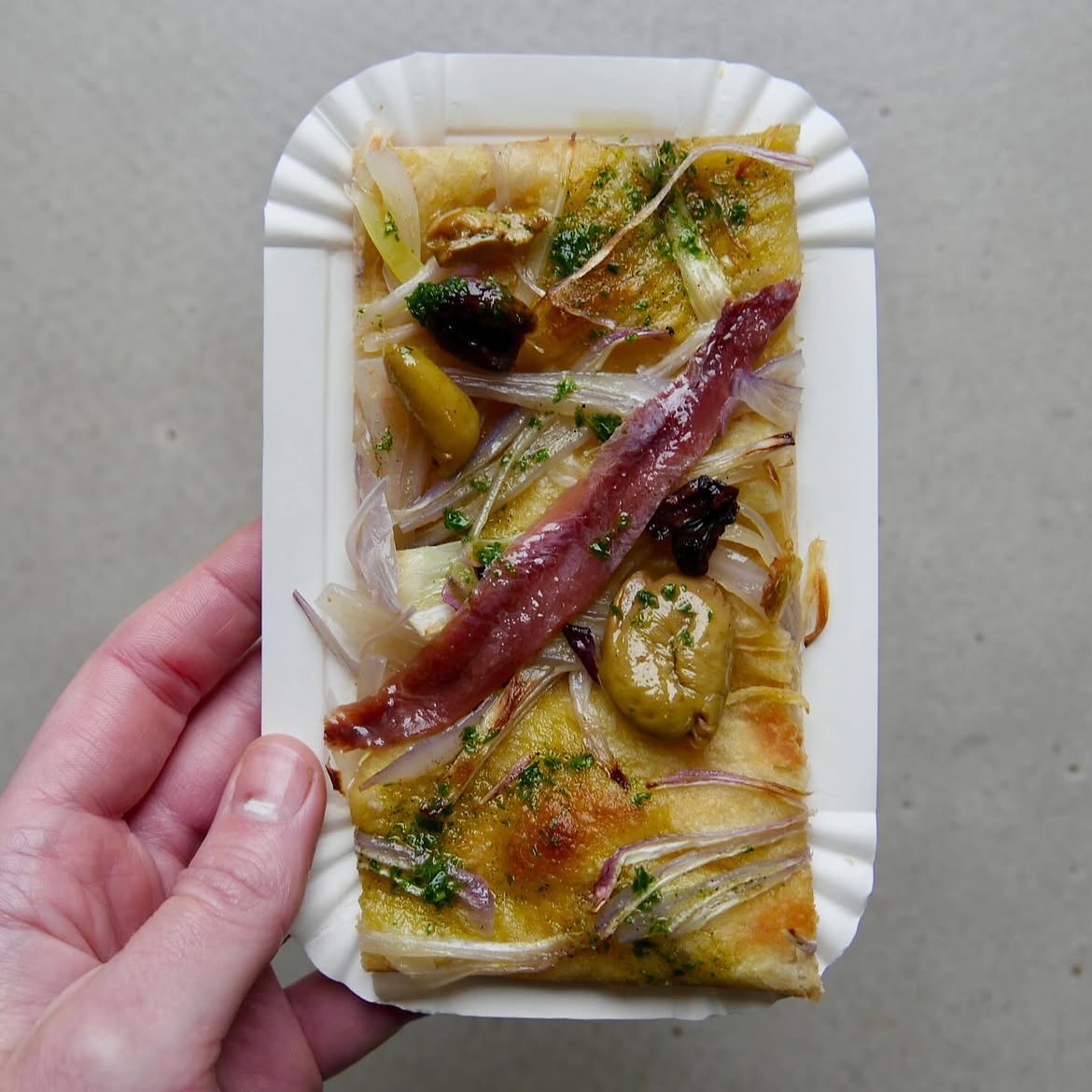
Caramelised shallots, olives and anchovies, inspired by the classic Provençal dish.
Ingredients:
5 banana shallots, thinly sliced
3 tbsp olive oil, plus extra for drizzling
2 sprigs fresh thyme, plus extra to finish
1 bay leaf
A pinch of fine sea salt
12 anchovy fillets
18 black olives, pitted
Method:
1. Heat the olive oil in a pan over low heat. Add the shallots, thyme and bay leaf, and cook very gently for 35 minutes, stirring occasionally, until soft, jammy and deep golden; season with salt.
2. Discard the bay leaf and thyme stalks and leave the shallots to cool slightly. Spread them over the dough right to the edges, lay over the anchovies, dot with olives, and drizzle with olive oil.
3. Bake for 7 minutes, turn the tray, then bake for a further 5-7 minutes until the crust is golden (the topping is already cooked, so this stage is really just about the base).
4. Scatter with a few extra thyme leaves if you like, as well as a drizzle of extra virgin olive oil.
5. Slice and eat immediately.
Sutton Hoo coq au vin
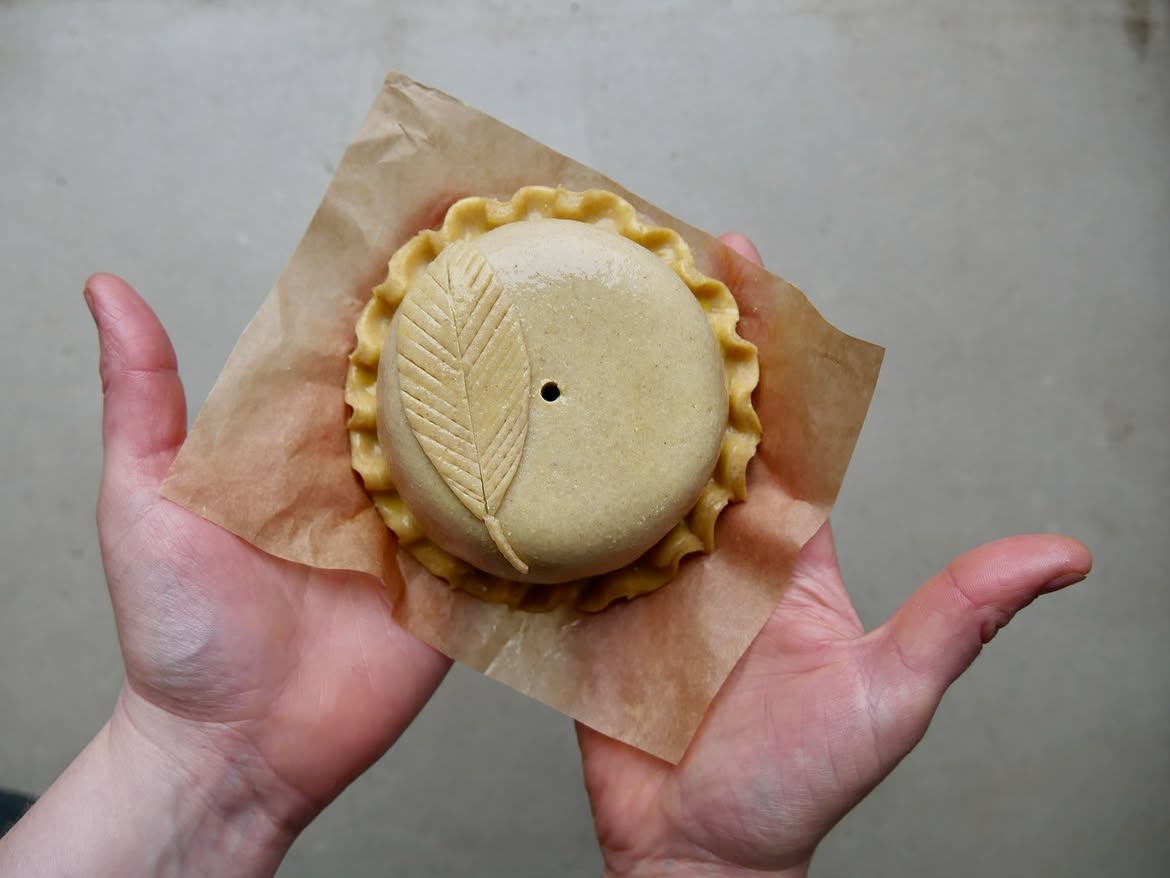
“A proper coq au vin made with a Sutton Hoo cockerel, red Burgundy and Westcombe pancetta. The cockerel has more flavour and structure than a standard chicken, so it benefits from an overnight marinade and a longer, gentler braise. Cockerels can be difficult to find, so if you can’t get hold of one, use a good-quality large free-range chicken instead and shorten the braising time to around 45 minutes-1 hour.
“I use Westcombe pancetta because it has a really good depth of flavour and proper texture, and it’s easy to get hold of as it’s available to order online.”
Serves: 6
Ingredients:
1 large Sutton Hoo cockerel, jointed into 8 pieces
750ml red Burgundy, such as Bourgogne Pinot Noir
200g Westcombe pancetta, cut into lardons
250g small pearl onions, peeled and left whole
1 large carrot, roughly chopped
3 celery sticks, roughly chopped
1 heaped tbsp plain flour
400g chestnut or button mushrooms
1 bouquet garni
Small bunch flat-leaf parsley
Neutral oil
Butter
Sea salt
Black pepper
Method:
1. Bring the Burgundy to the boil, reduce slightly for 5-10 minutes, then leave to cool completely.
2. Put the cockerel, pearl onions, carrot, celery and bouquet garni into a large container. Pour over the cooled wine and marinate overnight, or for at least 4 hours.
3. Strain everything, reserving the wine. Separate the cockerel from the vegetables and pat the meat dry.
4. Brown the cockerel well in a large casserole, then remove. Cook the Westcombe pancetta until golden, remove, then colour the marinated vegetables in the rendered fat.
5. Stir in the flour and cook for 2 minutes. Slowly add the reserved Burgundy, stirring to make a smooth sauce.
6. Return the cockerel, pancetta and bouquet garni to the pan. Cover and braise at 150°C fan / 170°C conventional for 1½-2 hours, checking from around 1¼ hours. If using a large free-range chicken instead, cook for around 45 minutes-1 hour.
7. Fry the mushrooms separately in a little butter until well coloured.
8. Once the cockerel is tender, remove the meat and pancetta, discard the bouquet garni and strain the sauce, keeping the pearl onions.
9. Reduce the sauce until glossy, then return the cockerel and pancetta with the pearl onions and mushrooms. Finish with chopped flat-leaf parsley.
10. Serve with buttery mashed potatoes and seasonal greens.
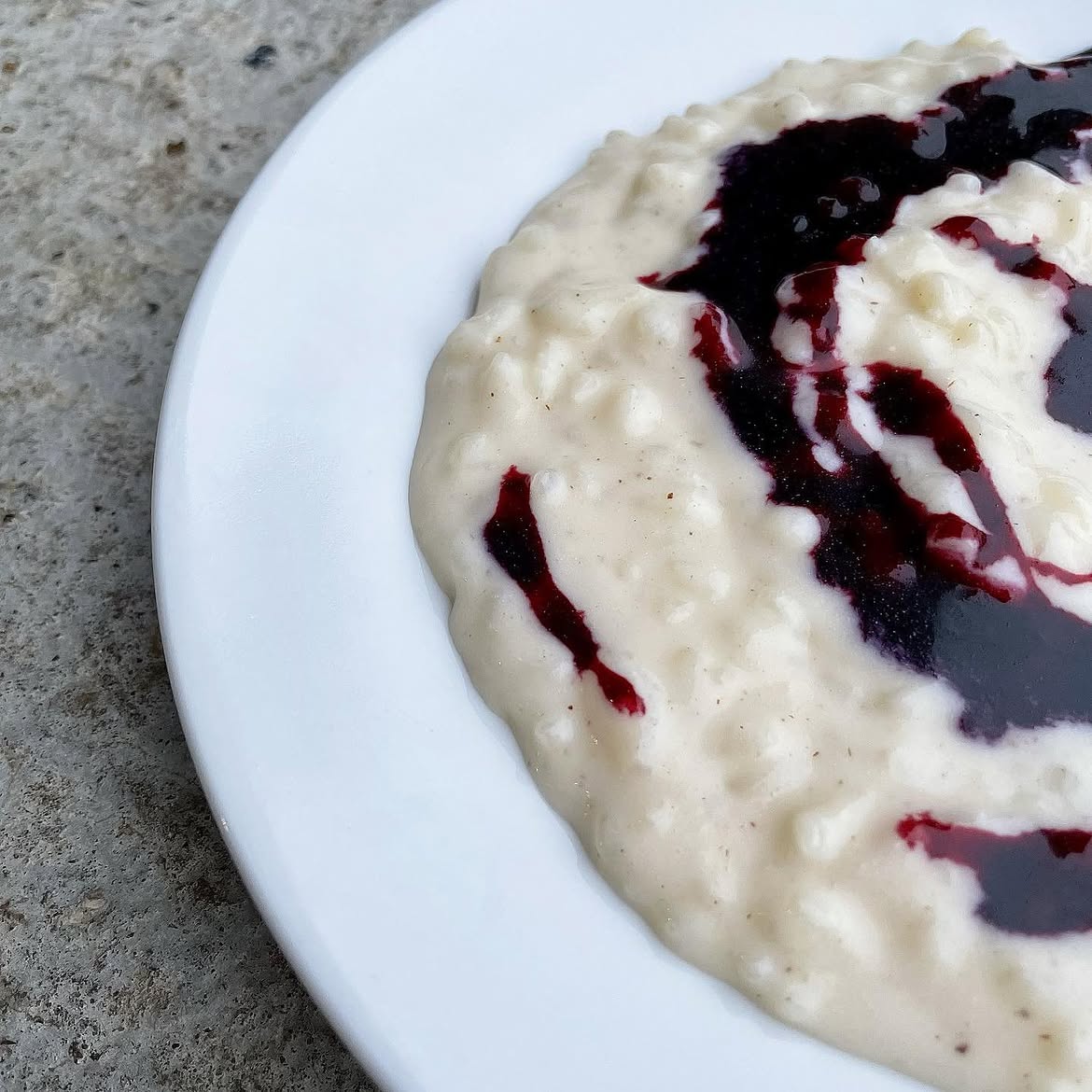
Buttermilk rice pudding
Ingredients:
100g Carnaroli rice
500-750ml whole milk
150ml double cream
150ml buttermilk
60g sugar
½ tsp sea salt
Method:
1. Add the rice, 500ml of the milk, cream, sugar and sea salt to a saucepan.
2. Bring gently to a simmer, then cook over a low heat for 30-40 minutes, stirring regularly, until the rice is tender and the pudding is thick and creamy. Add more milk as you go if needed – different rice will absorb different amounts, so you may use anywhere between 500ml and 750ml.
3. Remove from the heat, then stir through the buttermilk. Adding it at the end helps preserve its fresh, tangy flavour.
4. Serve warm with a knob of salted butter, Demerara sugar and a generous sprinkle of cinnamon. I had a Norwegian boyfriend who taught me this way of serving rice pudding – the little pool of melted butter in the middle is called smørøye (“butter eye”) . It’s a classic Norwegian way of serving rice pudding and porridge.


