



Want to bookmark your favourite articles and stories to read or reference later? Start your Independent Membership today.
Already a member?
Log in
The trouble with Meghan Markle’s new advent calendar is not so much that it costs £112. It’s that it involves maths.
There are 24 chocolates inside the Duchess of Sussex’s first As Ever calendar, made with Los Angeles chocolatier Compartés and “thoughtfully inspired” by the garden of her Montecito home – rather than her new Cotswolds digs. Flavours include strawberry, raspberry, blackberry and orange marmalade, with another finished in Meghan’s flower sprinkles. Each comes numbered in her own handwriting, painted on in edible gold lustre. The price works out at £4.67 a chocolate.
As Ever lists the boxed product at approximately 340g, including the packaging. Any claim about the cost per kilo of actual chocolate would therefore require either guesswork or someone spending £112 and taking it to the kitchen scales. We have not yet reached that stage.
Plenty of other people have reached the outrage stage. The calendar has been mocked online for its price and dragged into an unexpectedly theological dispute after the Rev Daniel French suggested shoppers could instead buy a roughly £6 Fairtrade Christian calendar supporting charity. Another priest who defended him subsequently locked his social media account after a pile-on from some of Meghan’s supporters.
Meanwhile, the Royal Collection Trust is selling its own chocolate calendar for £12. There are few Christmas traditions more reliable than a royal row, though arguing over whose chocolates better represent the spirit of Advent feels like a relatively new one.
The advent calendar has, after all, come a long way. Nineteenth-century German children marked the approach of Christmas with chalk lines on the wall or door, rubbing one away each day. Their descendants can now apparently choose between Montecito-inspired chocolates, three refrigerated deliveries of cheese and £860 worth of Burgundy, depending on how firmly they intend to observe the cost-of-living crisis.
Early German Protestant families also used candles and religious pictures to make the wait for Christmas visible. The printer Gerhard Lang is generally credited with helping turn the idea into a commercial printed calendar in the early 20th century; little doors followed in the 1920s. Chocolate arrived in the 1950s. Cadbury made its first in 1971 and only began producing them continuously in 1993. For most of this history, the innovation was putting a small piece of chocolate behind a cardboard flap. Nobody was expecting the technology to advance to the point where eight days of cheese would arrive at a time by refrigerated courier.
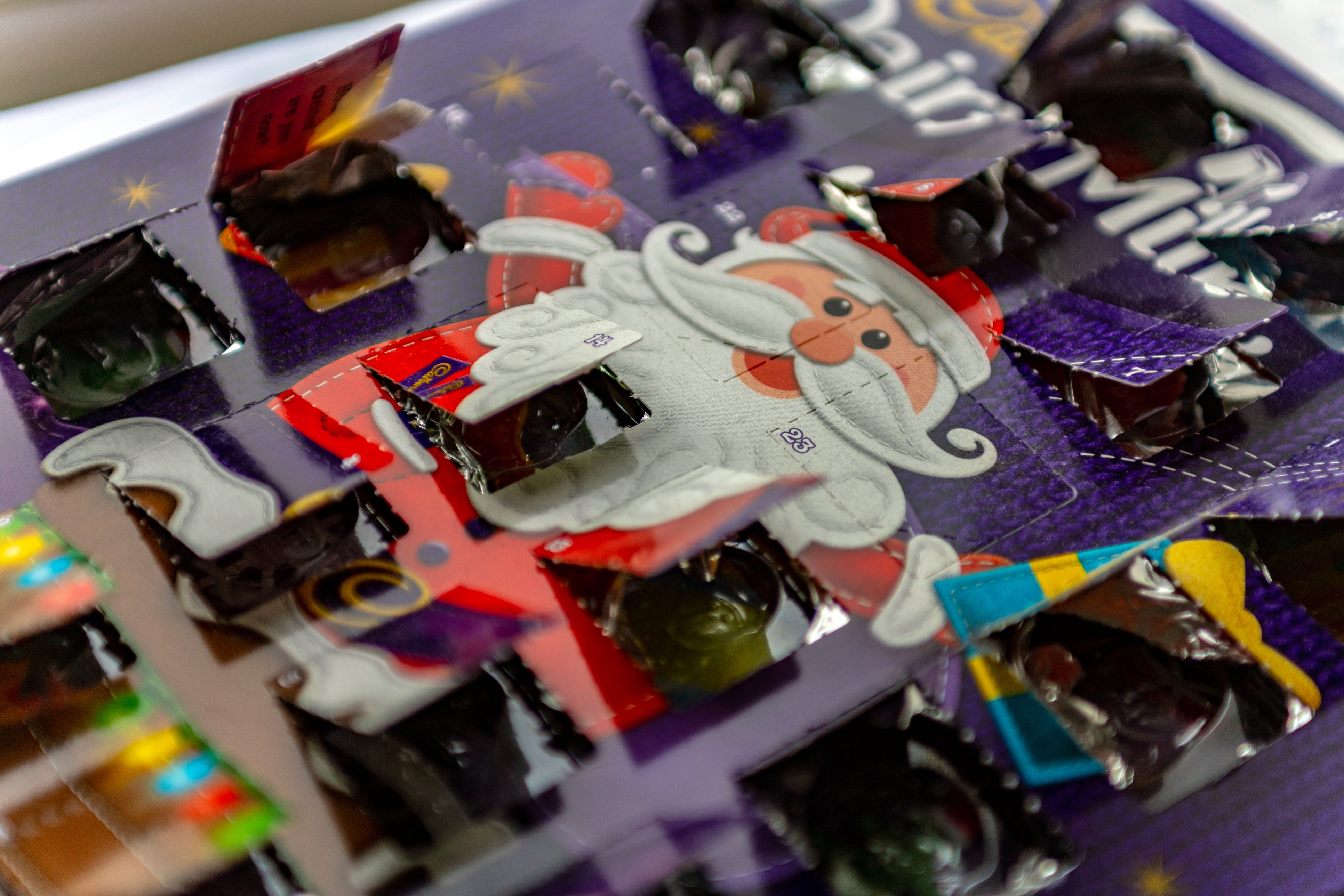
For anyone keen to experience the old ways, Tesco will still have a 90g Cadbury Dairy Milk calendar for £3 – £33.33 a kilo. This does the fundamental job. There are doors. There is chocolate. December advances.
Move to the official Royal Collection calendar and the tariff jumps. Its 95g of milk chocolate costs £12, or £126.32 a kilo – nearly four times the Cadbury rate – although you do also get Buckingham Palace, Windsor Castle, Holyroodhouse and ceremonial guardsmen on the recyclable cardboard. Monarchy has rarely been the budget option.
Fortnum & Mason will sell 270g of truffles divided between 25 doors for £40, which is £148.15 a kilo, or £1.60 a truffle. This begins to feel almost sensible beside Popcorn Shed’s £27.99 “Naughty or Nice” calendar. It contains 168g of popcorn, making it £166.61 a kilo. Worse, paying that does not guarantee you popcorn you actively wish to eat. Nice flavours include strawberry, blueberry and almond marzipan; the naughty half offers Garlic Breath, Seawater, Mouthwash, Liver and Onion and Granny’s Perfume. The latter is presumably for those who have ever wondered whether Chanel No 5 would benefit from being puffed corn.
Price, though, turns out to be a surprisingly poor measure of lunacy.
Paxton & Whitfield’s cheese advent calendar is £175, a number that might cause a small intake of breath until the contents are considered. Each of its 24 portions weighs at least 75g, meaning the calendar contains a minimum of 1.8kg of cheese. That puts it at no more than £97.22 a kilo – cheaper by weight than the palace chocolate and the liver and onion popcorn – and it arrives across three separate fresh deliveries. The expensive calendar, perversely, starts looking like one of the more defensible ones.
Grind’s ground coffee version is another reasonably coherent proposition. Twelve 18g sachets of different single origin coffees cost £29.95: £138.66 a kilo, or just under £2.50 a cup, which is surprisingly good value when you consider the cost of your pre-work Pret.
At £169, Condimaniac’s version sounds like the point at which a cupboard problem has become a financial one. It contains 16 full-sized condiments – six seasonings, four preserves and six sauces – plus eight bits of merchandise. Yet the company offers a useful glimpse into why these things cost what they do. Its founder says the empty box for last year’s calendar alone cost “well over £20”, because full-sized bottles and jars require something sturdy enough not to leak chilli sauce. It made 500 in 2025 and sold them all by October. Production doubled to 1,000 this year. Those have sold out too.
Apparently we are not victims here. We are actually asking for this.
Ipsos found last year that 72 per cent of Britons buy advent calendars and 84 per cent of buyers choose chocolate. More than half planned to spend £10 or less. Just 8 per cent expected to go over £100. Yet 51 per cent buy calendars for themselves and among 18-34-year-olds, 28 per cent said they had at some point spent more than £100 on one.
Beauty helped teach adults that this was perfectly normal. In 2010, Selfridges and L’Oreal launched a £60 calendar containing 24 miniature luxury beauty products. It sold out and the model spread: sampling, scarcity, self-gifting and the thrill of getting something every morning before work. Modern food brands have borrowed the same trick, though chilli sauce has the disadvantage of being considerably heavier than mascara.
Somewhere along the way, the calendar stopped being a way of counting down to the treat and became the treat itself.
The result is that “advent calendar” no longer really describes a product. It describes packaging. Put 24 things in compartments, number them and capitalism will do the rest. Daylesford’s £275 Farmshop calendar has 25 drawers containing food, drink, candles, decorations, hand care and accessories. Fortnum’s £265 Feasting calendar has 26 items, 20 of them full-sized. These are hampers that have discovered suspense.
At 67 Pall Mall, suspense costs considerably more. Its Burgundy calendar contains 24 100ml bottles selected by Jasper Morris MW and is £860 for non-members. That is 2.4 litres of wine at £358.33 a litre, or £35.83 every time you open a door. It is perhaps advisable not to begin the countdown over breakfast.
The £799.95 Old & Rare Whisky Calendar from Drinks by the Dram offers 24 30ml measures, 720ml altogether: £1,111.04 a litre, or £33.33 per dram. It does throw in a Glencairn glass. At that price, one would hope they hadn’t forgotten it.
All of which makes Meghan’s £112 chocolates difficult to place. Against a £3 Dairy Milk calendar they look hilariously extravagant. Against £175 of cheese, £169 of condiments and almost enough Burgundy to require a conversation with your bank (or your doctor), they begin to look almost conventional.
Meghan’s calendar may have caused a row because £112 still sounds ridiculous when most of us picture a flimsy cardboard box with cartoon animals in the snow and a stale chocolate the size of a 5p piece. The strange thing is not really that someone is selling one for £112.
It is that, in 2026, it barely qualifies as having lost the plot.


