


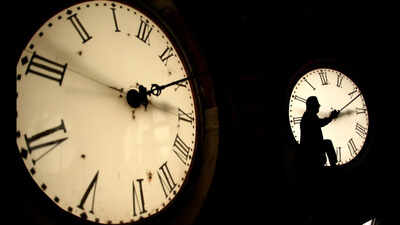
The Ontario government announced that it will be making daylight saving time permanent in parts of northwestern Ontario to keep in sync with Manitoba because Manitoba said they will switch to permanent daylight saving time on November 1. Ontario says the recently announced change for northwestern Ontario will keep that region aligned with Manitoba, avoiding disruption for businesses, families and Indigenous communities in Ontario’s central time zone.“Maintaining alignment with Manitoba would help businesses operate more efficiently across provincial boundaries, while making it easier for residents and service providers to coordinate activities such as health-care appointments and travel,” the government said.“Providing certainty and predictability is essential to supporting strong communities and a competitive economy,” Attorney General Doug Downey said in a statement. “By keeping this part of the province aligned with Manitoba, our government is taking a practical … approach to avoid unnecessary disruptions and ensure economic stability in communities that reside in Ontario’s central time zone.”In daylight saving time, clocks are changed twice a year: In spring, clocks move forward by one hour; in autumn, clocks move back by one hour.Ontario has two time zones. Toronto, Ottawa, Hamilton, Mississauga and most of Ontario come under ET. partnes of northwestern Ontario including kenora and Fort Frances come under Central Time. Under the proposed change, affected communities in northwestern Ontario that currently change their clocks seasonally would not need to turn them back on Nov. 1. The affected communities in Ontario’s Central Time Zone, include Kenora, Dryden, Fort Frances, Sioux Lookout, Red Lake and Rainy River. Communities in the Eastern Time Zone, such as Thunder Bay, will continue to fall back one hour on November 1st. That’s in line with the rest of Ontario, which is in the Eastern Time Zone.Ontario has considered the switch to permanent daylight saving time for the entire province in The Time Amendment Act, 2020. But that legislation is not yet in force. For that to happen, Ontario says neighbouring Quebec and New York would have to make the change too.British Columbia said in March that it was moving to permanent Pacific daylight time. Alberta also switched to permanent daylight time this year in what it calls Alberta time, which means it now has the same time as Saskatchewan year-round. Canada has six time zones: Newfoundland Time, Atlantic Time, Eastern Time, Central Time, Mountain Time and Pacific Time,


