


“The inspiration for Mini Switzerland came from one of my many trips to the country,” says Thomas Ableman. The former Transport for London strategy director is explaining his vision for “joined-up” mobility in the UK.
“Mini Switzerland” is a project to bring Swiss-style integrated public transport to the Hope Valley in Derbyshire – and to demonstrate that dovetailing buses with trains can boost ridership and the local economy, while increasing options for residents and visitors.
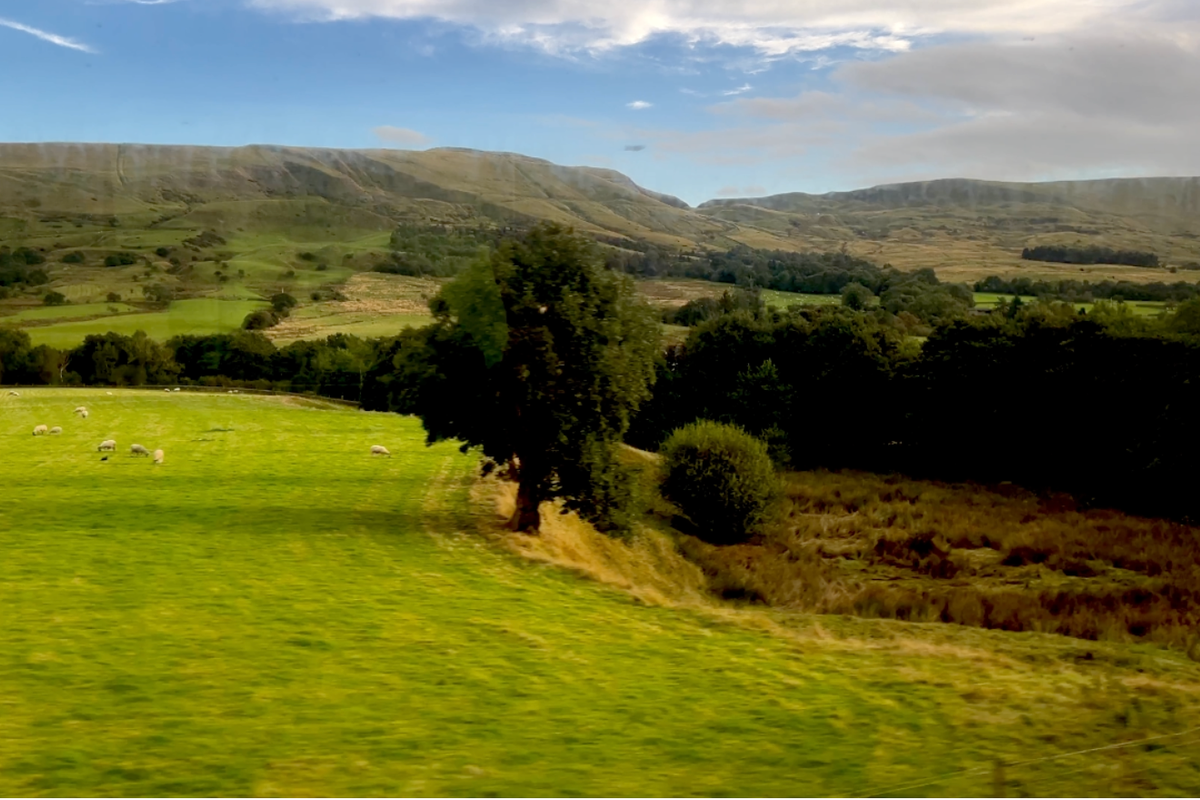
A beautiful rail line runs through the Hope Valley, bisecting the Peak District National Park and linking Manchester with Sheffield. But at present there is no holistic approach to public transport.
“It’s a railway line in a valley,” Mr Ableman says. “It has five small rural stations within it. And those stations are surrounded by villages, but not immediately connected to the villages. That is an important piece of context. Because for the Mini Switzerland demonstrator project, we needed to do this somewhere where there’s an existing railway with rural stations with a train service that runs every hour.”
Northern runs hourly stopping trains along the Hope Valley in both directions between Manchester and Sheffield.
“What we are seeking to demonstrate is that if you can improve bus connections to a regular train service, then actually you can put in meaningful public transport.
He cites the examine of Bradwell – a village in the Hope Valley with a population of about 1,400 people.
“There are only about three hours all day where the bus even comes close to meeting the train – by which I mean about within about 15 minutes,” he says.
“Most of the time, they don’t meet each other at all.
“So you can get to the nearest station, but you can’t actually make the last couple of miles connection to Bradwell.
“Last Easter, I went to Switzerland with my daughter. We stayed in a village called Paspels in Graubunden, with a population of 475, so about a third of that of Bradwell, but it has a bus that runs every hour.
“That bus goes to the local train station. It arrives at 59 minutes past the hour, and at two minutes past the hour, every single hour, the train to the regional capital, Chur, departs. You just step off the bus straight onto the train.
“This happens literally every hour from every village in the whole of Switzerland.
“Bus to the local station to meet the train, train back to the local station to meet the bus. And everywhere in Switzerland is connected to everywhere else.”
Despite the rocky state of the national finances, within a year of Mr Ableman’s epiphany the project has been handed £6m by the government to get off the ground – with matched funding from East MIdlands Combined Authority.
In transport terms, that is still a small amount of money. But Mini Switzerland does not depend on new infrastructure – simply better coordination between modes of transport in terms of timetables and ticketing.
“There’s lots of little things: better signage, better information systems, better ticketing systems, but by far the biggest is just more buses – because the the core of the Swiss system is a bus every hour.
“The hypothesis behind this is not that this will be self-funding, it won’t. The hypothesis is that the subsidy per passenger will be lower.
“So we will put money in, but we will get much better value for that money because you have well-used buses as opposed to poorly used buses, which is what we have at the moment.
“I believe this should be doable within one year, and I would like to see this up and running by this time next year.
“Most people in Bradwell do not commute to Manchester by train and bus because It’s almost inconceivable that it would work, and we need to change that, and that will take years. This needs to be seen as a five-year behaviour change project because it will take literally years for local people to see this coming true, to see the buses do meet the trains, they keep running.
“During that time, they will be emptier than they would be if they were used at scale, but we need to stick with it. Because it will demonstrate – or not – that if you provide that quality of integrated transport infrastructure in a rural area, once people have got confidence that they can rely on it, they will use it.
“It is proven in Switzerland, it’s proven in Austria, it’s proven in Germany, it’s proven in the Netherlands where these types of services are put in place.
“We have never proved it in British rural areas, so now’s the chance to find out.”
Read more: What are your rights if your train is cancelled or delayed?



