


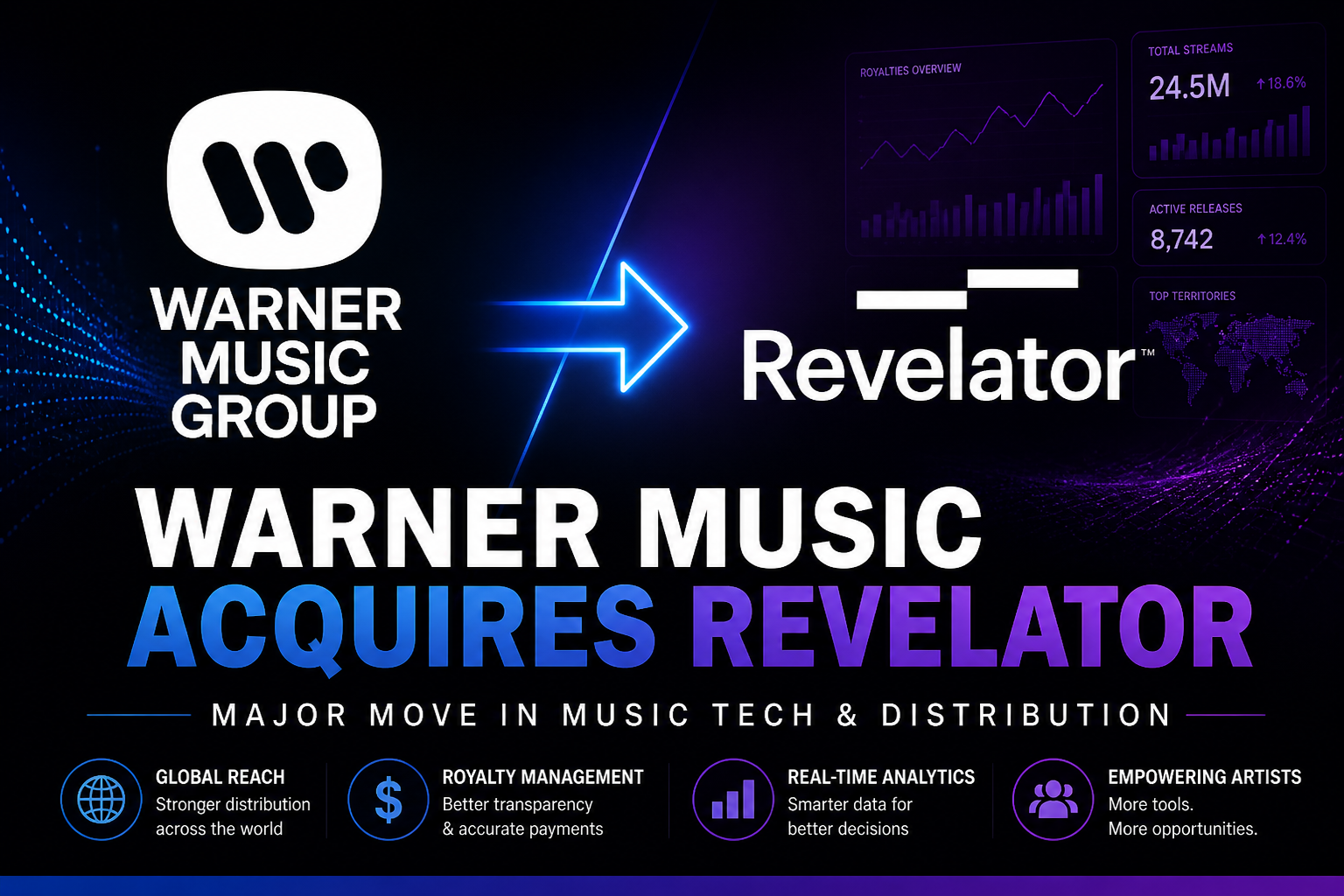
Global music giant Warner Music Group (WMG) has officially announced that it is acquiring Revelator, a leading B2B music platform focused on distribution, rights management, and royalty operations. The deal, revealed on April 1, 2026, is expected to close in the coming months, subject to standard conditions. ()
This move is not random — it’s a strategic power play. WMG is aggressively expanding its technology and distribution ecosystem, and Revelator fits directly into that vision.
What Revelator Actually Does
Founded in 2012, Revelator provides a full-stack digital infrastructure for independent music businesses. Its platform handles music distribution, catalog management, royalty accounting, and real-time analytics — all from a cloud-based system. ()
In simple terms: it replaces messy spreadsheets, manual royalty tracking, and fragmented systems with one centralized tech layer.
Why This Acquisition Matters
WMG isn’t just buying a company — it’s buying infrastructure.
By integrating Revelator’s technology into its global network, WMG aims to:
- Expand services for independent labels and artists
- Improve royalty transparency and financial tracking
- Strengthen its distribution capabilities through ADA and other divisions
- Scale faster in the growing independent music market ()
WMG CEO Robert Kyncl made the intent clear, stating that combining Revelator’s tech with WMG’s global reach will “turbocharge” support for artists and labels worldwide. ()
What Happens to Revelator Users?
No immediate disruption. Revelator will continue operating and serving its existing clients even after the acquisition. ()
That’s important — because sudden platform changes usually kill trust in the indie ecosystem. WMG is avoiding that mistake.
Bigger Industry Signal (Read This Carefully)
This deal shows a clear shift in the music industry:
- Major labels are no longer just labels — they are becoming tech + data companies
- The independent sector is too big to ignore, so majors are building infrastructure around it
- Control over royalties, analytics, and distribution pipelines is now more valuable than just owning music
Bottom Line
This acquisition strengthens WMG’s position not just as a label, but as a full-stack music services company. It also signals a future where independent artists and labels will increasingly rely on platforms owned — directly or indirectly — by major players.
If you run a label, distributor, or artist platform, ignoring this trend is a mistake. The game is shifting from content to control of systems.



