


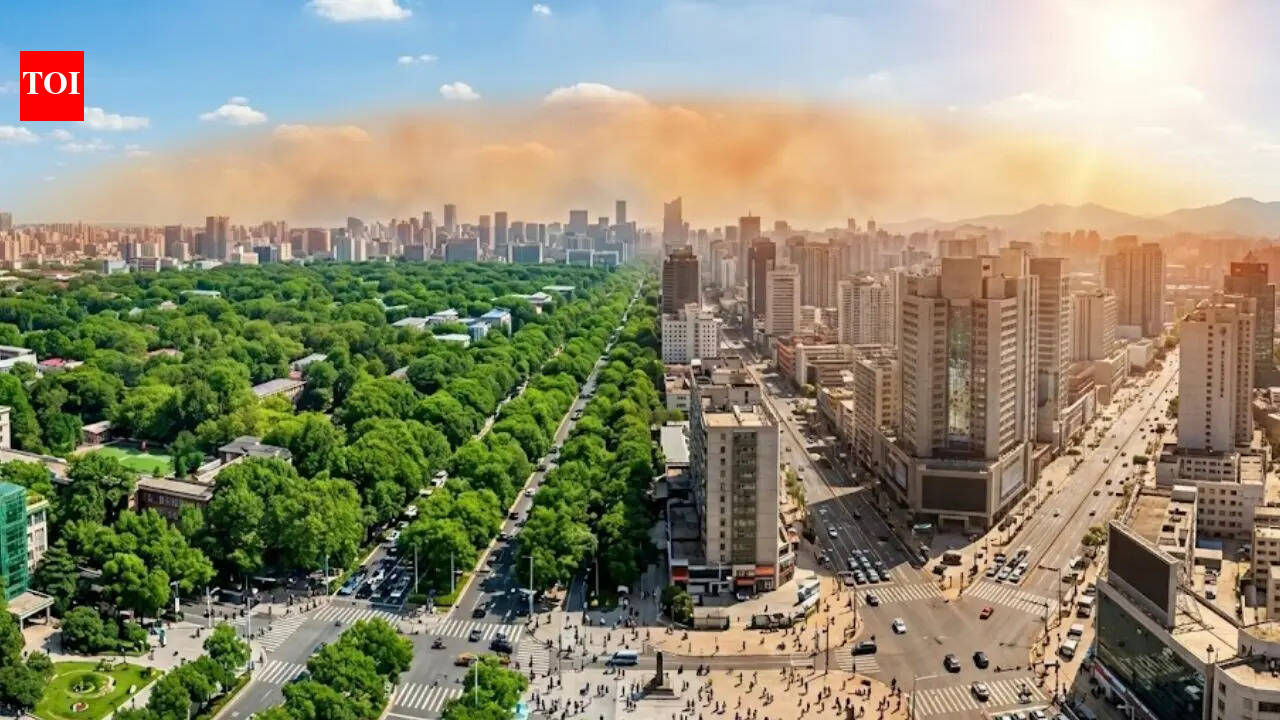
A recent study shows that urban tree canopies play a crucial role in combating the ‘Urban Heat Island’ (UHI) effect. They cut the temperature gap between cities and rural areas by almost half. Trees offer shade and cool the air through a process called transpiration, lowering summer air temperature by a population-weighted mean of 0.15 degrees Celsius on average, as noted in research published in Nature Communications. Yet, this extensive research highlights nature’s limitations, although increasing city forests remains important for public health, scientists point out that trees alone can’t counteract huge temperature rises caused by fossil fuel emissions worldwide. With cities potentially warming by up to 2.4 degrees Celsius by 2050, it’s clear that urban forestry needs to be combined with strong efforts to reduce carbon emissions.
Scientists reveal how trees naturally cut dangerous city heat levels
According to the research published in Nature Communications, the study utilised satellite data and climate modelling across 8,919 large urban areas to quantify the cooling power of green infrastructure. It found that trees are responsible for mitigating approximately 41 per cent to 49 per cent of the maximum potential UHI.The cooling occurs through two primary mechanisms: shading, which prevents sunlight from hitting and heating pavement and buildings, and evapotranspiration, where trees release moisture into the air, acting like a natural air conditioner. Without current urban tree cover, the heat trapped in cities would be twice as intense as it is today.
Lack of trees is a growing public health crisis for the poor
The research uncovers a glaring difference in who gains from natural cooling. It points out a ‘cooling divide’ between rich and poor countries. Nearly 40 per cent of high-income cities in wealthier nations benefit greatly from tree canopies, while less than 9 per cent of cities in poorer nations have enough trees to make a difference. In many fast-growing cities in the Global South, like Dakar and Port-au-Prince, there’s almost no cooling benefit. This situation puts the most vulnerable people at greater risk for heat-related health problems.
Why can’t even maximum trees stop global warming
The researchers explored a scenario where cities achieve maximum tree cover to see if this approach could address the climate crisis. Their findings showed that even with every city expanding its tree canopy to the fullest, it would result in only an extra 0.3 degree Celcius of cooling. When compared to the expected global temperature rise of 1.5 degrees Celsius to 2.4 degrees Celsius by 2050, this is not enough. The study published in Nature Communications indicates that although trees play a vital role in making urban areas more livable, they offer only limited relief from the larger issue of climate change, which is largely driven by greenhouse gas emissions.
Implications of using green infrastructure to protect high-risk zones
The study points out that future urban planning should focus on ‘strategic planting’ to help protect neighbourhoods at high risk. Trees cool the area around them, so placing more in low-income neighbourhoods with fewer trees can save lives during heatwaves. But there’s a catch: for these trees to thrive and cool effectively, global carbon emissions need to decrease. Extreme heat and drought threaten the very trees intended for protection, making it crucial to address climate change simultaneously.



 effect. They cut the temperature gap betw.)