



















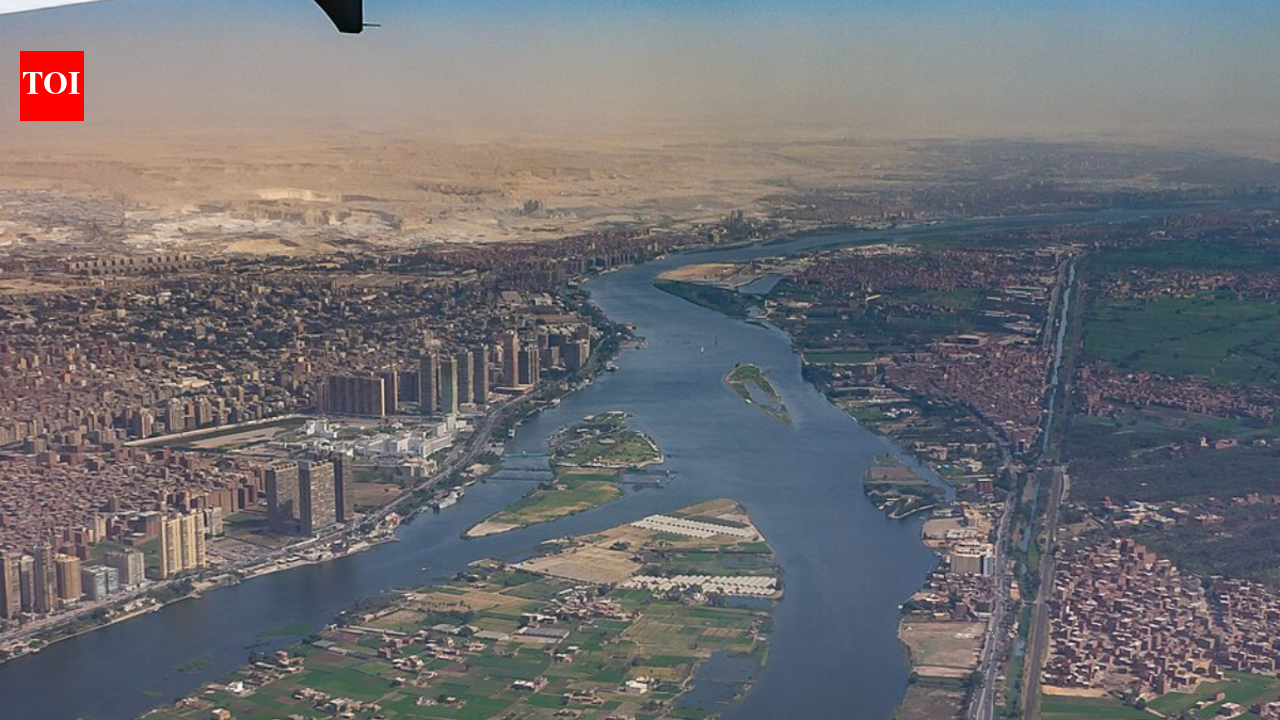
Nature can be described as self-managing in ways that are both extremely precise and chaotic. Imagine the landscape as a vast, living canvas in which every raindrop is a traveller seeking the lowest point of Earth. The process begins with a small trickle of molecules in freshwater, drawn by gravity. The trickles meet and whisper into the creeks and accumulate strength in streams before morphing into the massive giants called rivers.To understand these waterways, you must look into their “watershed,” which is the main drainage basin of nature. No matter whether it’s a little valley or an enormous continent, the watershed makes sure that each drop of water that flows through an area will eventually find its way to a location, which is usually at the point where a river joins the ocean. These huge drainage zones create huge rivers that have changed the course of human history and have provided trade routes as well as sustained whole civilisations.Determining precisely where the river’s origins are is something of a challenge. Geologists are often forced to employ an element of “arbitrary Fudging” to determine which small streams in the mountains deserve to be named as the main source. According to the U.S. Geological Survey, the name of that particular stream is.This is a glimpse of the longest nine rivers that we have on earth, in which geography and lifestyle intersect with the past of time.The great debate: The Nile RiverSince the beginning of time, the Nile has held the title of the longest flowing river in the world. With its 4,132 miles of length, it’s the vitality of the northeastern region of Africa. Its status, however, isn’t uncontested. Even though there is no doubt that Guinness World Records recognises it as being the longest, scientists continually improve their measurement. A major study in theInternational Journal of Digital Earth utilised satellite images to verify the length of the Nile over the South American rival. It has two main branches: both the White Nile and the Blue Nile that meet in Khartoum, a city that is bustling with activity. Khartoum, the river runs across eleven countries before joining the Mediterranean Sea.The mighty Amazon: A volume kingIf the Nile triumphs in length, but the Amazon is the winner due to its sheer strength. The Amazon flows across Peru, Colombia, and Brazil. The Amazon is undisputedly a big water force. It has more freshwater capacity than the seven other largest rivers combined. It’s so huge that it is responsible for almost 40% of the South American continent’s drainage. Although most research places it around 4,500 miles, about a quarter in the middle of the Nile, a lot of Brazilian researchers believe that recent discoveries of sources may eventually alter the ranking.Yangtze: The dragon of ChinaThe Yangtze isn’t only a river, it’s a symbol of national significance. With a length of 3,900 miles, it is the longest river to run entirely within a nation. The watershed it flows through is the home of a whopping one-third of China’s people. With 700 tributaries to the Yangtze, the Yangtze is a vast system that supports a huge part of the world’s industries and agriculture.
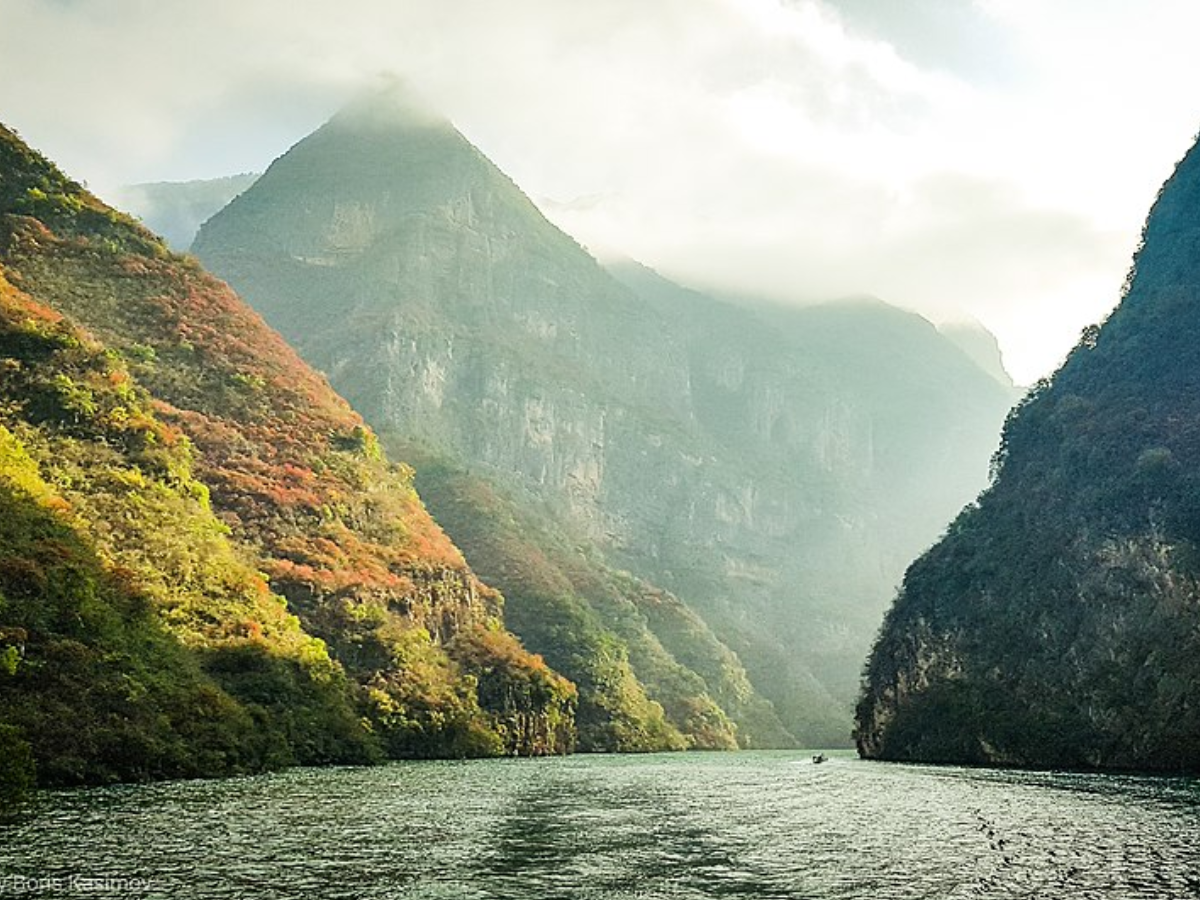
China’s Yangtze, North America’s Missouri-Mississippi, Siberia’s Yenisey, and the Yellow River, cradle of civilization, highlight their global significance. Image Credit: Wikimedia Commons
The Missouri-Mississippi systemWithin North America, the Missouri River has the upper hand. Although the Mississippi is more well-known in the world of literature, the Missouri is in fact longer, covering 2,341 miles across to the Rocky Mountains. As these two massive rivers meet in close proximity to St. Louis, they make up a network that drains 32 U.S. states and two Canadian provinces. They eventually flow to the Gulf of Mexico.Siberia’s Yenisey RiverThe Yenisey is a rough, wild river that is the mainstay of what is known as the Siberian landscape. With a length of 3,442 miles (when coupled with the Angara and Selenga rivers), it is dependent on Lake Baikal. Incredibly, research on the Hydrology of the Arctic Ocean highlights the fact that rivers like the Yenisey are vital to the water balance at the North Pole. It’s clean, cold and a strong natural force.The yellow river: Cradle of civilizationAlso known as the Huang He, the Yellow River is the longest river in sixth place on earth at 3,395 miles. Its name comes from the yellow silt that it transports out of its Loess Plateau. Many archaeologists believe that the watershed of this river is the place of birth for the ancient Chinese civilisation. The river provided the soil that was fertile for the early dynasties to flourish.The Ob-Irtysh systemReturning to the immenseness that is Russia in the direction of Central Asia, the Ob-Irtysh system spans 3,360 miles. The Ob-Irtysh river system is a transcontinental traveller starting with the Altai Mountains and flowing through Mongolia, China, and Kazakhstan until it reaches the Arctic. The river drains a region that is nearly equal to India.Rio de la Plata: The southern giantThe eighth place is part of the Rio de la Plata-Parana network situated in South America. It is 3,032 miles long and is an essential economic corridor that connects Brazil, Argentina, and Paraguay. It is a stunning natural border, and is a major hydroelectric power source for the entire region.The Congo: The deepest reachThe final item on this list comes next on the list is Congo River. Although it’s the ninth-longest at 2920 miles long, it also holds the distinction of being the world’s deepest. The force of its flow and its basin is so large that it is shaped like an enormous, multi-limbed tree when viewed on the map. It is an extremely enigmatic and diverse ecosystem around the globe.