








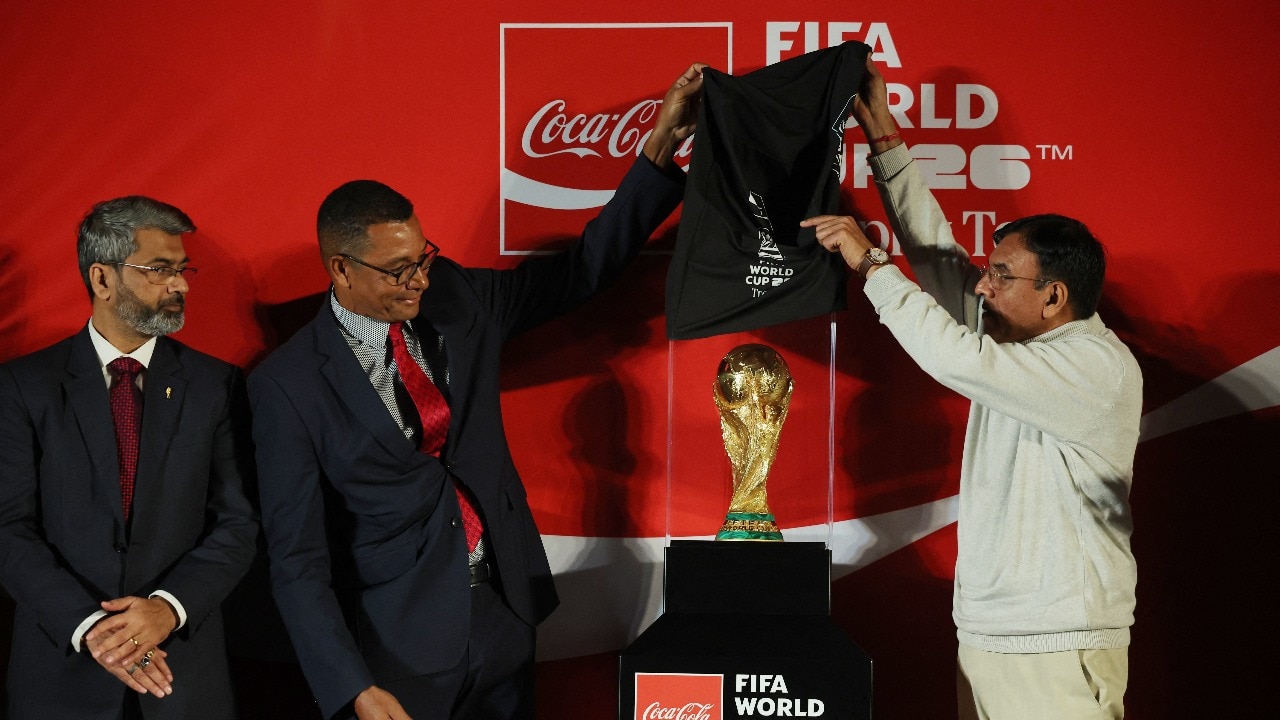
With barely a month left for the FIFA World Cup 2026 to begin, Indian football fans still do not know where they will be able to watch the tournament. The uncertainty has now reached the Delhi High Court, which on Monday issued notice to the Centre and Prasar Bharati over a plea seeking directions to ensure the World Cup is broadcast in India, especially through free-to-air platforms like Doordarshan and DD Sports.
Justice Purushaindra Kumar Kaurav issued the notice while hearing a writ petition filed by advocate Avdhesh Bairwa under Article 226 of the Constitution. The plea argues that despite the tournament running from June 11 to July 19, no broadcaster in India has officially acquired the media rights so far, raising fears that millions of football fans could miss out on the biggest sporting event in the world.
The petition also pointed out that the FIFA World Cup has already been classified as a “sporting event of national importance” under the Sports Broadcasting Signals (Mandatory Sharing with Prasar Bharati) Act, 2007. According to the plea, that places an obligation on authorities to ensure public access to the tournament.
The matter becomes even more striking considering India’s massive football audience.
During the FIFA World Cup 2022 in Qatar, India reportedly emerged as one of FIFA’s biggest engagement markets globally despite not qualifying for the tournament. The plea further argued that Prasar Bharati already possesses the infrastructure required to broadcast the competition through DD Sports, DD Free Dish and the WAVES OTT platform.
The petitioner also claimed that failure to ensure the broadcast would violate citizens’ rights under Articles 14, 19(1)(a) and 21 of the Constitution, including the right to access information through public broadcasting platforms.
INDIA WITH NO FIFA WORLD CUP 2026 BROADCASTER
The biggest reason behind the current deadlock appears to be the gap between FIFA’s valuation and what Indian broadcasters are willing to pay.
According to reports mentioned in the plea, FIFA had initially valued the India broadcasting package for the 2026 and 2030 World Cups at nearly USD 100 million. That figure was later reportedly reduced to around USD 35 million after a lack of interest from broadcasters.
Even after the reduction though, no agreement has been finalised.
The commercial complications around the 2026 World Cup have also made things trickier than usual. Since the tournament will be hosted across the United States, Canada and Mexico, most matches are expected to begin during late-night and early-morning hours in India.
That significantly affects advertising value and viewership projections for broadcasters already heavily invested in cricket properties.
The overall sports broadcasting market in India has also changed drastically over the last few years, with broadcasters becoming increasingly cautious about expensive rights deals outside cricket.
The result is a bizarre situation where one of the world’s biggest sporting events still has no confirmed Indian broadcaster barely weeks before kickoff.
WILL INDIA GET TO WATCH FIFA WORLD CUP 2026?
Despite the uncertainty, the All India Football Federation remains confident that a solution will eventually be found.
AIFF Deputy General Secretary M Satyanarayan recently said that India’s market size makes it extremely difficult for FIFA or broadcasters to completely ignore the country.
The federation, however, also clarified that it cannot directly intervene in the commercial negotiations since its role is limited to administering football rather than handling media rights deals.
The AIFF also pointed towards India’s growing football appetite, highlighting that Indian fans formed the largest travelling supporter base among non-qualified nations during the 2022 World Cup in Qatar.
For now though, fans remain stuck waiting.
With the opening match now less than a month away, the window for promotion, scheduling and technical preparation is rapidly shrinking. But despite the uncertainty, there is still an expectation within Indian football circles that FIFA and broadcasters will eventually arrive at a compromise rather than allowing the tournament to disappear from one of the world’s largest sports markets.
– Ends