


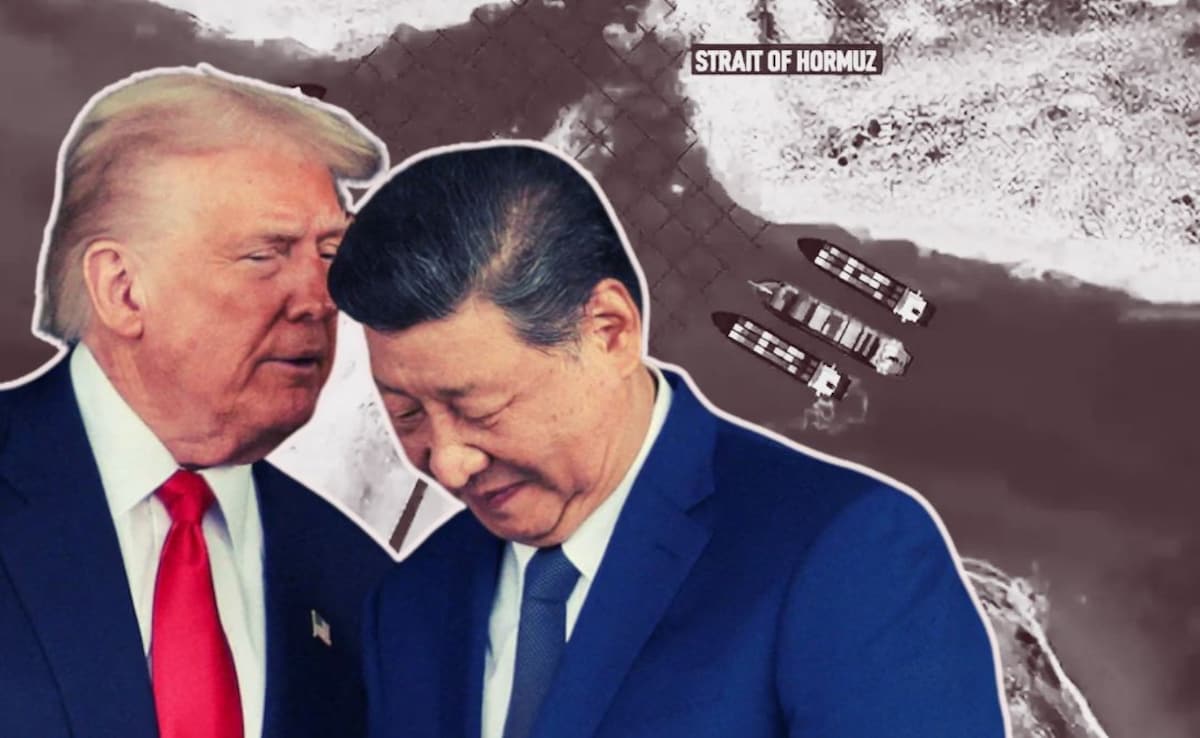
US President Donald Trump will arrive in China from May 13 to May 15 for a closely watched state visit that could shape the next phase of relations between Washington and Beijing. The trip marks the first visit by a sitting American president to China in nearly a decade and the first since Trump’s own 2017 visit during his first term.
Despite years of harsh rhetoric on China, Trump has continued to publicly praise Chinese President Xi Jinping. Just last week, he described Xi as a “good man” and a “smart man” with whom he has “a very good relationship”.
But behind the warm language lies mounting pressure. The summit comes at a moment when Washington is struggling to convert its military and economic power into diplomatic outcomes, particularly in the Middle East.
Iran Crisis Looms Over The Summit
A major shadow hanging over Trump’s Beijing trip is the ongoing conflict involving Iran. For weeks, the White House has tried unsuccessfully to persuade China to use its influence over Tehran to help secure a US-backed settlement or at least push for the reopening of the Strait of Hormuz.
Opinion | Trump-Xi Talks: When One Is Playing Chess, And Other Is Flipping The Board
Although Washington avoided a battlefield defeat, the war has exposed the limits of American influence. The US has so far failed to bring the conflict to a close, even as global energy markets remain on edge.
Speaking on Monday, Trump attempted to project confidence, insisting Xi wanted the crisis contained. “He’d like to see it get done,” Trump said of the Chinese leader, referring to efforts to reopen the crucial shipping route.
The same day, Trump claimed Iran’s ceasefire was on “life support” after rejecting Tehran’s latest proposal to end hostilities. According to officials, the offer included some compromises linked to Iran’s disputed nuclear programme, but Trump dismissed it as “garbage”.
Now, Washington is looking to Beijing for help. China remains one of Iran’s key economic partners and continues to purchase large volumes of Iranian oil, giving it leverage the US currently lacks.
Read | Trump Says Will Discuss US Arms Sales To Taiwan With Xi During China Trip
Alejandro Reyes, a Chinese foreign policy expert at the University of Hong Kong, told Reuters that Trump enters the talks from a position of weakness.
“Trump kind of needs China more than China needs him,” Reyes said.
“He needs a kind of foreign policy victory: a victory that shows that he is looking to ensure stability in the world and that he’s not just disrupting global politics,” he added.
Meanwhile, Tehran has shown little interest in easing tensions before Trump’s arrival in Beijing. Ali Akbar Velayati, an adviser to Iran’s new supreme leader, issued a pointed warning ahead of the trip.
“Mr. Trump, never imagine that by taking advantage of Iran’s current calm, you will be able to enter Beijing triumphantly,” Velayati said, according to Iran’s semi-official Tasnim news agency.
CNN also reported that Trump has recently become more open to the possibility of renewed military action against Iran, signalling that the conflict remains far from resolved.
Taiwan Could Become Beijing’s Bargaining Chip
However, Chinese assistance to Iran is unlikely to come free of cost. Beijing may try to extract concessions from Washington on issues it considers far more important, particularly Taiwan.
China views the self-governed island as part of its territory and has repeatedly warned the US against deepening ties with Taipei. Even subtle shifts in Washington’s language or policy could trigger alarm among US allies across Asia.
Read | US May Propose Currency Swap Deal With China To Boost Dollar: Report
Some observers fear Beijing may try to use Trump’s diplomatic vulnerability to soften American commitments toward Taiwan.
Either way, the summit is expected to test how far Trump is willing to compromise in exchange for Chinese cooperation elsewhere.
The visit also risks highlighting a broader criticism of Trump’s second term, that despite projecting strength on the global stage, rivals such as Beijing and Tehran have repeatedly managed to force Washington into reactive diplomacy.
Trade And Rare Earths Return To Centre Stage
Trade will remain another major focus of the Xi-Trump meeting, especially after the bruising tariff war that rattled both economies last year.
The path to this summit began in Busan in October, when the two countries agreed to pause an escalating trade conflict that had seen US tariffs on Chinese imports rise as high as 145 per cent.
Beijing retaliated by tightening exports of rare earth minerals, materials critical to American technology companies and military supply chains. The impact was immediate, with several US factories reportedly facing serious disruptions.
The standoff demonstrated China’s growing ability to hit strategic sectors of the US economy, exposing vulnerabilities in Trump’s trade strategy.
Now, both sides appear eager to stabilise relations, at least temporarily. China is seeking continued access to American technology and relief from tougher export restrictions, while Washington wants larger Chinese purchases of US goods and fresh investment commitments.
Among the biggest possible announcements is a long-discussed aviation deal involving Boeing. Beijing has reportedly been negotiating an order that could include 500 Boeing 737 Max aircraft along with dozens of wide-body jets, a move that would mark China’s biggest Boeing purchase since 2017.
The US is also pressing China to dramatically increase imports of American agricultural and energy products, including soybeans, poultry, beef, coal, oil and natural gas.
But China’s most powerful negotiating tool may still be its control over rare earth supply chains. Analysts believe Beijing could offer long-term guarantees for American access to rare earth minerals and magnets for commercial use, while continuing to restrict supplies linked to military applications, according to the Guardian.
That leverage could become one of the defining factors of Trump’s Beijing visit, a summit where diplomacy, trade and geopolitical rivalry are all colliding at once.



