


A top rail tip for you: I am sitting in first class aboard the 9.58am train from Brighton to London with only a standard ticket. But I am not trying my luck and hoping to evade revenue protection staff. The rear first-class carriage on Thameslink train is always “declassified” to make more seats available for those of us with cheaper tickets.
Yet how I yearn for the era of the Brighton Belle. This was a premium first- and third-class only train, launched in 1933, that shuttled non-stop between London Victoria and Brighton in an hour. Today’s everyday successors, which pause twice along the way, are only a couple of minutes quicker on the 51-mile run.
“It was a common practice among railway companies to assign distinctive names to their train services,” notes Jeff Dickinson of Clitheroe in the Today’s Railways magazine. He cites the Royal Scot, a prestigious express between London Euston and Glasgow Central. Naming trains has always been a marketing tool to promote particularly fast or long services.
The tradition, Mr Dickinson says, “could easily be resumed”. With Great British Railways (GBR) set to take over the running of most of the nation’s trains, such a move “would greatly enhance their public image right from the start”.
Naming trains is theme that costs little, unlike most things on the railway. To maximise the value, operators should use the technique sparingly – and for services that are distinctive.
Great Western Railway is well ahead in the UK. “They are historic named services and very much part of the fabric of GWR.” a spokesperson says.
The Golden Hind runs east from Penzance to London Paddington at 5.05am, returning at 6.03pm on the same route. It covers the 305 miles between the ends of the line in under five hours, the fastest of the day. The Red Dragon between Carmarthen and Paddington cuts out the normal stops at Reading and Swindon. And who doesn’t want to step aboard the Cheltenham Spa Express and The Bristolian? (In the latter case, someone exploiting the “Didcot Dodge” by splitting tickets at the Oxfordshire station should definitely avoid this express.)
You might remember the curious case of the Avanti West Coast express from Manchester to London that, for a time, was deemed unavailable to carry actual passengers.
Thankfully common sense prevailed, and the 7am is the only train of the day that can make it to the capital in under two hours. Avanti West Coast should reflect its flagship status with a name such as The Mancunian, United City or perhaps the Andy Burnham.
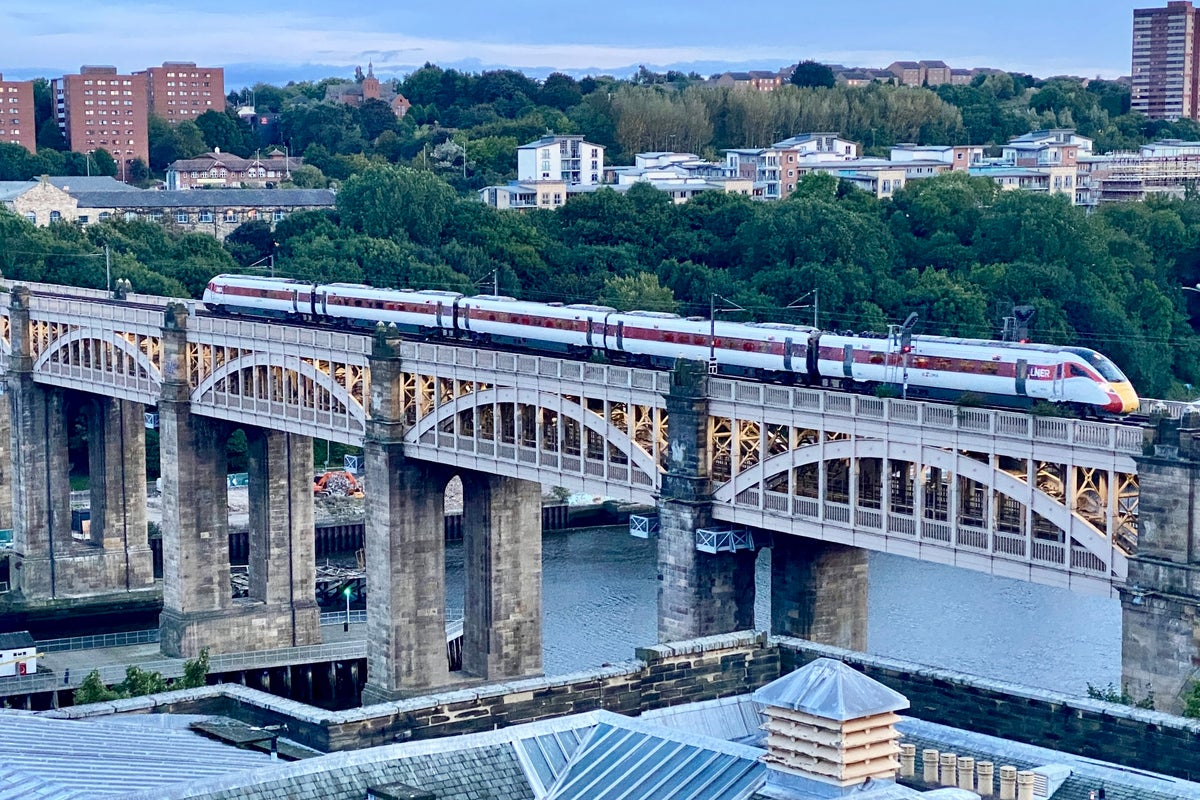
Across on the East Coast Main Line, LNER has a few:
- Carolean Express – 11am London King’s Cross to Edinburgh Waverley
- Highland Chieftain – 12 noon London King’s Cross to Inverness
- Flying Scotsman – 5.40am Edinburgh Waverley to London King’s Cross
- Northern Lights – 10am London King’s Cross to Aberdeen
- West Riding Limited – 6.30am Bradford Forster Square to London King’s Cross
But the train operator has missed a trick. Each Friday at 9.52am the southbound train from Aberdeen to London is “dry” as far as Newcastle.
LNER explains: “We expect a number of large groups to be travelling on this train, so to help make it a pleasant experience for everyone, we’ll be operating an alcohol-free policy for part of the journey.
“This means that alcohol cannot be brought onto or purchased on board our trains at any stop between Aberdeen and Newcastle, and customers may be searched before boarding.”
Being searched before boarding a domestic train is unusual, so Friday Frisker would work. But surely even better: the Dee-Tyne Detox. You’re welcome.



