


Washington:
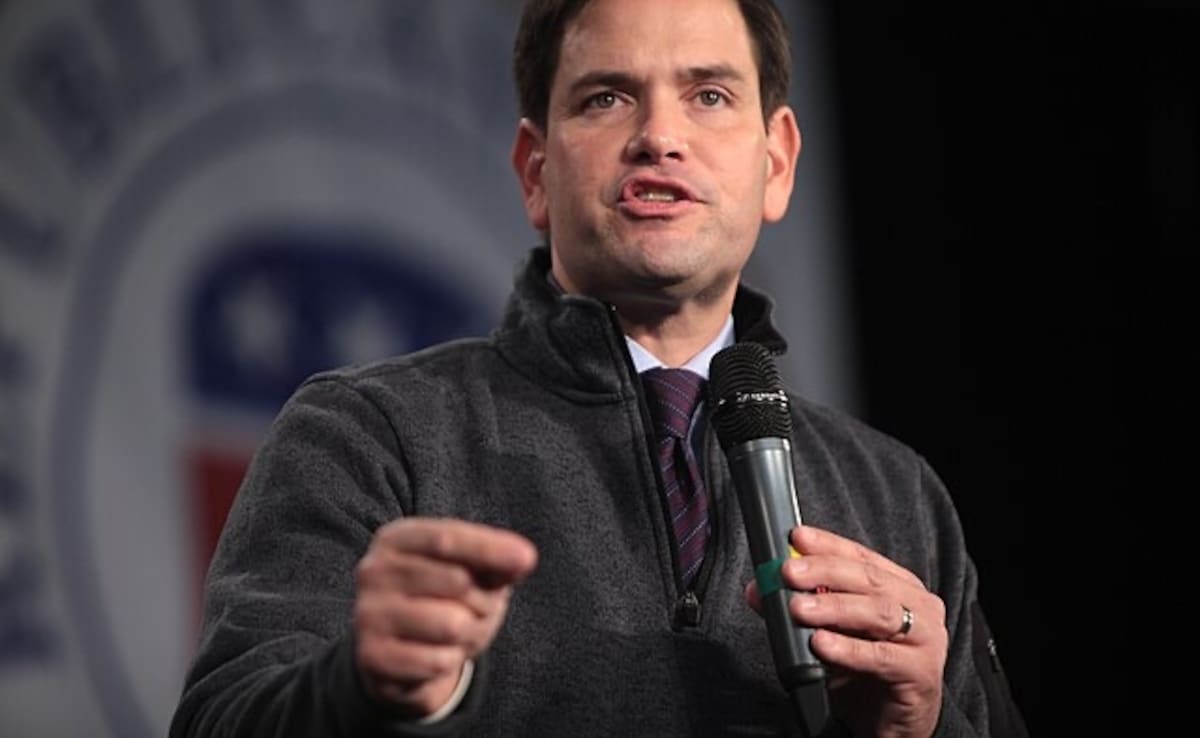
US Secretary of State Marco Rubio has described China as America’s top geopolitical challenge and its most important relationship to manage ahead of President Donald Trump’s meeting with Chinese leader Xi Jinping. Rubio, who accompanied Trump on a 2-day state visit to China, also called on Beijing to take a more active role in ending the war in Iran.
“It’s both our top political challenge, geopolitically, and it’s also the most important relationship for us to manage,” Rubio said in an interview with Fox News.
“It’s [China’s] a big, powerful country. It’s going to continue to grow, but we’re going to have interests of ours that are going to be in conflict with interests of theirs.”
The Secretary of State said that to avoid wars and maintain peace and stability in the world, the United States will have to manage the conflicting interests between the two largest economies in the world.
“There might be some areas of cooperation too, and we want to make sure we don’t walk away from those,” he added.
On Iran War
Addressing reporters before leaving Washington, Rubio also called for China to put pressure on Iranian Foreign Minister Abbas Araghchi, who was leaving Tuesday for Beijing.
“I hope the Chinese tell him (Araghchi) what he needs to be told, and that is that what you were doing in the straits is causing you to be globally isolated,” Rubio said.
“You’re the bad guy in this,” he said. “You guys should not be blowing up ships.”
Iran has exerted control over the Strait of Hormuz, the narrow waterway through which one-fifth of the world’s oil once transited, in retaliation for being attacked by the United States and Israel. China has been by far the largest buyer of Iranian oil, defying sanctions unilaterally imposed by Trump since his first term against any country that is Tehran’s customer.
Rubio claimed, “It’s in (China’s) interest to resolve” the tensions between the US and Iran, outlining three reasons the Hormuz crisis runs against Beijing’s own interests.
“We hope to convince them to play a more active role in getting Iran to walk away from what they’re doing now in the Persian Gulf,” he added.
“Asia is more exposed than any other region due to its heavy energy dependence on the strait…And China’s export-driven economy will take a direct hit as global economies weaken and demand for Chinese goods falls,” he added.
On Taiwan
Rubio, addressing reporters at the White House, also said he was sure that Trump and Xi would discuss Taiwan, the self-governing democratic island claimed by Beijing.
“I think both countries understand that it is in neither one of our interests to see anything destabilis(ing) happen in that part of the world,” Rubio told reporters.
“We don’t need any destabilising events to occur with regard to Taiwan or anywhere in the Indo-Pacific, and I think that’s to the mutual benefit of both the United States and the Chinese,” Rubio said.
China has ramped up its military presence around Taiwan in recent years and staged large-scale military drills. While the United States has an ambiguous policy on whether it would defend Taiwan, its military looks increasingly stretched as resources shift from Asia to the Iran war.
On Human Rights Issue
Rubio, who has never visited China, was an outspoken critic of Beijing’s human rights record while a senator, championing legislation that brought sanctions over Beijing’s alleged use of forced labor from the Uyghur minority. The Trump administration has largely downplayed human rights, preferring to focus on promoting what it sees as core US interests such as trade.
Asked if Trump would raise human rights, Rubio said, “I think we’ve proven in some cases it’s most effective to raise them in the appropriate setting. But we always raise those issues.”



