





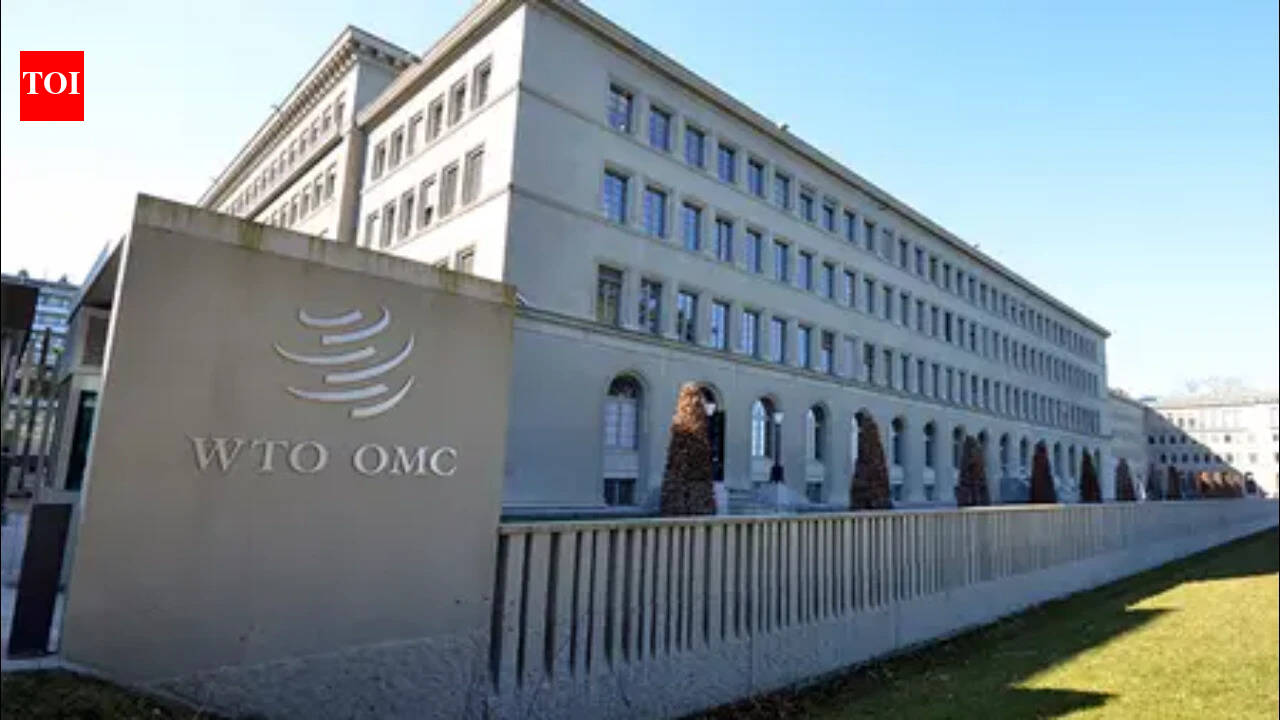

















The head of the World Health Organization on Wednesday defended its response to the fast-moving Ebola outbreak in the Democratic Republic of Congo and Uganda amid criticism that the agency had acted too slowly.
Tedros Adhanom Ghebreyesus, the W.H.O.’s director-general, said he had taken the unprecedented step over the weekend of declaring the outbreak a “public health emergency of international concern” himself, before an agency committee had met.
“This is the first time a director general has declared an epidemic before convening an emergency committee,” Dr. Tedros said at a news conference.
His comments came after Agence France-Presse quoted the U.S. secretary of state, Marco Rubio, as saying on Tuesday that the W.H.O. — from which the United States formally withdrew in January — had been late to identify the Ebola outbreak. The New York Times has not confirmed that Mr. Rubio made the remarks as quoted.
Asked about Mr. Rubio’s reported comments on Wednesday, Dr. Tedros said they may have reflected a “lack of understanding” about how the W.H.O. functions. “We don’t replace the country’s work, we only support them,” he said, referring to the health authorities in countries where an outbreak begins.
Dr. Tedros said that the number of suspected cases in the Ebola outbreak had risen to nearly 600, including 139 deaths. The outbreak could last for months, and many more people in central Africa may be infected than have been reported, global health officials have said.
Dr. Tedros said that while health officials in Congo had a track record of quickly identifying and responding to Ebola outbreaks, the conditions around this one, including a recent surge in violent conflict, had made the situation “more complex.”
The United States’ termination of funding to the W.H.O. deprived the organization of its biggest funding source and saw it scramble to cut its 2026-27 budget by $500 million. The Trump administration also shut down the U.S. Agency for International Development last year, an organization that has played a major role in containing previous outbreaks. The United States also cut funding for the U.S. Centers for Disease Control and Prevention.
These actions “have resulted in the fundamental weakening of the W.H.O. for surveillance, staffing, logistics, laboratory support and rapid response coordination across multiple countries,” said Dr. Peter Chin-Hong, an infectious diseases specialist at the University of California, San Francisco.
The outbreak is centered in Congo’s northeastern Ituri province, where there are large numbers of people who are displaced by conflict and many migrant laborers drawn to its gold mines.
Local officials have said equipment in the province could only test for the most common species of Ebola, known as Zaire, not the Bundibugyo species responsible for the current outbreak, which meant early results returned negative readings. Diagnostic kits capable of identifying Bundibugyo were flown in over the weekend, a W.H.O. representative said.
On Tuesday, the State Department announced that it would fund up to 50 treatment clinics and cover associated frontline costs in Congo and Uganda, to provide emergency Ebola screening, triage and isolation capacity.



