I went to meet Abhishek Banerjee at his office on Camac Street in Kolkata a few years ago. I reached before the time. There was heavy security outside the Camac Street office. The entire road was being cleared by security personnel. Right in front of the office, there was a street food lane bristling with stalls selling ghugni, sandwiches, chowmein, roti-tarka etc.
I got off my car to take a stroll around the stalls to try and understand the people and the market around that area. But the road was blocked. I enquired what was the matter? “Don’t you know? The crown prince is coming,” One person replied.
‘The Yuvraj Arrives’
I then went to meet Abhishek Banerjee. I realised that he had political maturity and understanding.
He claimed that everyone who met him appreciated him and his work. But from me, he wanted to know his flaws. And, I did tell him a few things.
My first point was that he was becoming disconnected from ordinary people. I explained the kind of reactions I was seeing. I told him that people felt he was becoming distant from the masses. At such a young age, this kind of image creates a problem.
I still remember when Abhishek used to arrive at the airport and travel to Delhi. There would be big cars, police vehicles, convoys, and Z-plus security around him. The editor of the newspaper where I worked earlier once told me many years ago that he was curious to know who was arriving because there was such a huge security arrangement – state police, paramilitary forces, and so much protection.
Then it was revealed that it was Abhishek Banerjee.
At that time, he was just 25. For a 25-year-old young politician, such a huge VIP security arrangement was something ordinary people did not always connect with. Regarding security, he said he had removed the police picket outside his house. He was trying to reduce it, but it was not completely in his control. The security agencies were providing him protection because of threat perception.
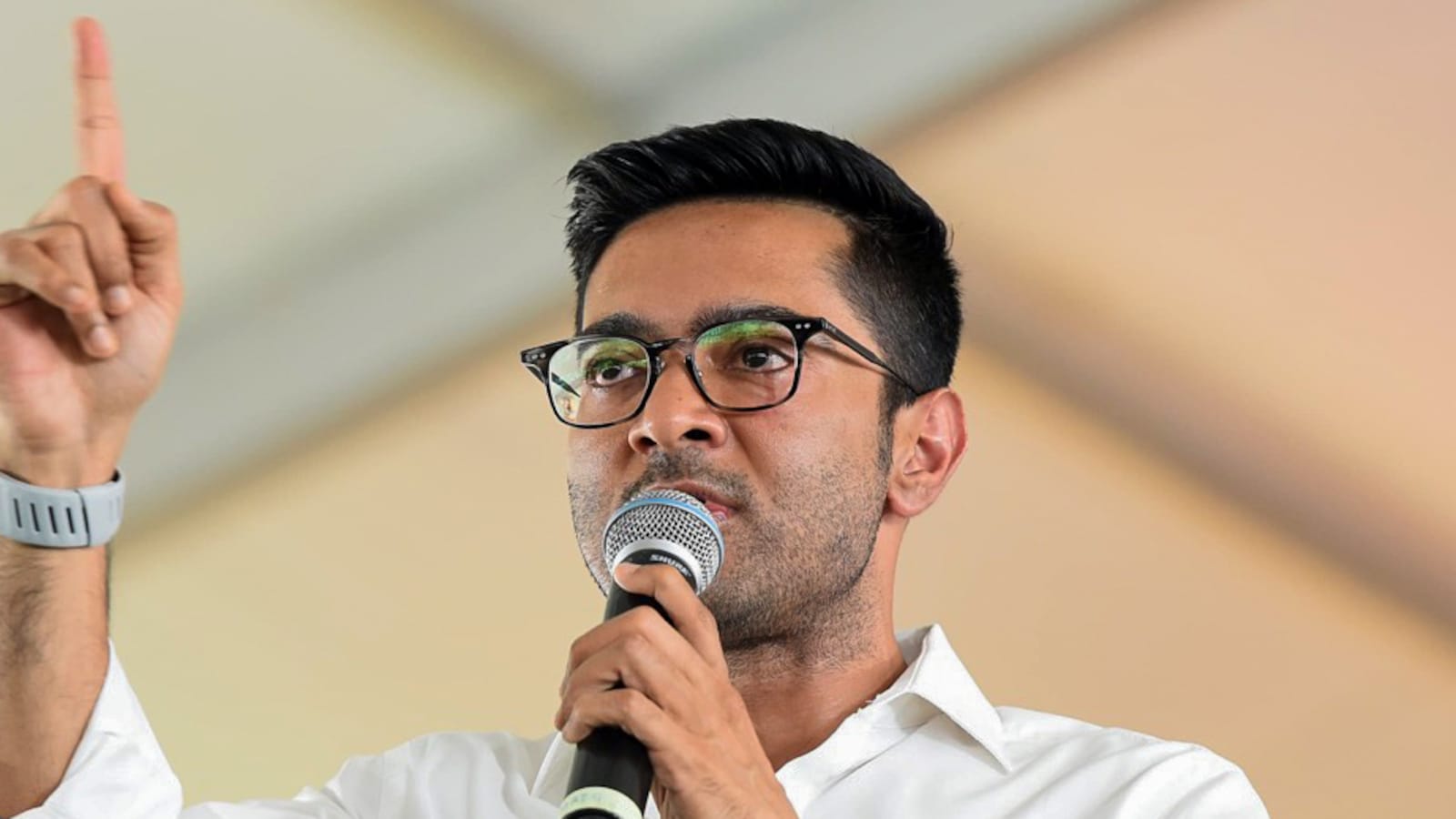
I also told him that wearing black glasses created a sense of distance. He replied that it was not a style statement. He had almost vision in one eye after an accident, and he had to wear glasses on doctor’s advice. However, my point remained that these things were creating distance between him and ordinary people.
Buddhadeb Bhattacharjee also had to wear black glasses because his eyesight was poor, but even then, such things sometimes create a psychological distance. I have seen a similar situation with Karunanidhi. People sometimes did not accept certain images easily. Despite having a strong public connection, some symbols created distance. Mahatma Gandhi’s old-school politics was about direct connection and penetration among people.
Influence Within The Party
Today, Abhishek Banerjee is around 38 years old. He entered politics at a relatively young age and, from the very beginning, received exposure that few regional leaders of his generation got. He travelled extensively across India and abroad and had the opportunity to observe different political systems and organisational structures. As a result, he developed a modern political outlook and tried to introduce a more contemporary style of political management.
A major part of this approach was reflected in the growing influence of election-management organisations such as IPAC. Although IPAC did not directly take over the party, its methods, campaign strategies, and organisational culture increasingly became visible within the Trinamool Congress. Alongside this came the question of funding and resource mobilisation. Running a large political organisation requires substantial financial resources, and TMC was no exception.
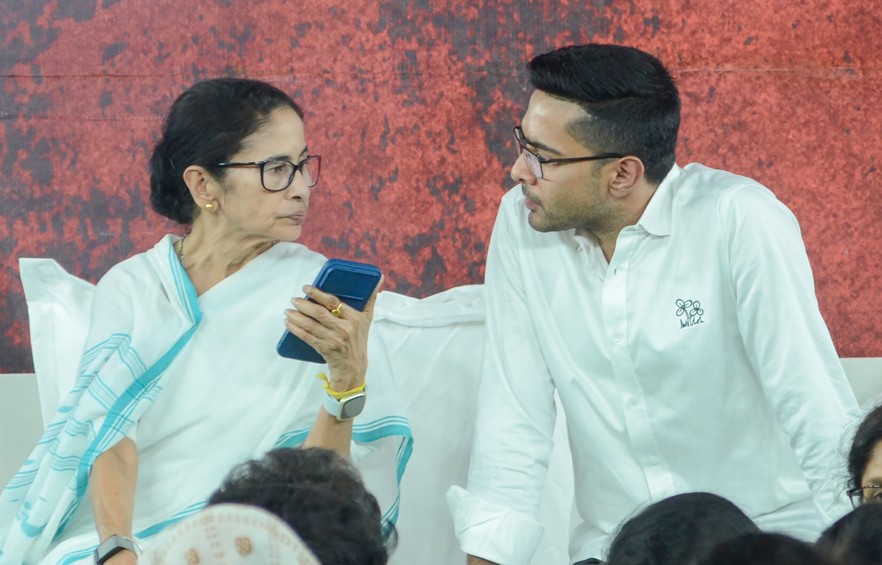
However, one thing is undeniable: without Mamata Banerjee’s support and political backing, Abhishek Banerjee would never have reached the position he occupies today. His emergence as the party’s number two leader was not accidental. Mamata Banerjee consciously elevated him and gave him increasing responsibilities within the organisation. Many other members of her extended family could not reach such a position. Abhishek did well because he possessed political instincts, organisational skills, and the ability to work within the party structure.
There is no doubt that Abhishek worked hard. He travelled extensively, remained active in organisational matters, and handled many responsibilities that others often avoided. In many situations, Mamata Banerjee relied on him more than anyone else. Whenever there was an important issue, it was often Abhishek who was asked to look into it. Yet this rise brought with it another challenge. The very visibility that made him powerful also made him vulnerable.
Contrast With Mamata Banerjee
Over time, a perception began to develop among sections of the public that Abhishek represented a more elite and distant style of politics. His lifestyle, public image, and the way he was projected created a feeling among some ordinary voters that he was not easily approachable. Mamata Banerjee, despite her flaws and limitations, always maintained a certain grassroots image. Her communication style was simple. People felt that she was one of them.
Abhishek, on the other hand, often appeared more sophisticated, polished, and urban in his public presentation. Whether that perception was fair or unfair is a different debate, but politically, perceptions matter.
Many people can imagine Mamata Banerjee walking into a roadside tea stall and sitting with ordinary people. That image comes naturally. The same image was not as easily associated with Abhishek. This created a sense of alienation among sections of the electorate.
At the same time, the BJP intensified its political campaign against him. The party repeatedly projected him as the face of alleged corruption scandals. From the coal scam to the cattle-smuggling controversy and several other allegations, BJP leaders consistently placed Abhishek at the centre of their attacks.
As a result, his political image gradually became linked with accusations of corruption, regardless of whether those allegations were proven or not. In politics, repeated accusations often shape public perception even before legal conclusions are reached.
Post-Suvendu Rise
The situation became more complicated after Suvendu Adhikari left the Trinamool Congress. At one stage, many believed that Suvendu was the natural political successor To Mamata Banerjee within the party structure. After his departure, the path became clearer for Abhishek to emerge as the No. 2.
Mamata herself played a decisive role in creating that space for him.
This development also highlighted a larger reality about regional parties in India. Unlike national parties, many regional parties gradually become highly centralised around a family or a small group of individuals. Control over organisational decisions, resources, and political authority often remains concentrated within a limited circle.
Examples of this pattern can be found in several regional parties across India – from Samajwadi Party under Mulayam Singh Yadav and later Akhilesh Yadav to Rashtriya Janata Dal under Lalu Prasad Yadav and his family. Similar tendencies have emerged in many other regional political formations.
In the Trinamool Congress as well, Mamata Banerjee remained the final authority, and after her, Abhishek increasingly came to be viewed as the second centre of power.
According to critics, this concentration of authority weakened internal party democracy. Many leaders felt that decision-making became limited to a small circle, leaving little room for dissent or alternative voices.
Over time, the public perception of Abhishek also began to change.
Admiration To Resentment
For some people, admiration gradually turned into resentment. Political opponents successfully framed him as a symbol of power, privilege, and centralised authority. This narrative gained traction among voters who were already dissatisfied with the government.
Bihar BJP leader and Rajya Sabha MP Vivek Thakur argued that the main problem was not merely governance but the perception of arrogance associated with both Mamata Banerjee and Abhishek Banerjee. According to him, this image created a disconnect between the leadership and ordinary citizens.
Thakur believes that many leaders failed to understand the depth of public anger that had been building beneath the surface. What eventually emerged was not merely an electoral setback but an outburst of accumulated frustration, resentment, disappointment, and anti-incumbency sentiment. He draws parallels with other regional parties that ruled for long periods and eventually faced voter backlash. Similar trends were visible in Bihar under the RJD and in Uttar Pradesh under the Samajwadi Party. According to this argument, long years in power often create a gap between leadership and ordinary voters.
Thakur further claims that the BJP corrected several strategic mistakes that it had made in the 2021 West Bengal election and entered the 2026 contest with a stronger and more refined strategy.
Meanwhile, criticism of Abhishek Banerjee had also begun emerging from within sections of the Trinamool Congress itself.
Kunal Ghosh, despite being considered close to Mamata Banerjee, has openly expressed concerns about Abhishek’s role and the perception surrounding him. Several leaders argue that the party’s present difficulties are closely linked to the way power was concentrated and how allegations of corruption damaged the organisation’s credibility.
Some voices within the party have even suggested that if urgent corrective measures are not taken, TMC may face deeper organisational challenges in the future. At the same time, questions are being raised about the timing of these criticisms. Several leaders have also questioned why many of these concerns were not voiced before the elections and why they surfaced only after the results were declared.
Supporters of the party leadership argue that loyal workers remained disciplined during the election campaign and chose not to publicly raise internal disagreements at a crucial political moment. Now, after the electoral setback, many suppressed concerns are coming to the surface.
That, perhaps, is the larger story behind Abhishek Banerjee’s rise and the challenges he faces today. His political journey reflects not only the evolution of one leader but also the broader tensions that emerge when a party remains in power for a long time and struggles to balance authority, organisation, public perception, and internal democracy.
(The author is Contributing Editor, NDTV)
Disclaimer: These are the personal opinions of the author