


After nearly six decades at San Francisco’s Fisherman’s Wharf, Ripley’s Believe It or Not! is preparing to close its doors before the end of 2026. The attraction, which opened on February 2, 1967, contains more than 400 unusual artifacts and a 2,000-square-foot mirror maze. SFGATE reported that the company has not announced a specific final date, but the museum will remain open while it organises the closure. Ripley’s also plans to sell several exhibits connected to San Francisco, including a tiny Golden Gate Bridge made on the head of a pin, toothpick versions of the landmark, Joe DiMaggio’s crutches and a chicken-wire portrait of Janis Joplin. The decision ends a colourful chapter in the history of Fisherman’s Wharf, where generations of visitors paid to see curiosities, oddities and objects designed to make them question what was possible.
The end of a Fisherman’s Wharf era
Ripley’s Believe It or Not! became part of the Fisherman’s Wharf experience long before smartphones, social media and interactive digital attractions changed the tourism industry.For 59 years, the museum occupied 175 Jefferson St., sharing its building with Applebee’s and the Wharf Central souvenir shop. Visitors entering the attraction encountered a collection built around the strange, the surprising and the difficult to explain.The museum’s closing will remove one of the district’s longstanding roadside-style attractions. Fisherman’s Wharf has always depended on novelty, spectacle and memorable experiences, and Ripley’s offered all three under one roof.Its closing is also part of a broader shift in the neighbourhood. Other long-established attractions have disappeared, including Madame Tussauds, which permanently closed its Fisherman’s Wharf location in October 2024.The area is not becoming empty. New restaurants, shops and entertainment venues are planned. But the character of the waterfront is changing, and Ripley’s departure marks the loss of a business that many visitors associated with San Francisco tourism.
A museum built around the unusual
The Fisherman’s Wharf museum contained more than 400 artifacts. Some were historic, some were artistic and others were designed primarily to provoke disbelief.Ripley’s attractions have traditionally combined genuine curiosities with unusual art, unusual records, optical effects and stories from around the world. The goal is not to present a conventional museum collection. It is to create a sequence of surprises.The San Francisco location also included Ripley’s Marvelous Mirror Maze, a 2,000-square-foot attraction that challenged visitors to find their way through reflective walls, confusing passages and changing perspectives.A mirror maze depends on a simple idea, but the experience can be surprisingly disorienting. Repeated reflections make it difficult to judge distance and direction, while visitors must rely on touch, patience and careful observation to find the exit.Together, the oddities museum and mirror maze created a family-oriented attraction that appealed to tourists looking for something lighter and more theatrical than a traditional cultural institution.
Why the attraction is closing
Ripley’s has not identified one specific event or problem as the reason for the closure.Suzanne Smagala-Potts, a spokesperson for the company, told SFGATE that Ripley’s had taken a broader look at the attraction, the changing landscape of Fisherman’s Wharf and what made sense for the company’s future. After nearly 60 years at the location, the company concluded that it was the right time to close.That explanation suggests the decision reflects multiple factors rather than a sudden crisis.Tourist districts change over time. Visitor habits shift, operating costs rise and older attractions may need major investment to compete with newer experiences. A location that worked well in the 1960s may not have the same commercial role decades later.The company operates 26 other museums around the world. It also recently closed locations at the Arizona Boardwalk in Scottsdale in August 2025 and in Atlantic City, New Jersey, in 2022.The San Francisco closure therefore appears to be part of a wider evaluation of Ripley’s locations rather than an announcement that the brand itself is ending.
The museum’s San Francisco connection
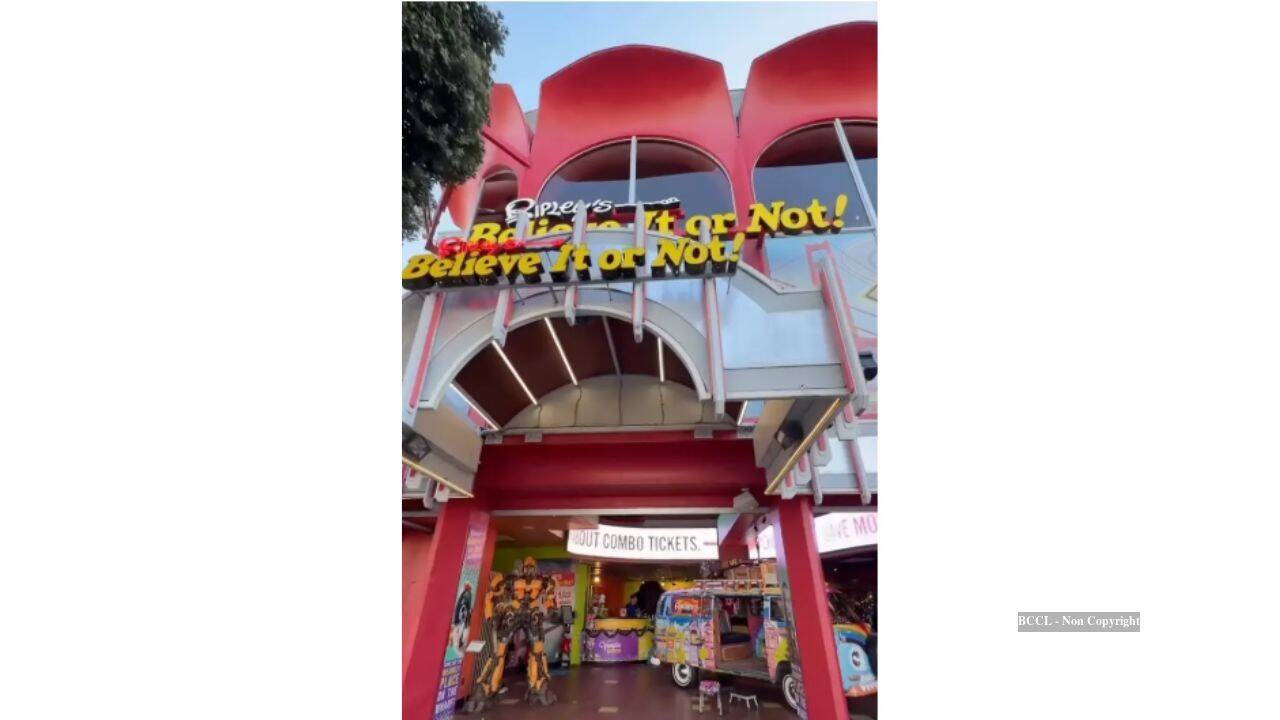
Photo credit: Ripley’s Believe It or Not! (San Francisco)/ FACEBOOK
Ripley’s history in San Francisco goes back further than the Fisherman’s Wharf attraction.Robert Ripley, the cartoonist and entrepreneur who founded the brand, was born in Santa Rosa. He began working for the San Francisco Bulletin in 1909 before travelling around the world and collecting stories, images and objects that became the basis of his famous Believe It or Not! features.Early versions of the museum appeared at the Golden Gate International Exposition on Treasure Island in 1939 and 1940. Ripley later opened the first official Believe It or Not! location in St. Augustine, Florida, in 1950.His connection with San Francisco continued through later attractions. The city previously hosted the Museum of Witchcraft and Magic at 235 Jefferson St., a venue that eventually became the Guinness World Records Museum. That museum closed in 1994.The history gives the current closure an added meaning. Ripley’s was not simply a national attraction that happened to rent space on the waterfront. San Francisco was connected to the story of the founder and to some of the earliest versions of the brand’s museum concept.
Famous visitors over the years
The Fisherman’s Wharf museum attracted more than ordinary tourists.According to SFGATE, high-profile visitors included Michael Jackson, former San Francisco Mayor Willie Brown and baseball legend Joe DiMaggio.Celebrity visits added to the attraction’s visibility, but the museum’s appeal did not depend entirely on famous guests. Its main audience consisted of families, tourists, school groups and curious visitors who wanted an unusual experience during a trip to the waterfront.The museum’s location made it easy to combine with other popular activities. Visitors could walk along the wharf, see the sea lions, browse souvenir shops, eat seafood and then step into an air-conditioned world of oddities.That combination of convenience and curiosity helped Ripley’s remain part of the local tourism landscape for decades.
Exhibits that will be sold
The closure will give collectors and San Francisco enthusiasts an unusual opportunity.Ripley’s plans to offer several city-related exhibits for sale. The items include a model of the Golden Gate Bridge created on the head of a pin and versions of the landmark made from toothpicks.These miniature works reflect the kind of craftsmanship and spectacle that made the museum distinctive. A familiar San Francisco landmark becomes extraordinary when it is recreated at a scale small enough to fit on a pinhead or assembled from everyday wooden sticks.Other exhibits being offered include Joe DiMaggio’s crutches and a chicken-wire portrait of Janis Joplin. Both objects connect the collection to well-known figures associated with American sports and music.The sale means that some pieces will leave the museum and enter private collections. Instead of remaining together as part of one public attraction, the objects may be distributed among buyers who value their history, construction or connection to the city.Ripley’s has not announced the final sale dates or prices for the exhibits, as per the report.
A changing attraction district
The closure comes as Fisherman’s Wharf continues to evolve.The neighbourhood remains one of San Francisco’s best-known visitor destinations, but tourism patterns and commercial needs are changing. Longstanding restaurants and attractions have closed, while new public spaces, food businesses and entertainment venues are expected to arrive.A new public plaza is planned on the site where Alioto’s once operated. Saigon Sandwich and the local boba chain Little Sweet are expected to open by the end of the year, while Space Karaoke is scheduled to debut in early 2027, as per the report.These additions show that the wharf is not simply losing businesses. It is being reshaped for a new generation of visitors.However, newer venues do not necessarily replace the emotional role of older attractions. A karaoke lounge may draw crowds, but it does not offer the same experience as walking through a museum filled with unusual objects collected over decades.For many visitors, Ripley’s was part of a personal memory of San Francisco. Its closing will be felt most strongly by people who visited as children and later returned with their own families.
What visitors can expect
The museum has not yet announced a specific final day. It is expected to remain open sometime before the end of 2026 while the company completes its transition.Ripley’s president, Jim Pattison Jr., said the attraction had delivered the odd, the unusual and the plainly weird during its long run. The company has thanked the Sabella family, the longtime landlords, as well as the hundreds of employees who helped operate the museum over the years.The company has also said it is offering support to team members as they prepare for what comes next.Visitors who want to see the museum before it closes will need to monitor Ripley’s announcements for the final date. Until then, the attraction continues to offer its collection and mirror maze to the public.The closing period may also increase interest in the museum. Some people who have postponed a visit for years may decide to go before the doors shut, while former visitors may return for one last look.
A possible return to San Francisco
Although the current location is closing, the company has not ruled out a future presence in the city.Pattison wrote that Ripley’s was saying goodbye to this location, but not necessarily to San Francisco. He added that visitors should never assume the story is completely over with Ripley’s.That leaves open the possibility of a new attraction, a temporary exhibition or another format in the future. The brand’s global network and long association with curiosity could allow it to return if the right location and business conditions emerge.For now, however, the Fisherman’s Wharf museum’s run is coming to an end.Since opening in 1967, it has given visitors a place to encounter objects that were tiny, enormous, unsettling, beautiful or simply difficult to believe. Its 400-plus artifacts and 2,000-square-foot mirror maze turned a day at the wharf into a trip through the unexpected.By the end of 2026, the lights will go out on one of San Francisco’s most recognisable curiosity museums. Some of its strangest treasures may find new homes, but the memories created inside the attraction will remain part of Fisherman’s Wharf’s colourful history.


