


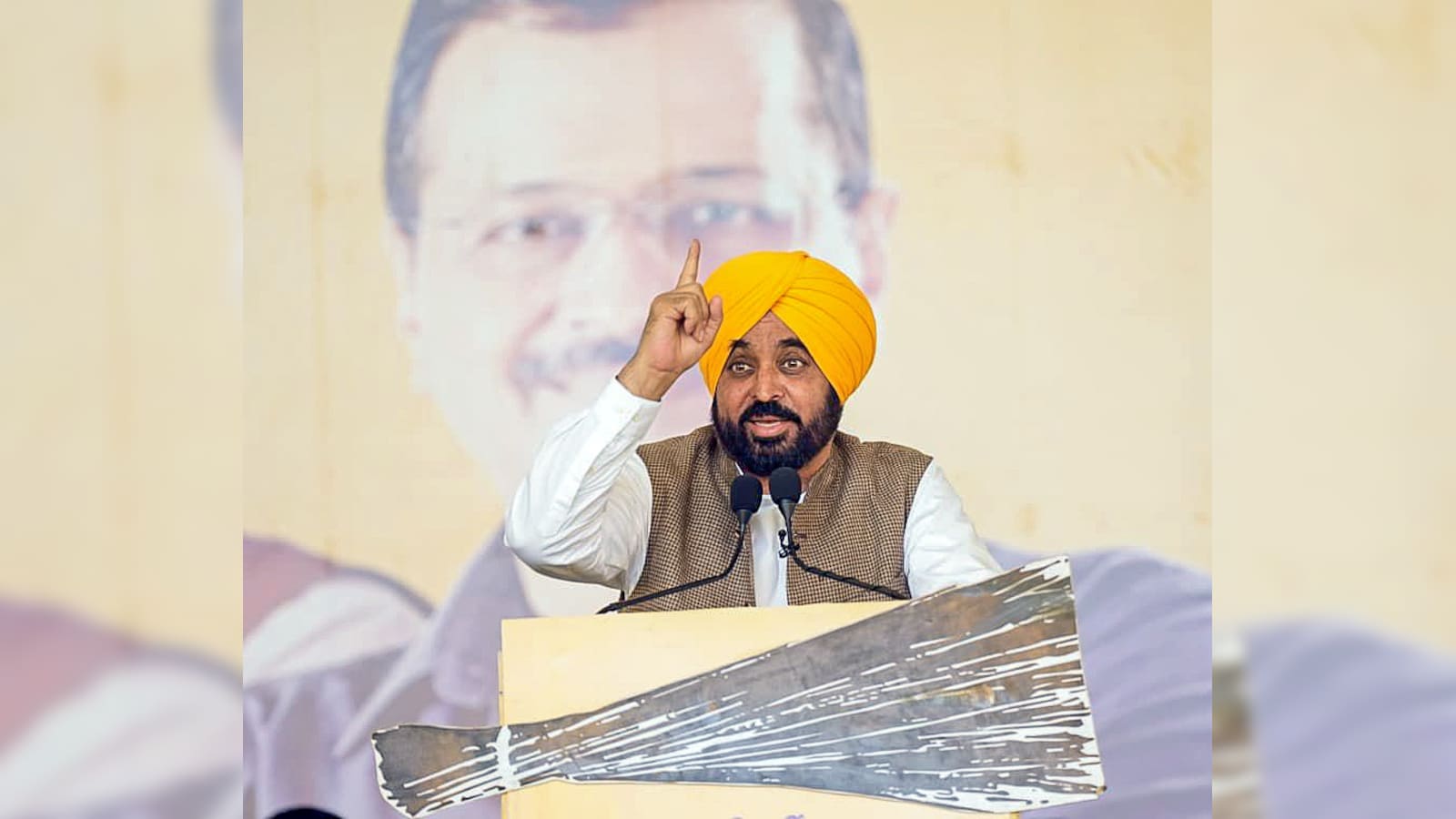
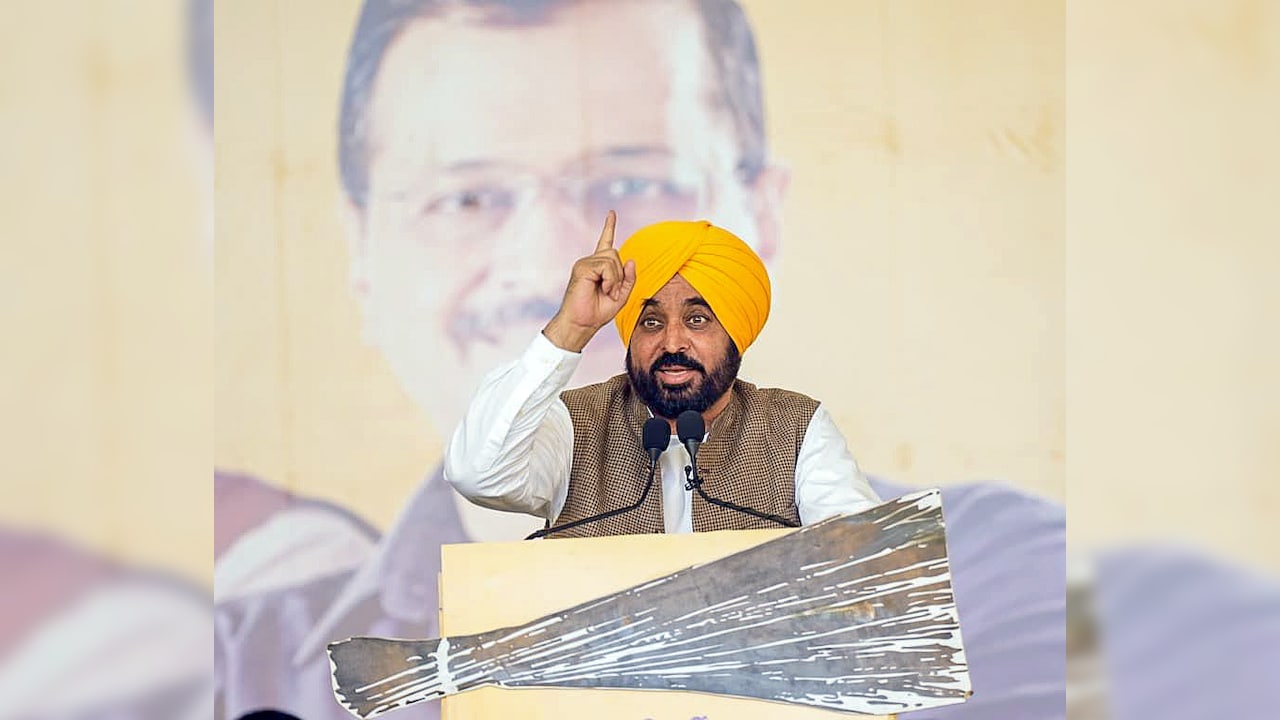
Standing at the Akal Takht, Jathedar Kuldeep Singh Gargaj declared Punjab Chief Minister Bhagwant Mann as “anti-Sikh” after a meeting of the five Singh Sahibs, marking a dramatic escalation in Punjab politics. The move follows allegations of blasphemy against the Chief Minister over purported video, which the Akal Takht claimed to be genuine based on a forensic examination.
Even as the AAP denies any wrongdoing by the Chief Minister, calls for his resignation have widened, with the Shiromani Akali Dal (SAD), Congress, and BJP jumping into the electoral ring.
With Punjab heading to the polls in 2027, this declaration by the highest temporal authority of Sikhs carries massive moral weight and threatens to fundamentally alter the electoral landscape.
The Sacrilege Law Boomerang
In 2023, the Mann government passed the Punjab Prevention of Offences Against Holy Scripture Bill, making sacrilege punishable by life imprisonment – a move framed as fulfilling a core Panthic demand following the 2015 ‘beadbi’ or sacrilege cases. With the Chief Minister now accused of a similar offense, an unmistakable question emerges: “Will Mann book himself under his own law?”
AAP’s dramatic rise was built on the moral high ground it captured while the Shiromani Akali Dal (SAD) was weighed down by the 2015 sacrilege baggage it acquired due to the Bargari sacrilege and Behbal Kalan police firing case. Congress too bore the brunt of the sacrilege over accusations of inaction. The latest decree by the Akal Takht has now stripped AAP of its “clean slate” image and placed it in the exact same bracket as its predecessors, whom it openly opposed.
Fracture of the 2022 Landslide Coalition
AAP’s 92-seat landslide in 2022 relied on a core formula. The party won 16 out of 25 seats in the Majha belt, the Panthic heartland, and 66 of 69 seats in the Malwa belt, the largest geographical area in Punjab, where AAP projected itself as a “cleaner, fresher” alternative.
A ‘Guru Dokhi’ or an “anti-Sikh” branding threatens to shatter that outreach. The crisis gives the Shiromani Akali Dal (SAD) a window to reclaim its Panthic narrative and position itself as the guardian of the state’s religious identity. However, full redemption for the Akalis remains dented by ‘beadbi’ and corruption allegations, with their own leader, Sukhbir Singh Badal, found guilty of religious misconduct by the Akal Takht.
Split into four factions, the Akalis may not be able to fully capitalise on the setback for AAP. Such an incident could lead to the movement of voters toward alternatives like the Congress or even independents, or could even trigger a low rural Sikh turnout, which benefits parties like the BJP.
The Rise of Independents and Radical Alternatives
The true beneficiaries of Panthic disillusionment may be radical Panthic forces or independents, who have seen a rise in the past few electoral contests in Punjab. Even while being jailed, Waris Punjab De chief Amritpal Singh won Khadoor Sahib, a seat often called the “heart of the Panthic belt,” and Sarabjit Singh Khalsa, son of former PM Indira Gandhi’s assassin, won Faridkot as an independent.
Furthermore, in the recent local body polls, independents emerged as the third-largest bloc with 251 wards, even outperforming the Akalis which finished fourth. While civic elections are fought on hyper-local issues like sewage and electricity rather than ideology, a state election driven by religious outrage may push voters toward independent or newer radical outfits offering a “purer” alternative.
Bhagwant Mann’s Campaign Paralysis
In 2022, Bhagwant Mann was AAP’s campaign weapon. A son of the Malwa soil which historically defines the course of the polls, Mann positioned himself as Punjab’s “apna munda”. His turbaned image tied to the arts and strong presence made him familiar and allowed the AAP to even breach rural Sikh pockets.
The “anti-Panth” tag now paralyses the reach of the leader that earlier enjoyed popular support, especially in villages. It puts Mann at greater risk and makes his entry into traditionally hardcore Panthic seats like Amritsar, Tarn Taran, and Gurdaspur (Majha belt) difficult.
Despite Malwa being Mann’s turf, he could face organised boycotts or protests by local gurdwaras. Such an image may compel deras to keep their stance neutral and potentially not invite AAP leaders for the sake of not associating with someone branded “anti-Sikh”.
However, benching the leader may not be an option for AAP. Keeping Mann out of the campaign may indicate the party’s admission of guilt. Besides, AAP lacks a Plan B; ostracising Mann would leave the party with no viable alternative who can pull in crowds with mass charisma.
With the Delhi leadership of the party carrying their own political baggage, the AAP campaign now thrives on Bhagwant Mann’s outreach in the northern state.
While the Akal Takht decree is not legally enforceable, its ramifications still hold just as much weight or more than a legal order in a state that runs high on religious identity. Despite AAP’s clean sweep in the local body polls, that data point may be dated with the party’s top leader being branded “anti-Sikh” in a Sikh-majority state.
A fresh crisis now looms over AAP – one that could severely alter the course of Punjab’s political destiny. With polls right around the corner, the incident may have huge ramifications in the 2027 polls, where AAP battles for the incumbent vote, Congress for the post, Shiromani Akali Dal (SAD) for survival, and the BJP to establish itself as a player.



