


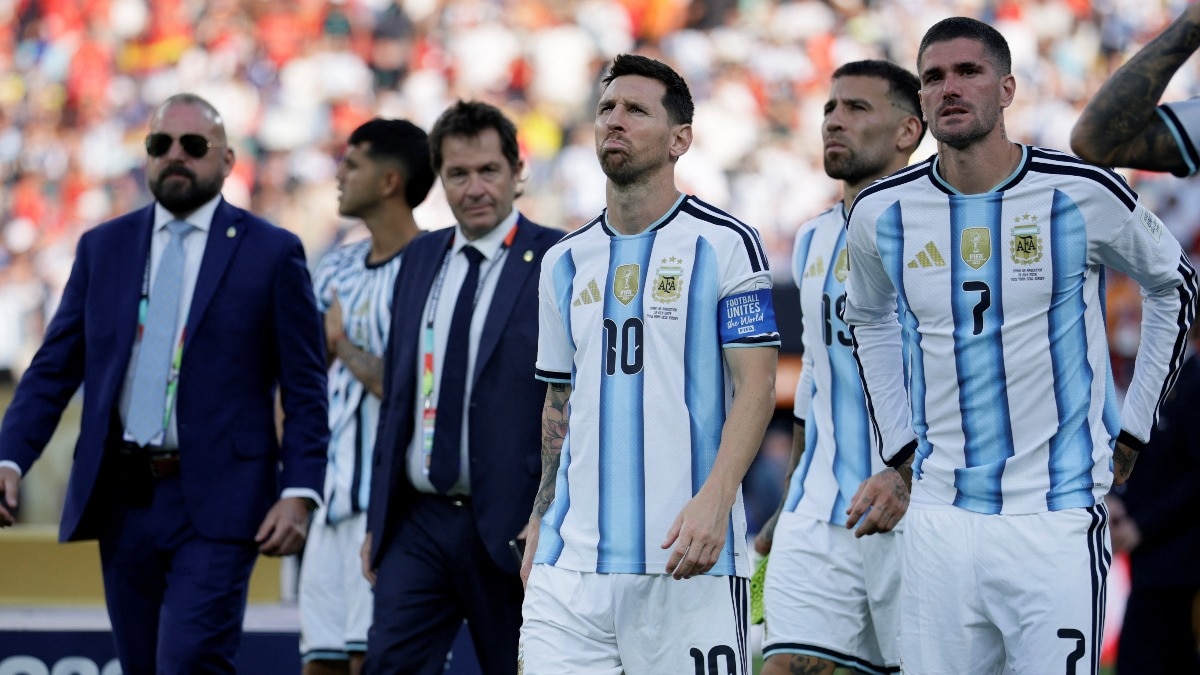
Argentina has introduced sweeping new immigration powers after the fallout from its 1-0 defeat to Spain in the FIFA World Cup final triggered a wave of hostility towards the country and its citizens. On Thursday, July 31, President Javier Milei signed an emergency decree allowing authorities to deny entry to or expel foreigners accused of promoting hatred or discrimination against Argentines because of their nationality.
The decree comes after weeks of criticism over controversial refereeing decisions that fuelled claims FIFA had favoured Lionel Messi and Argentina during the World Cup. The backlash soon spread beyond football, with Argentine fans, players and even the country’s society becoming targets of online abuse and criticism.
“In light of recent displays of hostility toward the Argentine Republic and Argentines, the national government reaffirms that the defence of the nation, its citizens and its symbols is non-negotiable,” Milei’s office said.
“Anyone who attacks the Argentine Republic is not welcome in our country.”
The measure expands Argentina’s immigration law by allowing authorities to deny entry, revoke visas or deport foreigners found to have promoted hatred against Argentines through spoken or written statements or by desecrating national symbols. The government, however, said the rules would not apply to political, academic or civic criticism protected under the country’s Constitution.
WORLD CUP FALLOUT
The controversy surrounding Argentina’s World Cup campaign escalated after the team lost 1-0 to Spain in the final. Questions over refereeing decisions throughout the tournament had already sparked accusations that FIFA favoured Argentina, while the team’s aggressive style of play and the behaviour of some supporters drew widespread criticism.
The backlash intensified after Argentina players and staff were involved in a post-final brawl with Spain. FIFA has since opened disciplinary proceedings against the Argentine Football Association over the altercation, alleged racist abuse and fan misconduct. The governing body is also investigating Argentina players for displaying a Falkland Islands banner after their semi-final win over England.
Milei has described the criticism as a coordinated “anti-Argentina campaign” and alleged, without providing evidence, that foreign political groups were behind it. His remarks also triggered a diplomatic dispute with Brazil after accusations against President Luiz Inacio Lula da Silva’s government.
CRITICS QUESTION DECREE
The emergency order marks another tightening of Argentina’s immigration policy under Milei, whose government has already introduced stricter residency rules and broader deportation powers. It also represents a shift for a country that has historically prided itself on welcoming immigrants.
Critics argue the decree leaves key questions unanswered, including how authorities will distinguish protected speech from hate speech and whether foreigners’ social media activity could be used as evidence.
Opposition lawmaker Maximiliano Ferraro criticised the move as unnecessary political theatre.
“Who and how will apply those grounds? How will it be determined that a person has engaged in such ambiguous assumptions as a ‘hate message’ toward the country or our population?” Ferraro said.
While the government insists the decree is aimed at protecting Argentines from targeted hostility, opponents warn its broad language could lead to inconsistent enforcement and raise concerns over free expression.
– Ends



