


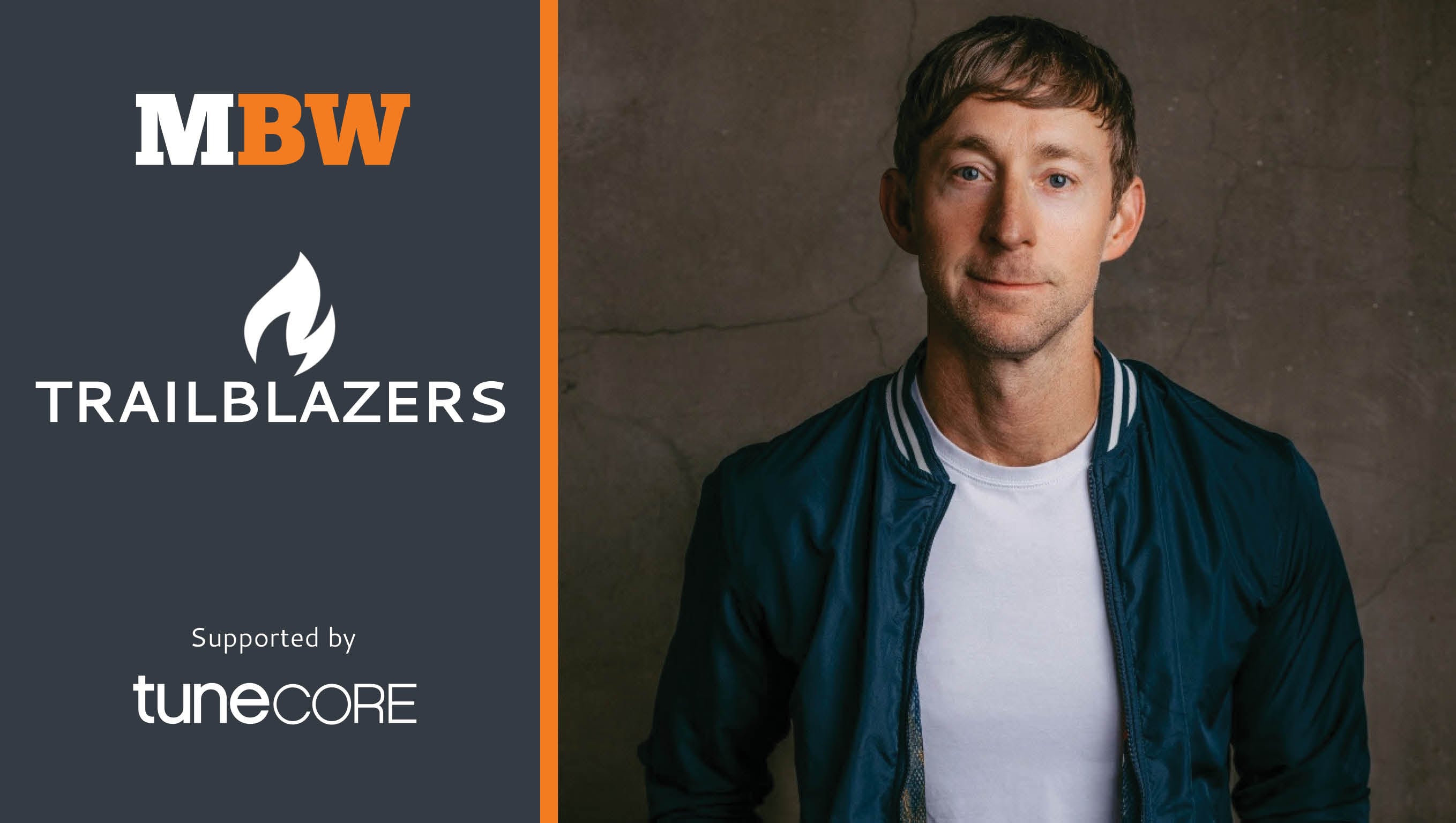
Trailblazers is an MBW interview series that turns the spotlight on music entrepreneurs with the potential to become the global business power players of tomorrow. This time, we meet Ashley Gorley – the hit songwriter and founder of Tape Room Music, a publishing company whose roster has minted a new generation of Nashville hitmakers. Trailblazers is supported by TuneCore.
Nashville’s finest have much to thank Ashley Gorley for – even when he tells them their songs ‘suck’.
“A lot of writers and publishers just try to be encouragers,” explains the record-setting hitmaker. “You’ve got to be a cheerleader and an encourager, but you don’t have to tell them that every song they turn in is great. They really want honesty. They want to know how to grow.”
Look no further than Hunter Phelps – one of the tunesmiths signed to Gorley’s Music Row-based publishing house and artist development company, Tape Room Music – as a case in point.
“My first three, four hits were basically story songs. That was the thing that set country music apart to me – the only genre where you tell a complete, real story that sounds like it actually happened.”
Ashley Gorley
“I’ve had writers thank me on stage for telling them their songs sucked in the beginning,” Gorley says.
“Hunter Phelps, who’s crushed it – hundreds of cuts, 10-plus No.1s – thanked us for being honest and giving that kind of feedback. He noticed that he started getting more songs recorded than those people who were told all their songs were great, and started taking steps a little quicker than they did. I think that’s a great snapshot of what we try to bring to the table.”
That philosophy of coaching over cheerleading has helped drill Tape Room (the name was inspired by Gorley’s internship in a literal tape room) into one of Nashville’s most consistent hit factories.
Founded 15 years ago, the firm’s roster has collectively notched over 60 No.1 hits, with two Country Airplay No.1s back-to-back at the start of 2026, plus a No.2 for Megan Moroney’s 6 Months Later.
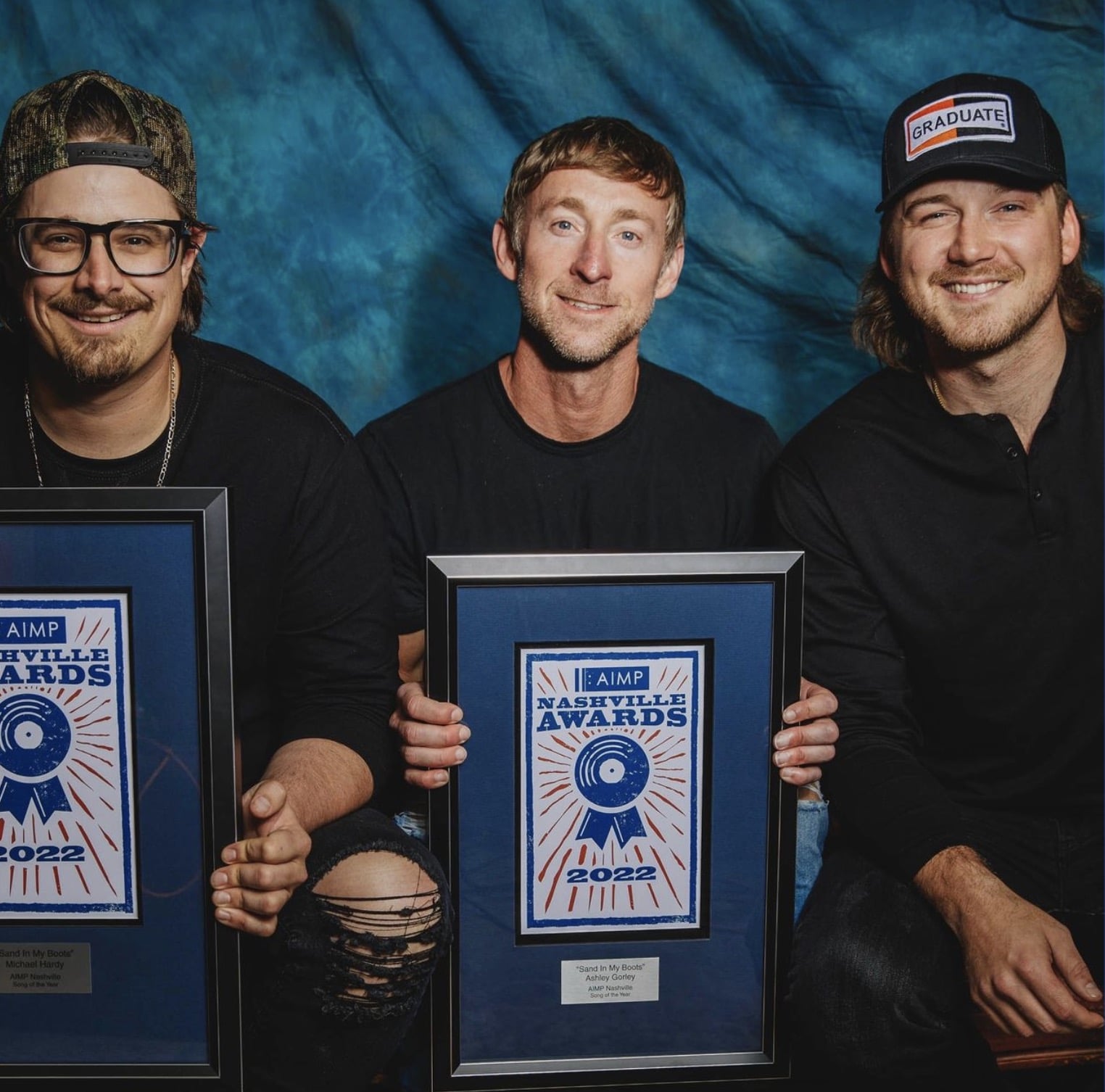
Gorley’s own writing credits include Sand in My Boots and Last Night (Morgan Wallen), Crash My Party (Luke Bryan) and She Had Me At Heads Carolina (Cole Swindell), among dozens of others.
At last count, he has a history-making 86 country airplay chart-toppers under his belt. He was an inductee in the Songwriters Hall of Fame’s Class of 2025.
His maiden No.1, Carrie Underwood’s 2006 single Don’t Forget to Remember Me, came after watching the singer win American Idol the previous year.
“I knew country music – I didn’t know it as well as pop and R&B and hip-hop, but I’d lived it,” says Gorley. “I grew up farming and different things, small town stuff, so I’d done all the stuff in country songs. But I was a nobody. I didn’t have the voice, didn’t have whatever. So I had to figure out a way to break in.
“My first three, four hits were basically story songs. That was the thing that set country music apart to me – the only genre where you tell a complete, real story that sounds like it actually happened.
“That first song was about a girl going away to college. I literally watched American Idol in real time, saw Carrie Underwood win and said, ‘I want to get a song on this girl’ – which was just a crazy thing, like saying I want to be in the NBA. But it happened.”
Here, Gorley speaks to MBW from his Nashville studio about the art of mentorship, Tape Room’s family values, and whether the industry’s songwriters are getting a fair shake…
YOU’VE BEEN RUNNING TAPE ROOM FOR AROUND 15 YEARS NOW. TAKE US BACK TO THE BEGINNING – WHAT WAS YOUR AGENDA?
After I got a writing deal, it was always my intention to have a publishing company. Coaching and mentoring has always been a passion for me. I love being a songwriter, but I also love hearing other people’s songs and being able to give feedback and advice.
So as soon as I had two or three hits of my own, I wanted it to be part of my next deal that I could sign three writers as partners with Warner Chappell, or whoever it was at the time, and I wanted to sign somebody out of the box.
“I ended up signing a guy named Zach Crowell, who was a cousin of an artist that I was working with, and he was selling rap beats. I watched Jelly Roll give him cash for an MP3 of beats when I was at his house, back when he was the local rapper, for like $200, maybe $150 bucks.”
I ended up signing a guy named Zach Crowell, who was a cousin of an artist that I was working with, and he was selling rap beats. I watched Jelly Roll give him cash for an MP3 of beats when I was at his house, back when he was the local rapper, for like $200, maybe $150 bucks. So I was like, ‘Alright, I love this guy.’ We loved the same kind of music growing up and I just liked his vibe for whatever reason, so I signed him.
He ended up producing Montevallo by Sam Hunt [2014], and he’s probably written 20 No.1 since then. He was my first signing, and then a guy named Matt Jenkins, and a guy named Jerry Flowers, and those people had multiple No.1s. I was three for three!
I don’t want to have two people that do the exact same thing ever. And then, it sounds very simple, but I just wanted nice guys and girls with kind hearts that wanted it as bad as I wanted it – and I wanted it really bad.
WHERE DOES YOUR INSTINCT FOR MENTORSHIP COME FROM?
I think some of it’s probably in the DNA. I was a dad early, at probably 23 or 24, so this whole time I’ve got kids at home. I was trying to support them. The dad gene is strong in me.
I’ve always liked working with kids even before that, and I always really appreciated teachers that would go the extra mile. I always noticed, like, “Hey, this teacher or this coach is not getting paid very much, not getting paid differently to the one that doesn’t care, but they just care.” And you remember those teachers. Right now, if I asked you, you could name your three teachers through your whole K-12 that really cared about you. I wanted to be one of those.
I grew up in central Kentucky – not a place known for their high education I’d say – and I had a creative writing teacher that took time to put us in a place where we would free-write every day for five, ten minutes, where we’d have to write poetry, plays, stories. That really fed into my love for language and trying to come up with different ways to say things.
TAPE ROOM’S WRITERS HAVE NOW COLLECTIVELY HAD AROUND 60 NO.1 HITS – NOT COUNTING YOUR OWN 86. DO WRITERS COME TO YOU NOW, OR IS THERE STILL A COURTSHIP INVOLVED?
In the beginning, of course, it was like, “What can you do for me?” But now we definitely have more writers that would like to be on the team than we can handle or we can sign. So we have to be really picky about it.
I just think we’ve created a culture and a family vibe. If you write for one of the majors or a bigger company, you can get lost in the shuffle, or you don’t necessarily get the kind of feedback and the hands-on thing. Everybody involved in Tape Room knows that if we succeed, we all succeed. It’s just set up for everybody to care about it a little bit more.
“I just think we’ve created a culture and a family vibe. If you write for one of the majors or a bigger company, you can get lost in the shuffle.”
We haven’t always kept every writer that we’ve signed because some of them have had success, and they sell a catalog, or do something where I’m not going to give them millions of dollars for the hits that they had – I can’t do that.
WHEN YOU’RE MENTORING WRITERS, WHAT ARE THE MOST COMMON MISTAKES THEY MAKE?
They’re not mistakes, I guess, but things that people need to work through. Copying what’s on the radio. Trying to be like, “This is the perfect thing for this artist, because it sounds like the last thing they did.”
Once you’re in the business for a while, you realize a lot of artists want something new. They don’t want to do the same thing over and over. Almost none of them want that. So you’re really trying to guess what this person would want to put out next year to sell tickets, a new dimension of their artistry.
“Once you’re in the business for a while, you realize a lot of artists want something new. They don’t want to do the same thing over and over.”
I’m always trying to tell our writers: instead of trying to do another version, 2.0, of the last thing they did, you’ve got to think outside that. Get outside the lines. You can get a little bit wilder. Don’t deny your influences. If you grew up loving Nirvana, incorporate that into what you’re writing. If you’re more of a programmer or DJ, don’t deny that.
Some writers will say, ‘Man, we wrote five songs in three hours today.’ And I’ll tell them, ‘You know what I’ve never been asked at a No.1 party, or an awards show? How long did this song take to write?’ I can get carried away and write really quickly too, but that doesn’t mean that it matters.
IT SOUNDS LIKE THERE’S A REAL FAMILY CULTURE AT TAPE ROOM. IS THAT DELIBERATE?
It’s a unique place. Our Christmas party was a bunch of couples and kids running around all over the place – it looked like a daycare. I love that. I love to blur the lines, not only in the country genre and the artistic way, but also in the personal, social way.
These are our friends. A lot of the same people that I’ll try to book in a session are the same people I’m trying to play basketball with. Usually, if we have one writer on a song, we have two or three, because they all love working together. That’s not us forcing that to happen – they’re just all similar, personality-wise, and are all working toward the same goal.
WHY DO YOU THINK COUNTRY MUSIC HAS SEEN SUCH EXPLOSIVE GROWTH INTERNATIONALLY?
It’s so awesome. I rarely have to go anywhere now – people are coming to Nashville all the time. Ellie Goulding was in Nashville recently, there’s been rappers coming through. It’s kind of become a hub. I’m not saying it’s overtaking LA, but it seems like it’s on par with that.
“I’m not saying [Nashville’s] overtaking LA, but it seems like it’s on par with that.”
I always say a lot of times it’s fantasy versus reality: there can be some great dance records or rap songs that are talking about experiences we’re never going to have. But in most country songs, we’re trying to write it in such a way that if you’ve been there, you know exactly what we’re talking about.
DARE WE ASK YOUR THOUGHTS ABOUT AI IN MUSIC?
I’m not a tech guy. I have no social media, and I was proud of myself for opening this Zoom link. But in my world, it is very strange to think that somebody might be uploading 10,000 of my songs to teach a computer how to write songs, and not getting compensation.
“It is very strange to think that somebody might be uploading 10,000 of my songs to teach a computer how to write songs, and not getting compensation. Obviously, that’s not fair.”
Obviously, that’s not fair. I don’t know what to do about that. I don’t know how that plays itself out. But as far as creatively, in the writer’s room, it’s fun to use it as a little bit of an idea-generating tool.
All I know is that country is driven by touring and real fanship. You can’t go and see AI in concert, so I’m not worried about it overtaking the genre that I find most of my success in.
IS THERE ANYTHING ABOUT THE MUSIC INDUSTRY YOU’D LIKE TO CHANGE?
It’s tough sometimes. Artists used to put out six singles, so they had six shots of actually hitting a lick or having a hit. Now, it’s maybe one or two per album. And when it goes from 10 songs to 25, 30 songs on an album and you’re picking one or two singles, it’s tough for writers to get a break.
I do think streaming payments need to go up. I think we should have some master ownership, depending on the project… A lot of that stuff needs to change. When an artist uses a particular writer or circle of writers for a project, some of those label points could be divided up, and I’d like to think that’s something we’ll see in the future.
“It’s just getting tougher and tougher to make a career out of songwriting. If I moved to town today, I feel like it would be a little more of an uphill battle.”
Spotify trying to figure out how to do bundle packages to pay us even less is really frustrating, and it’s shocking how little we get paid on some of that stuff. I feel like we keep getting picked on, unlike other entities that are making a ton of money off the streams.
It’s just getting tougher and tougher to make a career out of songwriting. If I moved to town today, I feel like it would be a little more of an uphill battle.
WHAT ARE YOUR AMBITIONS FOR TAPE ROOM NOW? WHAT’S TOP OF THE PRIORITY LIST?
I did a lot of thinking last year about what I want the future to look like. For a minute, I was like, ‘Maybe I’ll back off the writing and do more of the business side?’ I think that was just me trying to prep myself for running out of juice, or having a writer’s block or something, but that didn’t happen.
This year, I actually did some praying, fasting, trying to get some clarity on life in general. Part of that was me realizing that I love writing songs with my friends in the room. So I went to Blain Rhodes, who helps run Tape Room, and said, “Hey, I’m still loving writing songs. I don’t really want to back off of that, but I do feel like we should grow a little bit – not too much, we don’t want to be a major or anything like that.”
“With the success that we’ve had this last year at Tape Room, I was really left with no choice but to want to grow it.”
We’re at about 12 [writers] right now, so we’ll add to that. Never too big where everybody can’t get individual attention, but we definitely feel like this is going to be a great year of growth for us. And possibly seeking out partnerships if they’re the right thing, but we’re also set up to fully self-fund if that’s not the case, too.
With the success that we’ve had this last year at Tape Room, I was really left with no choice but to want to grow it. I think three of our writers crossed the threshold of 10 No.1s. We had two of the writers get record deals. And we started out this year with three No.1s back to back – on Megan Moroney and Hardy and Blake Shelton. It was almost like, “Okay, in case you didn’t think it was time to keep going and grow, here’s your snapshot.”
I’m just glad it was really clear that we can keep expanding, and keep that culture marching forward. It should be a great year for us.
LASTLY, YOU WERE INDUCTED INTO THE SONGWRITERS HALL OF FAME LAST YEAR. BUT IT SOUNDS LIKE YOU GET MORE JOY FROM YOUR WRITERS’ SUCCESS THAN YOUR OWN. WOULD YOU AGREE?
I’ll get shy if we’re talking about my success – the Songwriters Hall of Fame, all the cool things that I never thought would happen.
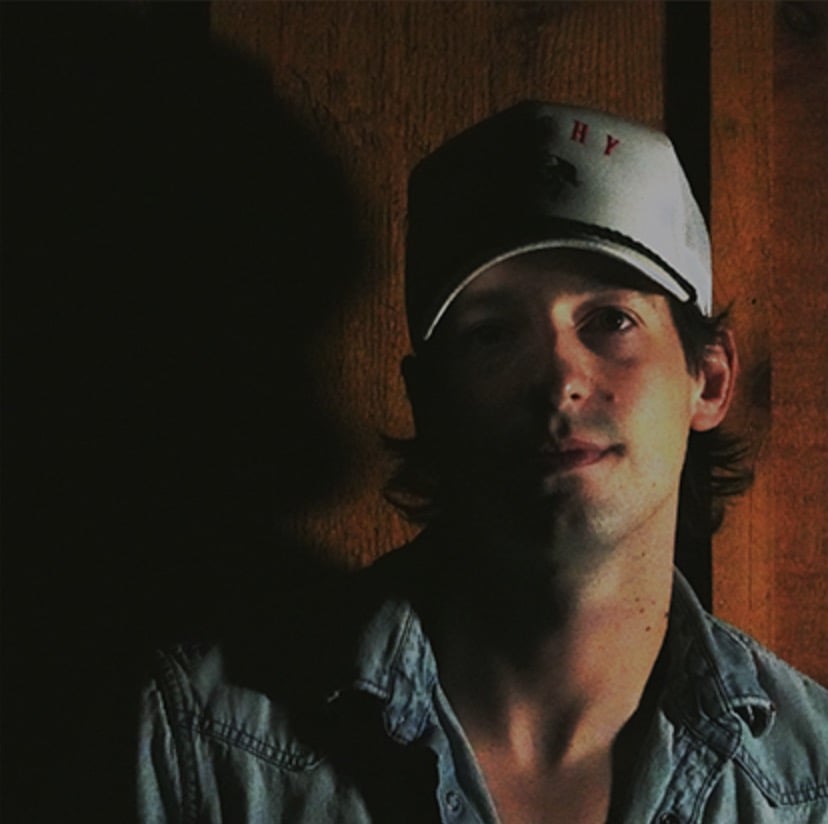
But man, when Beau Bailey got his first No.1 this year, that feels different to me getting another hit. It feels better. The fact that I get to hear these songs and push them has helped my career be longer and stronger.
I get a little shy pitching my own songs, but I don’t when it comes to somebody I’m proud of that we publish. It’s such a win-win. I want them to be Writer of the Year. I want them to beat me.
Trailblazers is supported by TuneCore. TuneCore provides self-releasing artists with technology and services across distribution, publishing administration, and a range of promotional services. TuneCore is part of Believe.
Music Business Worldwide



