


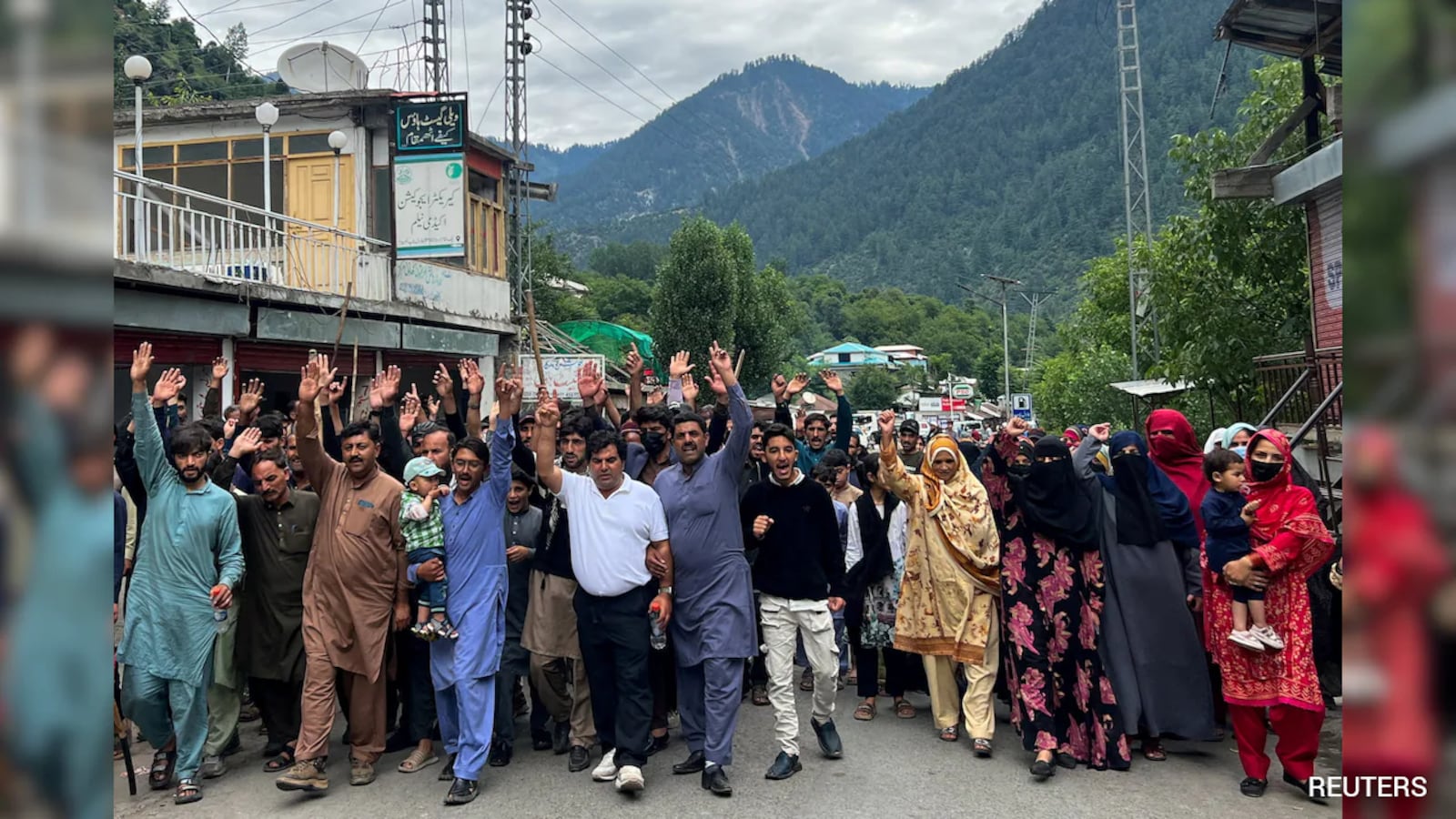
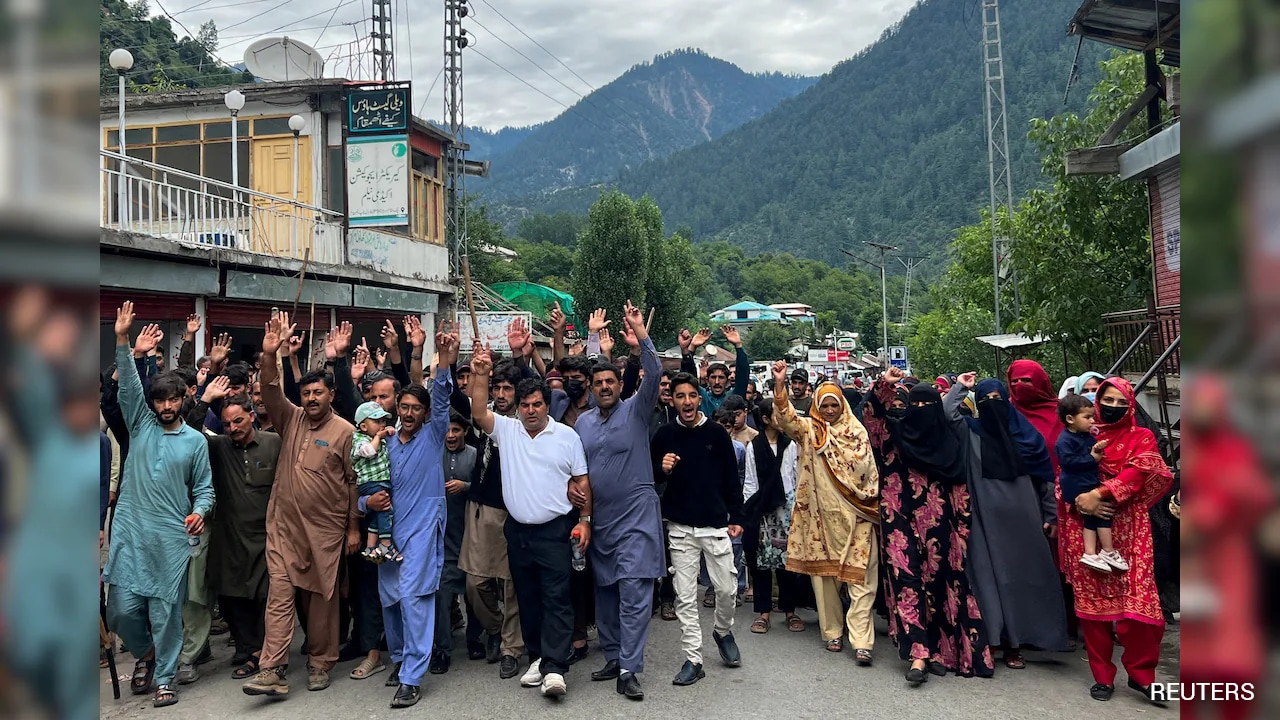
The first phase of elections in Pakistan-occupied Kashmir (PoK) unfolded on Monday amid violence, allegations of rigging, clashes between rival political groups and claims of excessive force by security agencies, casting a shadow over an exercise already viewed as a major test of law and order.
Around 3.8 million people are eligible to vote in the elections for the region’s so-called Legislative Assembly. For the first time, polling has been split into three phases after weeks of unrest and violent protests raised concerns over security arrangements.
The opening round of voting took place in the Mirpur Division under heavy security deployment, but turnout in parts of Mirpur appeared subdued as temperatures soared through the afternoon.
Ballot Box Set On Fire In Bhimber
The most serious disruption was reported from Bhimber, where clashes erupted between political workers at a polling station.
According to Pakistani media reports, a ballot box was allegedly seized and later set on fire, destroying the votes inside. Officials said the incident would be examined under election rules, and a decision on whether fresh polling would be required would be taken later.
The episode triggered fresh accusations that force was being used to influence the electoral process. Election authorities, however, insisted that polling continued in most areas and described the violence as isolated incidents.
PPP Worker Killed In Kotli
Violence was also reported from Kotli district, where the Pakistan Peoples Party (PPP) said its worker, Mukhtar Younus, was killed during an altercation in Nakyal.
The party blamed political rivals for the killing, while opposing groups denied the allegation.
Separately, the PPP lodged a complaint with the Election Commission, alleging that armed men interfered with the counting process in LA-1 Mirpur.
The party claimed armed individuals entered polling stations in Union Council Onah and disrupted the counting of votes. It sought immediate intervention from election authorities and additional security to safeguard election material.
JAAC Alleges Firing On Civilians
The election took place against the backdrop of an ongoing confrontation between the authorities and the Jammu Kashmir Joint Awami Action Committee (JAAC), the civil society-led alliance that has spearheaded protests over governance, economic issues and political reforms.
In a series of social media posts, JAAC alleged that security forces opened fire on civilians in Rawalakot, claiming several people were killed and many others injured.
The group accused authorities of using excessive force and questioned the legitimacy of holding elections in what it described as a repressive environment.
JAAC also alleged that the electoral exercise was being projected as democratic despite violence, restrictions and action against protesters. It further claimed that heavy firing continued in Rawalakot and appealed for medical assistance.
The elections come after nearly two months of widespread protests that left dozens of people, including security personnel, dead.
The demonstrations were led by JAAC, whose primary demand was the abolition of 12 Legislative Assembly seats reserved for refugees who settled in PoK after 1947. Islamabad banned the organisation last month following the unrest.
The prolonged protests also forced the election authorities to change the polling schedule. Less than a week before voting, the Election Commission announced that polling would be conducted in three phases instead of a single day, citing security concerns and the need to deploy forces more effectively.
Voting will conclude on August 10 in the Poonch district, considered the epicentre of the recent protests.
India continues to maintain that the entire Union Territories of Jammu and Kashmir and Ladakh are its integral and inalienable parts and that Pakistan remains in “illegal and forcible occupation” of portions of these territories.
Earlier this month, New Delhi said the protests in PoK were a “direct consequence” of Islamabad’s decades-long “systemic exploitation and administrative oppression” in the region under its “forcible” occupation, while also criticising reports of police brutality against protesters.



