


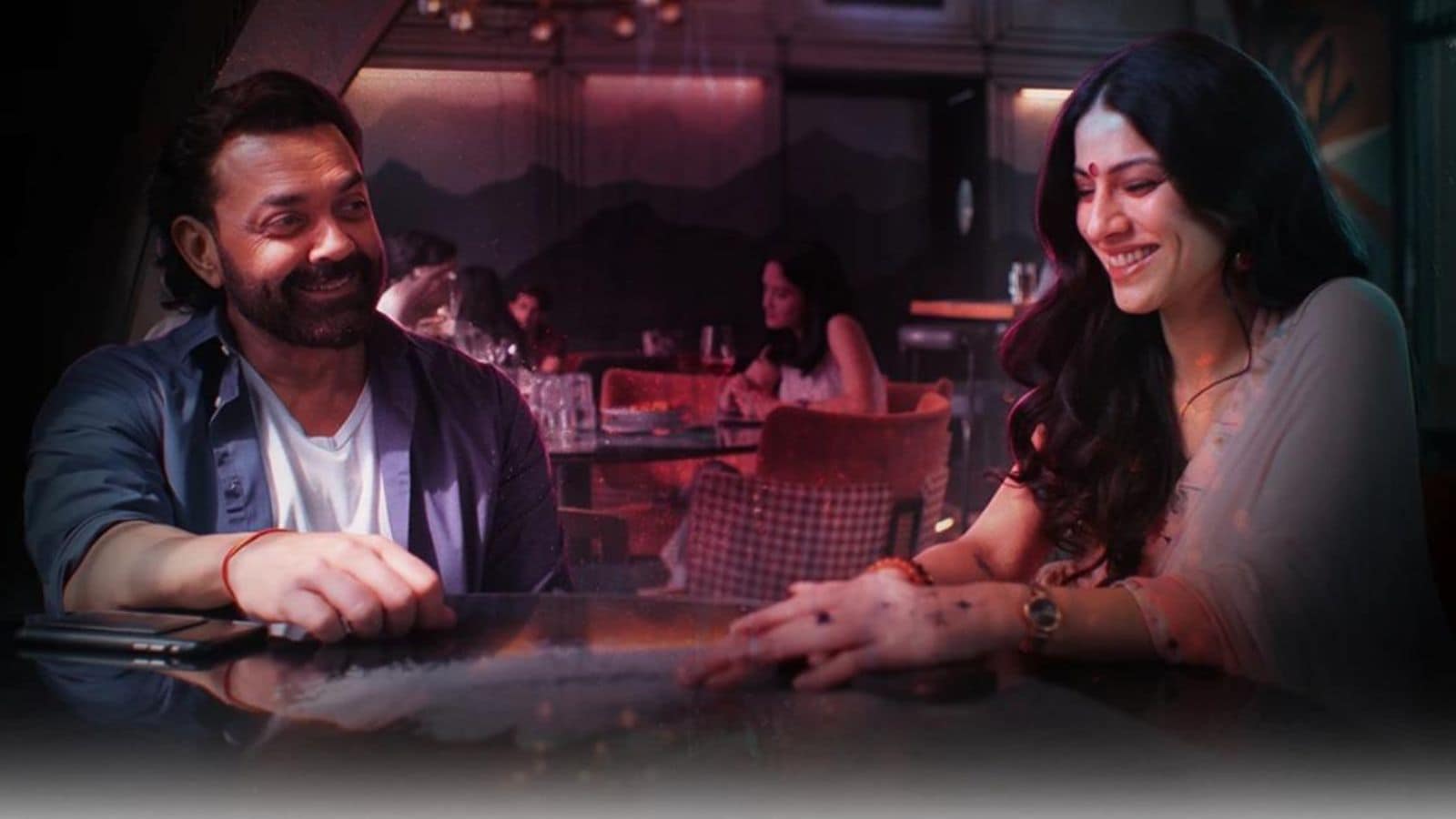
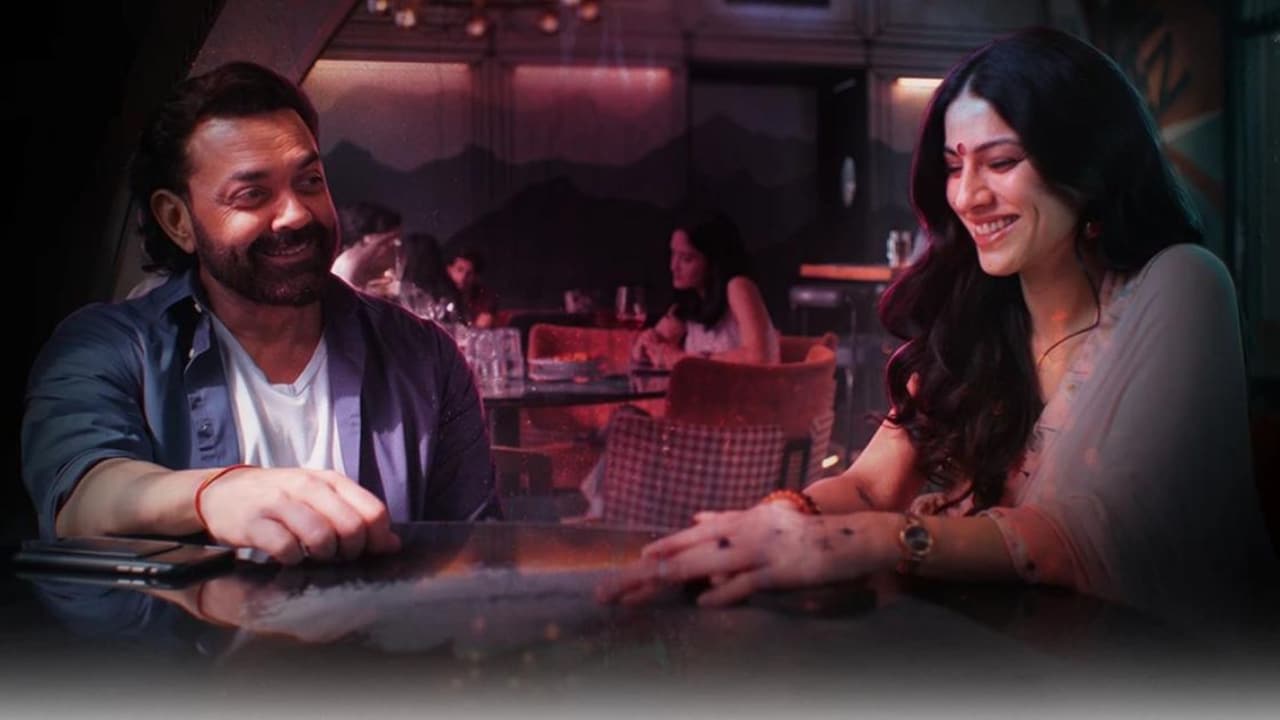
The protagonist of Bandar, a scrappy and uneven prison drama directed by Anurag Kashyap and written by Sudip Sharma and Abhishek Banerjee, learns the hard way that the law is an a** and its victims are monkeys in their own circus.
Played by an intense Bobby Deol, the man falls prey to an unrelentingly brutal system that blurs the line between innocence and culpability and makes the process as harrowing as the punishment.
Bandar is a grim, frequently confounding portrait of a lawless prison for undertrials that turns the toughest of men into amoral wrecks caught in a distressing struggle for self-preservation and dominance.
When an over-the-hill entertainer, Samar Mehra, a man who has never had a brush with the law, is dumped in the slammer following an accusation of rape levelled against him by an ex-girlfriend (Sapna Pabbi), his endurance and sanity are pushed to the brink of collapse.
He faces the brunt of a skewed investigation and a media and society predisposed against him. Bandar poses a question: should we cut the accused some slack, or is he receiving his just desserts for a sense of entitlement stemming from his gender and celebrity status? Bandar does not trot out any clear answers.
As the film’s focal point, Deol captures a flawed and vulnerable man’s precipitous spiral into emotional incoherence with admirable acuity even when the writing is palpably less than perfect.
It is in the haphazard delineation of the key characters around the harried Samar, especially the women, that the film ties itself up in knots. The women have a lot to say, but this film simply isn’t about them.
Although Bandar has a female co-director, Sakshi Mehta Lau, its gaze is always male.
Samar’s best days are well behind him. He is strapped for cash. And he struggles with a debilitating backache. He cannot afford the surgery his doctor has prescribed. His medical insurance, like his celeb status, has expired.
As if the 50-year-old man’s plummeting professional fortunes aren’t bad enough already, a bigger calamity befalls him. Two brusque cops arrive at his door in the middle of the night and drag him away to the police station. Before Samar knows what has hit him, he is behind bars.
His current girlfriend Khushi (Saba Azad), a woman who, as was the case with his previous fling, he met on a dating app, his sister Suhani (Sanya Malhotra) and his eager-beaver lawyer Nitin (Riddhi Sen) try in vain to be of help. One of them at one point exhorts him to do more to help himself, but Samar has no idea how he can do that.
People wonder aloud why a man as ‘sundar’ as him needs a dating app to hook up with women. The gender dynamic is inverted in this instance – the male is objectified, if only fleetingly – but the rest of the film sees Samar’s predicament entirely from his own masculine point of view.
He insists that he is blameless and is being framed, but how can anybody be sure? The law certainly isn’t. It is Samar’s word against that of a woman who claims she has been wronged. It is a hazy victim-perpetrator loop in which the truth ceases to matter.
Once the police have him in their clutches, Samar’s chances of wriggling out recede quickly. We hear the word “bubble” a few times. His sister and his girlfriend advise him to step out of his cocoon and deal with the real world. But the real world – the seedy prison – is as unreal as anything he has ever encountered.
The jail inmates run Samar to the ground. He is a rape accused, and, like the rest of his ilk in this prison, he is treated like an outcast and subjected to indignities that belie description.
By this point, Bandar has done one too many somersaults in its attempts to project Samar more as a victim of vendetta than as a man trapped in his cloak of privilege to notice that his words, deeds and sexual conduct
might have hurt a woman who is already on edge and prone to impulsive acts.
The smarmy cops (Jitendra Joshi and Nagesh Bhosale, both terrific, and others) on one hand and the prison inmates on the other – both groups exuding corrosive power and feral viciousness – represent the contours of a cage without an escape hatch.
He is repeatedly denied bail because everybody – the law, the prison system, society, and the media – is quick to brand a rape accused a deviant unworthy of a hearing, let alone a reprieve.
The argument pertaining to legal overreach and probable miscarriage of justice is perfectly acceptable until Bandar ventures into problematic territory. It paints the vengeful ex as a psychologically fragile woman out to settle scores.
Large parts of Bandar play out in the squalid prison, a veritable cesspool of venomous impulses. A few men rise to the top of the pile and do as they wish, their subservient lackeys play along, and violent jail brawls erupt at the slightest provocation.
For Samar, the torment is expectedly unnerving to begin with. As he begins to find his foothold, eating, defecating, sleeping, and forging bonds in a space meant for twenty men but occupied by a hundred, he toughens up a bit, although his urge to be heard persists.
Perhaps more interesting than anything else in Bandar is the casting of the undertrials, men dangling between the hope of acquittal and the prospect of being convicted.
Kannada filmmakers Raj B. Shetty and Natesh Hegde as two men addicted to lizard smoke, Malayali actor Indrajith Sukumaran as prison strongman Lijo, poet and actor Aamir Aziz, and Sukant Goel as two other inmates stand out in the blur that the prison sequences are.
If only these actors and characters were allowed to rise above the din around Samar’s mounting despair – illustrated by his exchanges with his sister and an increasingly despondent lawyer – the horrors of incarceration and its mental toll might have landed with greater force.
The leaps that the film makes, even those that are in the right direction, are inconsistent in terms of both arc and outcome. If not a mess, Bandar is a bit of a tangle that is hard to wrap one’s head and heart around.



