


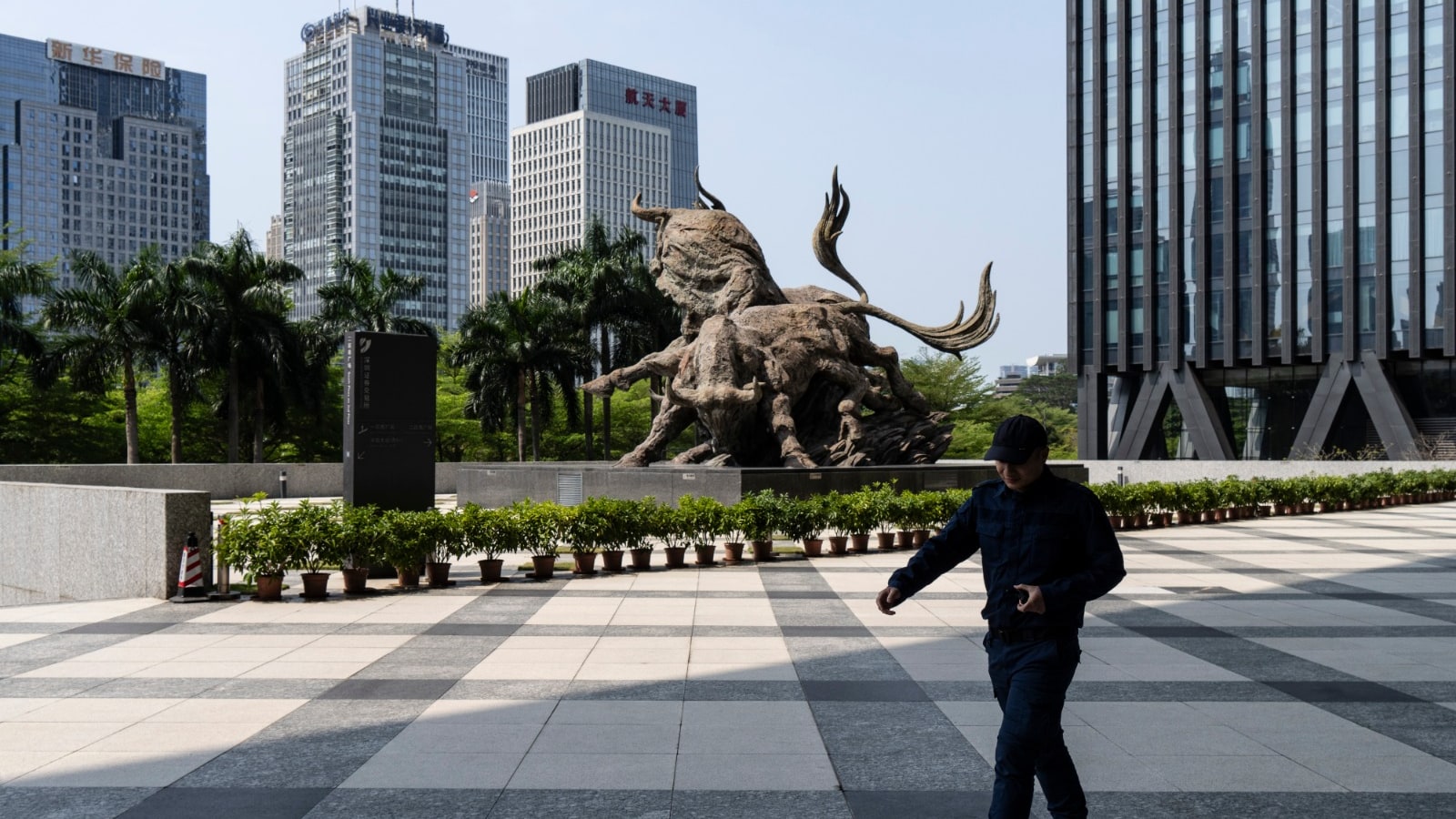
After a banner year for Chinese stocks on the back of AI advances, 2026 is not going well. The MSCI China Index has tumbled 15%, the worst performance globally after Indonesia. The Chinese gauge last week traded at the lowest level relative to MSCI’s world index since the immediate aftermath of the Sept. 11, 2001 attacks, when US markets closed for four days. The two biggest weightings — tech firms Tencent and Alibaba — have plunged more than 29% to wipe out a combined $337 billion.
The poor performance is a surprise to many. At the start of the year, Goldman Sachs Group Inc. was predicting a 20% rally for the MSCI China, which had just posted its best advance since 2017. Lombard Odier raised their recommendation on the country’s equities to “preferred,” expecting earnings improvement. There was growing confidence among investors that, with some help from Beijing, the market might finally shake off its boom-bust reputation and replace it with steady gains.
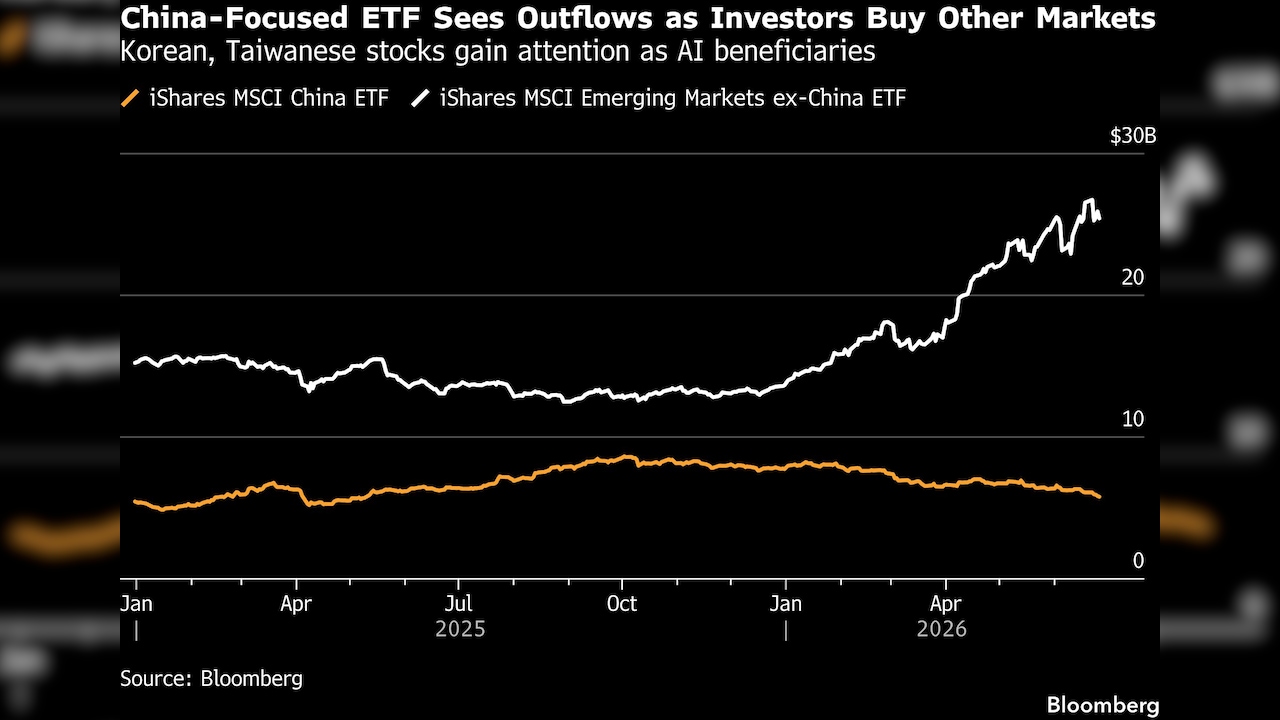
Such hopes have turned to disillusionment, especially given the large equity rallies seen in neighboring South Korea, Taiwan and Japan, where benchmark indices have gained between 17% and 99%.
“Chinese equities have been a major drag on our portfolio year-to-date,” said Gerald Gan, chief investment officer at Reed Capital. “We have the likes of Tencent and Alibaba, but they are underperforming badly. The performance divergence across major economies has been wide and utterly disappointing.”
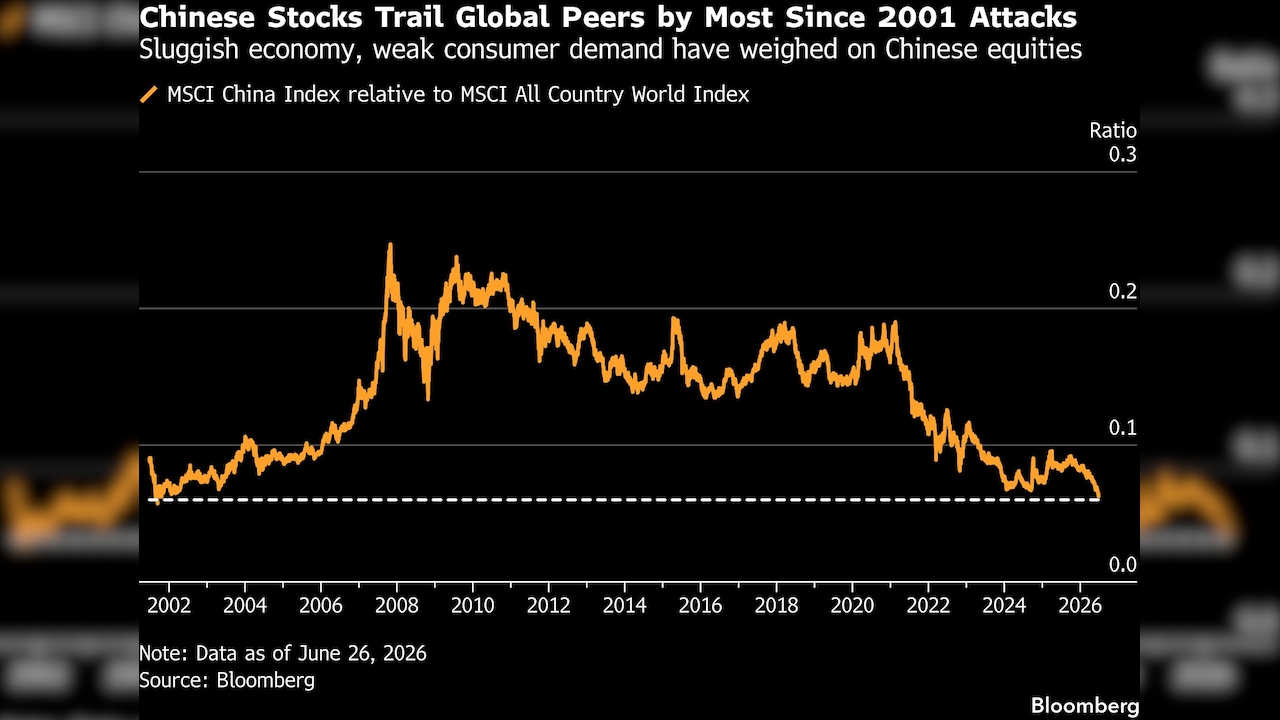
Chinese Stocks Trail Global Peers by Most Since 2001 Attacks
Photo Credit: (Photo: Bloomberg)
The causes of the retreat are multiple — and persistent. Consumer spending in China continues to weaken, undercutting profits at internet companies and automakers alike. Investor preference for chipmakers over hyperscalers in the ongoing AI boom puts China at a disadvantage due to its lack of prominent hardware manufacturers. Beijing’s recent crackdown on cross-border flows is leading to increased scrutiny of Hong Kong investments, and reigniting concern about regulatory risks.
The reversal is especially jarring given it was China’s breakthroughs in artificial intelligence — notably DeepSeek — that led overseas investors to return to the country’s equity markets last year, breaking its “uninvestable” tag.
“I’m quite sad because I have Alibaba in my portfolio,” said Chauwei Yak, chief executive officer at GAO Capital Pte in Singapore. “It’s extra sad that the only worse country is Indonesia. China is so high-tech and yet the only country it can beat is a relatively lower tech country with a lot more problems. I was so positive on China last year after attending an AI conference in Hangzhou.”
The downturn risks further eroding global investor confidence in China just as its biggest tech companies step up spending on AI. Tencent Holdings Ltd. plans to at least double its 2026 capital expenditure to more than 36 billion yuan ($5.3 billion), while Alibaba Group Holding Ltd. pledged to invest 380 billion yuan over several years. The losses also threaten to undermine the boom in initial public offerings in Hong Kong.
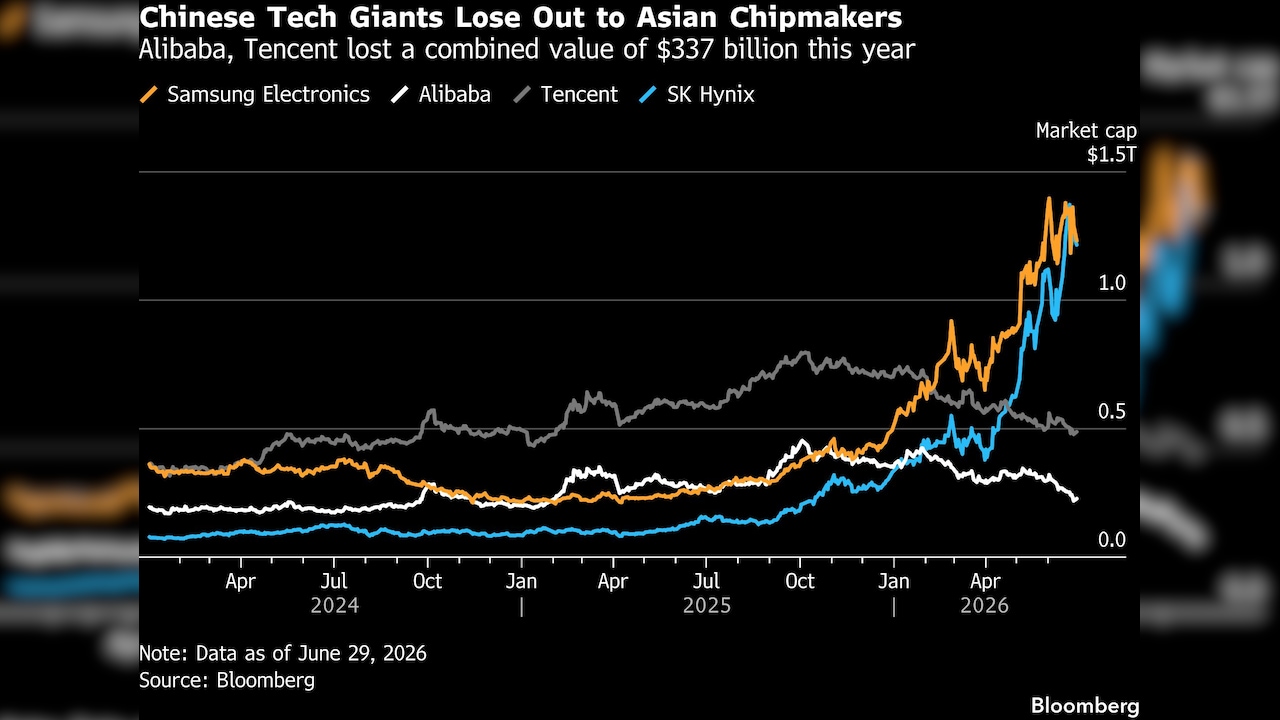
Chinese Tech Giants Lose Out to Asian Chipmakers
Photo Credit: (Photo: Bloomberg)
To be sure, China’s domestic markets in Shenzhen and Shanghai have been more resilient — in part. The CSI 300 Index is up about 6% this year, driven by a sizzling rally in tech hardware manufacturers. Outside of tech, gains are hard to come by. Eight of the 10 industry groups have fallen, with consumer-related companies tumbling more than 20%.
Kevin Net, head of Asian equities at Financière de l’Echiquier in Paris, is one who’s been favoring Chinese stocks traded onshore since near the start of the year.
“Most of the themes we like are listed in Shanghai and/or Shenzhen, such as AI, industrials and metals,” he said. “What you find in offshore is consumption, Internet, non-AI tech — i.e. what we have been somewhat avoiding.”
And other recent winners have done poorly this year as investors doubled down on their bets on AI by pouring money into chipmakers. Bitcoin has sunk more than 50% from last year’s high to below $60,000, while gold has lost about 25% from its January peak. The Magnificent Seven of big US tech stocks such as Apple Inc. and Alphabet Inc. is down 6% this year.
Even then, China’s underperformance is marked. Hong Kong’s Hang Seng Index, which is dominated by Chinese companies, last week reached its lowest level relative to the MSCI All-Country World Index since 1990 — when China’s economy was 2% of its current size, and three years before the first mainland company sold H shares in Hong Kong.
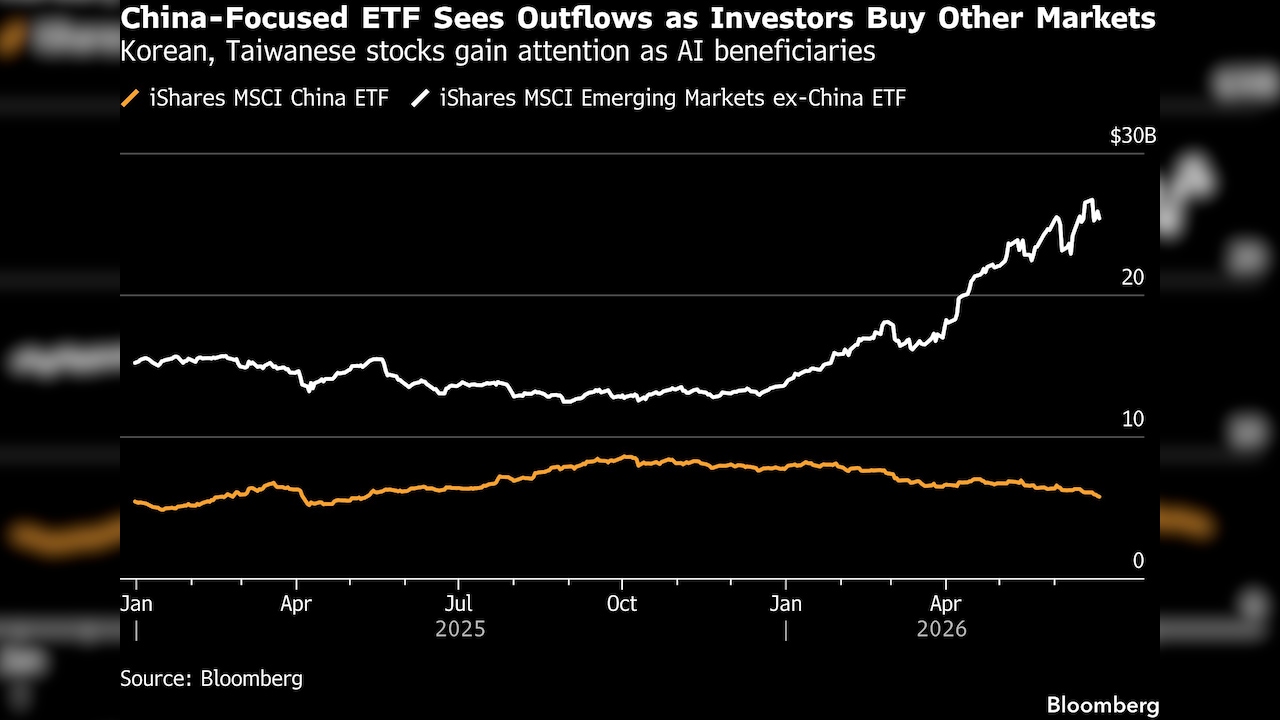
China-Focused ETF Sees Outflows as Investors Buy Other Markets
Photo Credit: (Photo: Bloomberg)
Weighing on Chinese equities are signs the domestic economy is worsening. Last month, retail sales fell for the first time since the pandemic and a decline in home prices quickened. Fixed asset investment has shrunk this year. Although exports have remained strong, boosted by growth in chips and computers, the economy is seen at risk of a deeper slowdown as the government holds off significant measures to boost household spending.
“We expect second-quarter GDP growth to slide to around 4.4% this year, which is under the official full-year growth goal,” said Larry Hu, head of China economics at Macquarie Group in Hong Kong. “If the global AI trade continues to boom and pushes up exports, the government won’t roll out major stimulus to boost domestic consumption, and domestic demand will therefore stay soft.”
That weak demand is impacting earnings. Tencent last month reported its slowest revenue growth in six quarters, fueling concern over how the company will monetize AI at a time when its core businesses such as games and advertising are losing impact. Alibaba recorded its first quarterly operating loss since 2021 in its most recent results.
Adding risk, Anthropic PBC last week accused Alibaba of waging a large-scale effort to “illicitly” access its Claude artificial intelligence model, and called on the Trump administration to help. Earlier this month, the US Department of Defense accused Alibaba, Baidu Inc. and BYD Co. of supporting China’s military. Tencent was added to the list in 2025.
New Penalties
“The geopolitical risks of investing in China have not gone away,” said Sam Konrad, a portfolio manager at Jupiter Asset Management in Singapore. “From a technology point of view, the Chinese equity market today doesn’t have the very significant beneficiaries of AI capex that South Korea and Taiwanese equity markets have.”
China’s sudden clampdown on illegal capital outflows is rekindling memories of the 2021 crackdowns on private enterprise. New measures announced last month include about $330 million in penalties imposed on three prominent brokerages often used by mainland Chinese to invest offshore: Futu Holdings Ltd., Tiger Brokers and Long Bridge Securities.
Hao Hong, chief investment officer at hedge fund Lotus Asset Management Ltd., said these brokerages have been an important source of capital for the Hong Kong market as well as share sales, because investors can easily apply for IPO allotments using apps on their phone.
“Since the crackdown on cross-border illegal trading, the pressure on the Hong Kong indices is palpable,” he said. “Without participation by mainland money, the upcoming IPOs will test how liquidity conditions really are in Hong Kong.”
So far, dealmaking has remained resilient. Initial public offerings, placements and block trades have raised almost $44 billion in Hong Kong in 2026, a 29% jump from the same time last year, data compiled by Bloomberg show.
Value of Hong Kong Listings is Expected to Reach a Six-Year High
Photo Credit: (Photo: Bloomberg)
The risk for China is waning interest in the nation’s shares becomes entrenched, making last year’s boom a distant memory, despite the country’s position as the world’s manufacturing powerhouse and its image as a high-tech nation.
Elfreda Jonker, client portfolio manager at Alphinity Investment Management in Sydney, says her firm no longer holds any Chinese shares after selling Tencent recently.
“We will continue to actively look for opportunities in China,” she said. “But to date we have not found a super exciting opportunity.”
(This story has not been edited by NDTV staff and is auto-generated from a syndicated feed.)
Essential Business Intelligence,
Sharp Market Insights,
Practical Personal Finance Advice, Daily Fuel, Gold and Silver Prices and Latest Stories — On NDTV Profit.



