


Beijing:
A minimalist villa nestled among lush forests, misty limestone peaks and cinematic skyline views: striking Instagram reels like these finally convinced Claire Thum to make her first trip to China.
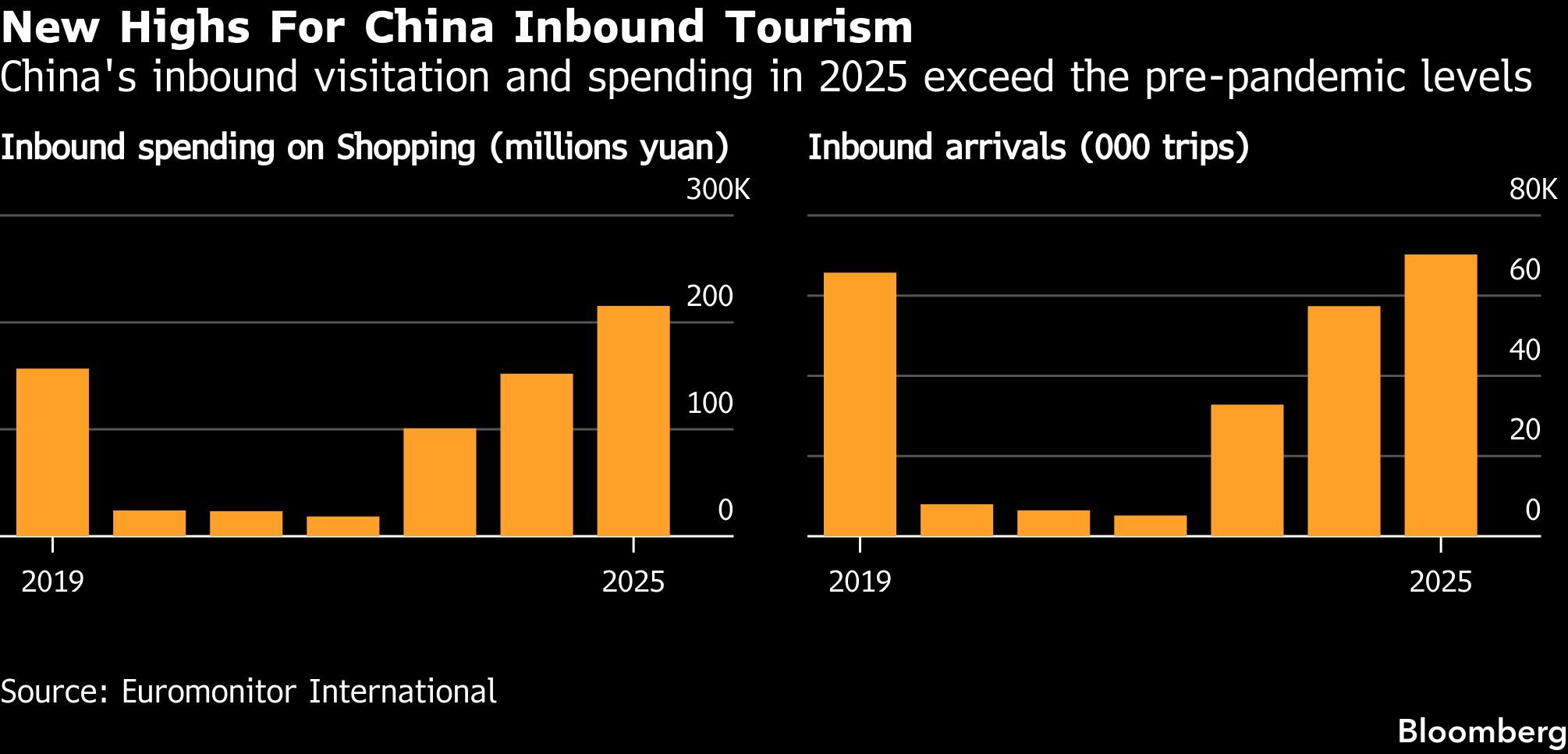
The 28-year-old Singaporean is one of millions of foreign tourists who visited the country in 2025, when arrivals and tourist spending surpassed pre-pandemic levels for the first time.
Thum knew only of terracotta warriors until Chinese travel content began regularly popping up on her feed. “To me, the first step to exploring more of China was to dip my toes into Shanghai,” she said.
Highlights included a visit to the viral perfumery To Summer with its signature garden, a snowboarding simulation experience and picking out winter clothes at Japanese sportswear store Descente.
Now she’s planning another trip to the Asian nation, with the far-flung regions of Yunnan, Xinjiang and Harbin top of her list.
After years of pandemic restrictions, in 2023 China launched a massive push to win back tourists with the gradual introduction of visa-free travel for 50 countries.
That campaign got off to a slow start, as memories of Covid curbs hurt the country’s reputation and flight routes took time to come back. But now tourists appear to be returning much faster.
That’s partly thanks to an online promotion campaign the government ramped up last year, including on Western platforms banned in China.
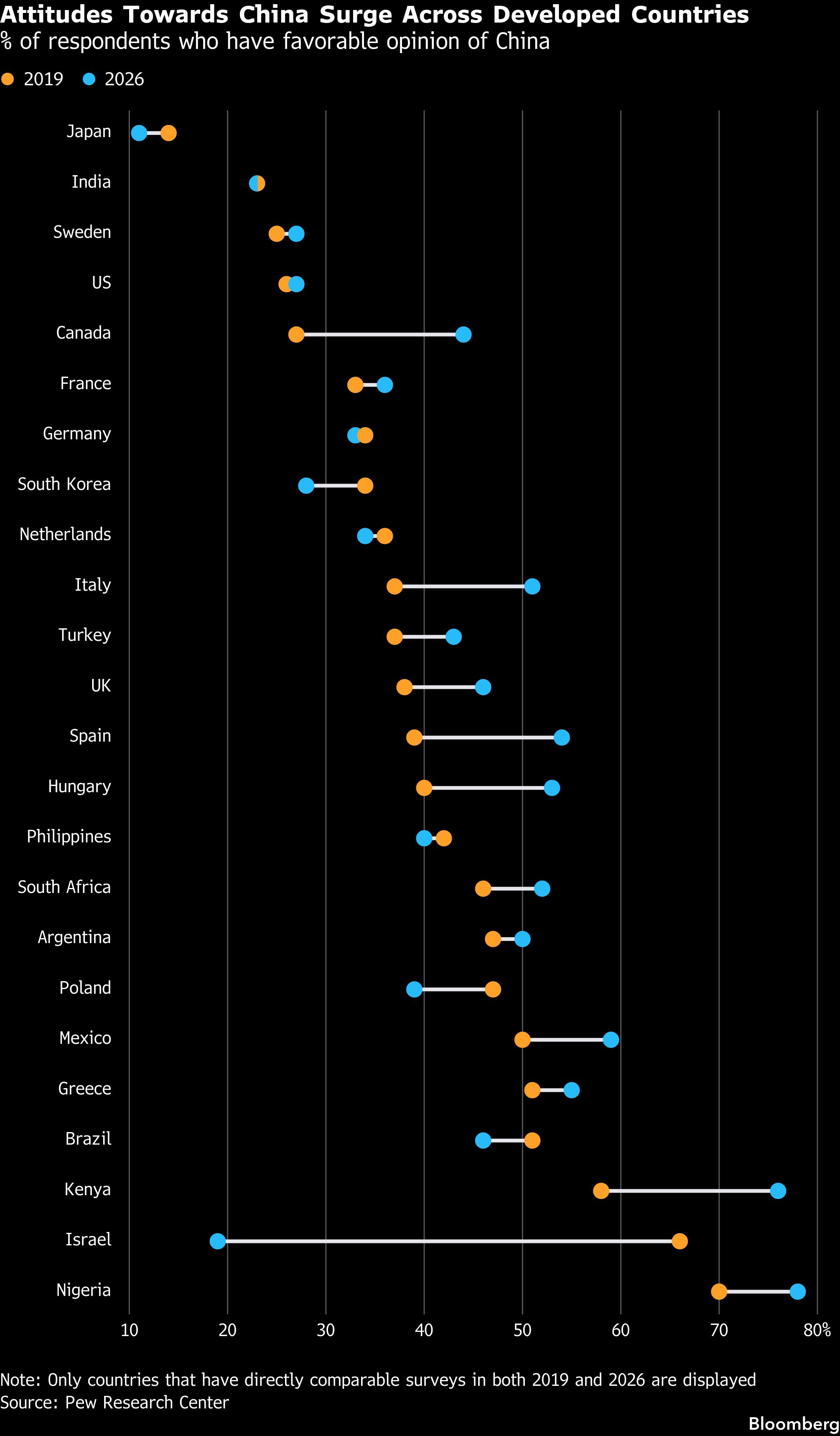
At the same time, favorable views of the world’s second-largest economy reached record highs in a number of countries in 2025, according to Pew Research Center, as Donald Trump reshaped global impressions of America. Trends like ‘Chinamaxxing’ – where Western citizens adopt habits from the Asian country, such as drinking hot tea – also went viral.
“The inbound tourism boom gives China the soft power boost it’s chased after for years,” said Olivia Plotnick, founder of Shanghai-based marketing consultancy Wai Social.
“I’ve heard more than a few recent visitors to Shanghai tell me that in their eyes, Shanghai is the new Tokyo.”
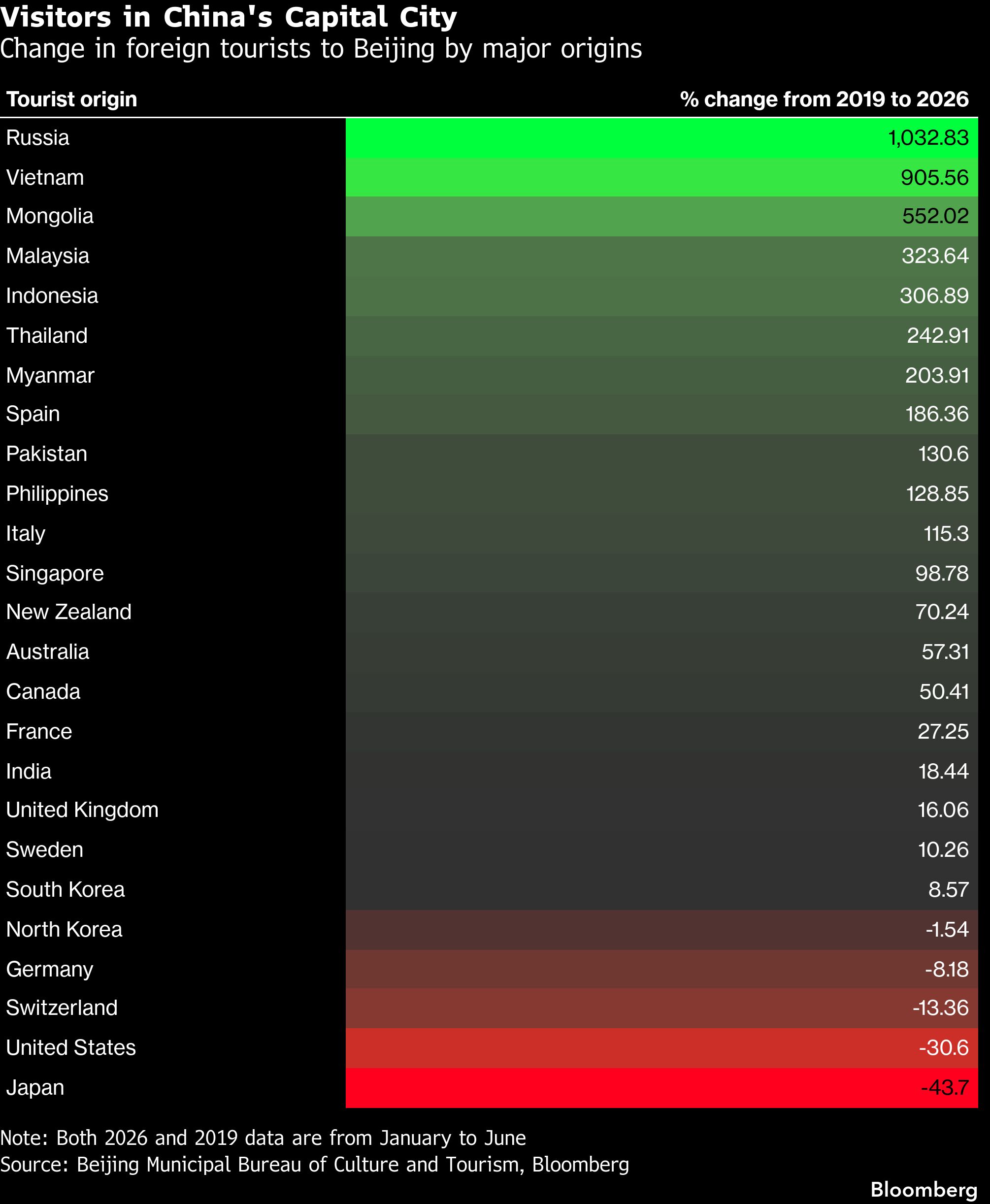
Around 35 million foreign tourists arrived last year, according to data from the National Bureau of Statistics, putting China in the ranks of some of the most well-established travel destinations in Asia – more than Thailand and just shy of Japan and Malaysia. The NIA said nations leading the tourism surge so far this year include Asian countries with visa-free entry such as Korea, Russia, Malaysia and Thailand.
Visa-free entry appears to be particularly popular, accounting for more than 70% of travelers last year, up by 50% from 2024. In the first half of 2026, 18 million people arrived from visa-free countries, pushing overall foreign tourist arrivals up by 20%.
Beijing has seen surging numbers of Vietnamese and Russians in that period, while Japanese figures are in decline following a diplomatic spat between the two countries.
Alongside relaxing visas, local governments provided cash to tourism offices, including an extra 2.64 million yuan ($390,000) for Beijing in 2026 to manage new headcount and launch online publicity projects – a rare spend in local finances.
Beijing used some of the money to hand out rewards to travel agencies that introduced foreign-language tour guides. Shanghai is due to spend at least 1.6 million yuan on promotional campaigns on popular hotel booking platforms Expedia and Booking.com this year, according to official procurement documents.
To capitilize on the power of social media in luring young travelers, many officials have hopped over the Great Firewall to set up accounts on social media platforms like X and TikTok, unavailable in China.
In the neon-lit mountainous mega-city of Chongqing, the deputy director general of tourism Zhu Mao said he was determined to make the city internet famous, leaning on influencers and even American basketball star Stephen Curry for boosts in popularity.
“China becomes more vivid, multi-dimensional and more appealing when international tourists are no longer limited to visiting traditional tourists attractions, but instead start to experience the everyday local life,” said Bobo Rok, founder of AI tourist guide Kora. “From that moment on, they start to see a real China, not just something from paper or imagination.”
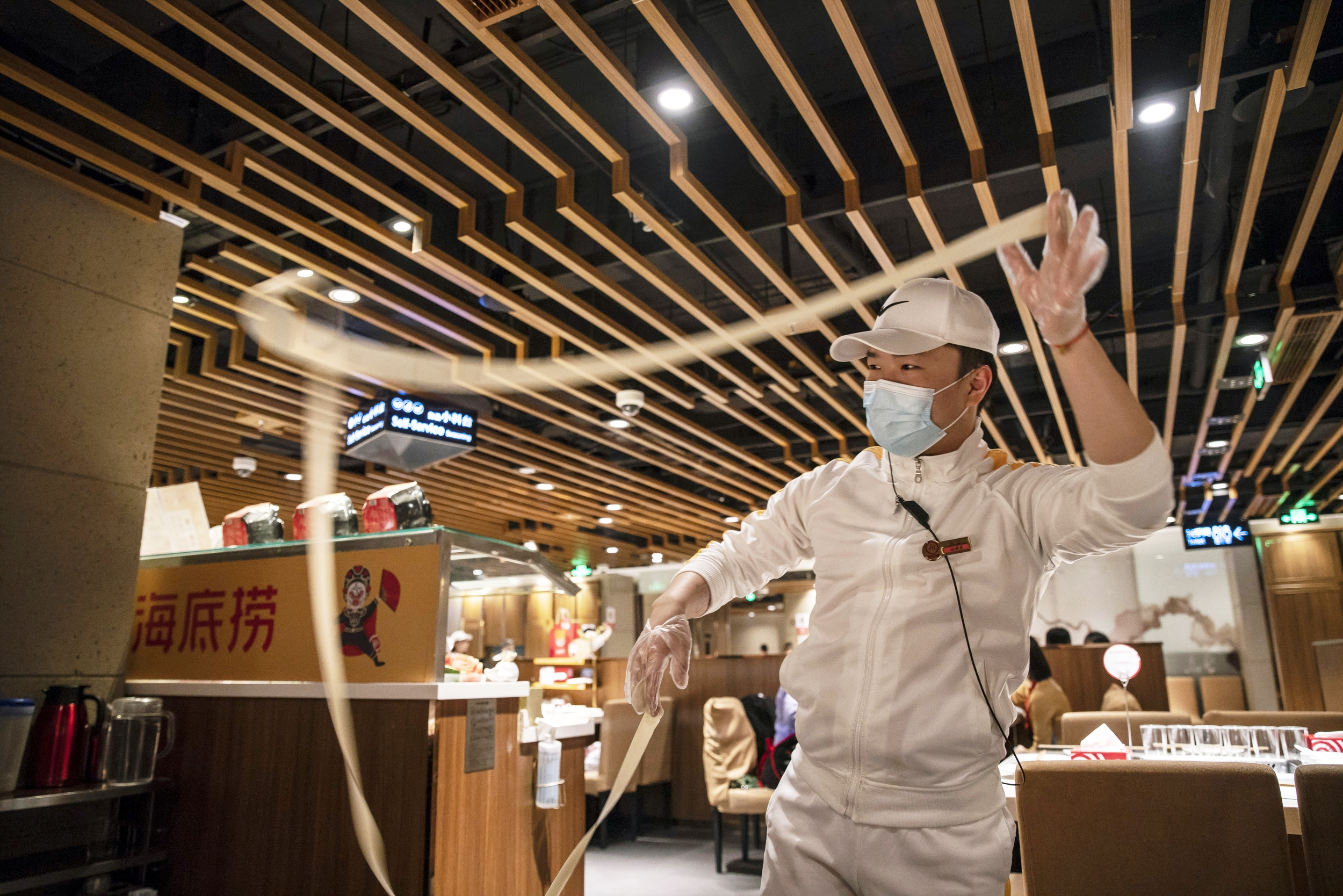
Exploring high-tech products at Huawei and DJI, shopping at theme-park style Pop Mart stores or eating hot-pot at Haidilao feature high on to-do lists.
The Iran war has also reshaped people’s travel habits by pushing up air ticket prices and driving transit traffic through China instead of the Middle East. China’s biggest airlines, state-run China Eastern, Air China and China Southern, all saw increasing flows of passengers filling its flights since the start of the Iran war.
Chinese airlines offer cheaper prices than foreign carriers, which have not returned their routes to China back to pre-Covid levels.
Despite the recovery of tourism, China still lags behind in both total tourism receipts and per-capita spending, generating less than one third of the inbound tourism spend compared to the US, and about 40% the per-capita inbound spend, at around $2,240 in China, according to Trip.com.
The international tourism industry accounted for less than 0.5% of China’s national GDP in 2025, Chinese media said, much lower than some mature tourism economies such Spain and Thailand where it’s 8%.
Still, it’s giving a much-needed boost to the Chinese retail sector which suffered from sluggish domestic consumption and a real estate market in the doldrums.
Dental cleaning, which costs one fifth of US prices, is a draw for American tourists, while Europeans like to order bespoke suits at local garment markets.
At Miniso’s flagship store on Shanghai’s Nanjing East Road, foreign visitors account for up to 70% of foot traffic during some parts of the day, drawn to collaborations with popular characters from Chiikawa, Sanrio, Harry Potter and Disney. Popularity with tourists has also continued in branches abroad.
Miniso reported rising overseas demand fueled by social media exposure from international visitors, while overseas sales surpassed its Mainland China revenue and grew 20% year-on-year.
Joy Group, parent of viral beauty brand Judydoll and Joocyee, generated more than 600 million yuan in overseas retail sales last year, with Judydoll achieving over tenfold growth in two years, particularly in Vietnam and Japan.
If China wants the curiosity to last it has to make the country an easier place to navigate. Major cities are virtually cashless, meaning for tourists without local bank accounts, digital payment wallets or local phone numbers it can be challenging to make payments, order food or buy tickets.
A lack of language support is compounded by no access to mainstream global applications like Google, Instagram and WhatsApp unless using a VPN, which is illegal in China.
AI tourist guide Kora is one of several new business ideas helping to ease the friction by simplifying ride-hailing and restaurant reservations and providing a chatbot that has served tens of thousands of visitors since its launch earlier this year, said Rok, its founder.
Virgile Kebaili, a 23-year-old history student from France, spent more than two weeks visiting Chengdu, Chongqing, Xian and Beijing on his first trip to China.
“It was a great journey, it was wonderful. It was in my top two best travels for food, along with India,” he said, adding that he went home with a few packs of Chinese cigarettes, which were six times cheaper than in France.
Two things stood out to him. One is the relative lack of other international tourists during parts of his visit. He was happy to pose for photos for locals and was even interviewed by a group of students at the Sanxingdui museum about his travel experience in China.
And then there was the surveillance.
“I was not expecting such an omnipresent and omnipotent regime,” said Kebaili. “I was not expecting cameras everywhere, policemen everywhere.” The bag checks before he could visit Tiananmen square were “from another dimension.” His friend’s playing cards and paper sheets were confiscated.
Still, he would come back again: “I really enjoyed my trip and what I discovered there.”
(Except for the headline, this story has not been edited by NDTV staff and is published from a syndicated feed.)



