


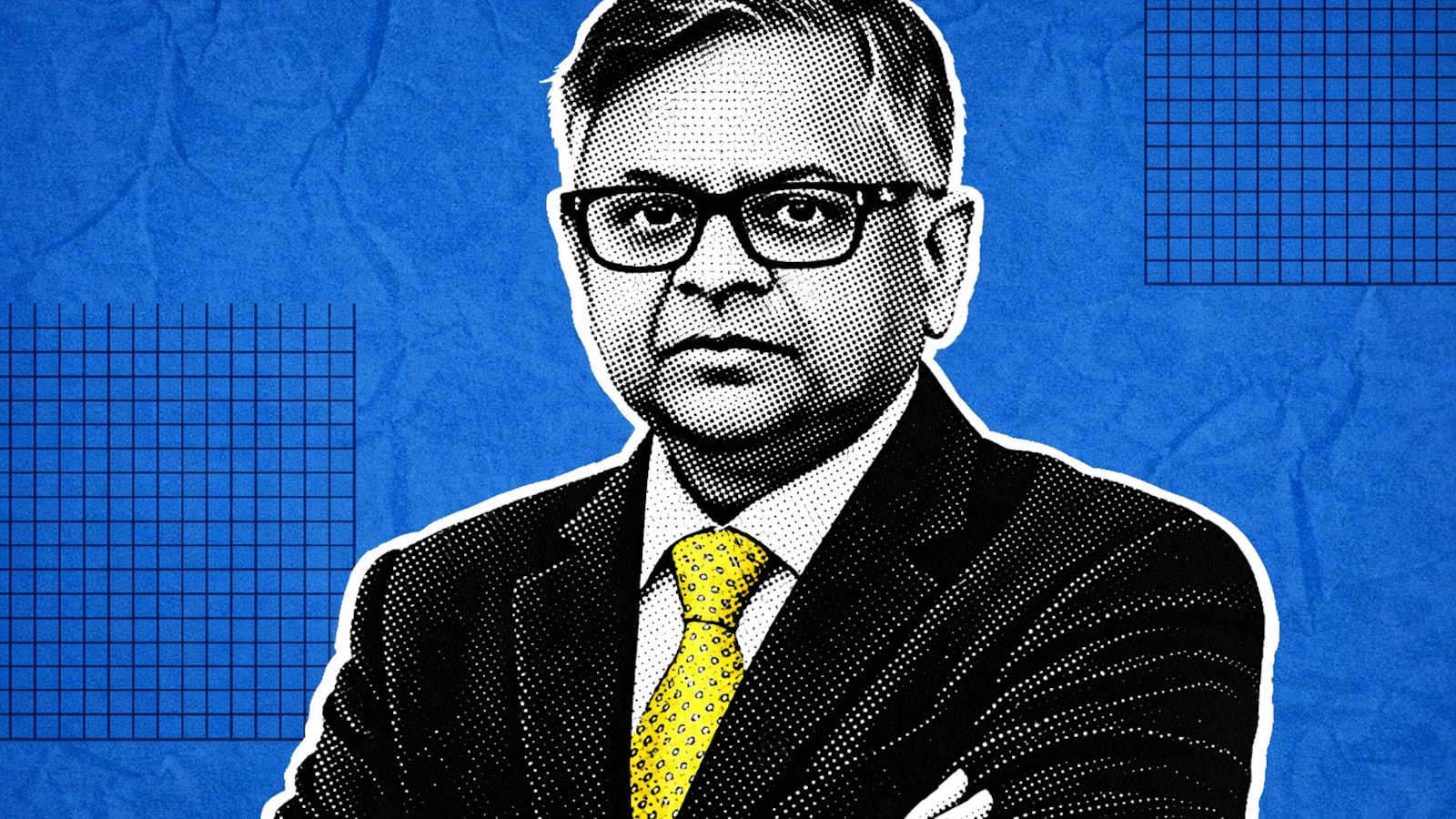
Tata Sons Chairman N. Chandrasekaran while addressing shareholders at the 31st Annual General Meeting of Tata Consultancy Services (TCS), dispelled concerns that artificial Intelligence (AI) poses a fundamental threat to the Indian IT services model. Instead, he framed AI as the “most significant opportunity” in the history of the company. Despite a challenging global environment marked by stagflation concerns and geopolitical tensions, Chandrasekaran highlighted that TCS delivered robust financial results in FY26.
TCS reported a consolidated revenue of Rs 2,67,021 crore (approximately US$30 billion), representing a 4.6% growth over the prior year. Net income grew by 8.8% to Rs 52,820 crore, with both operating and net margins hitting their highest levels in four years. However, India’s largest IT giant announced layoffs in the second quarter over the AI impact on business.
The AI Evolution: From Threat to ‘Infrastructure of Intelligence’
Addressing investor anxiety following a drop in the Nifty IT index triggered by the rise of agentic AI systems, Chandrasekaran emphasized that AI is more than just a technology; it is an “infrastructure of intelligence”. He projected that AI will drive the global enterprise IT industry from its current value of $1.6 trillion to $3 trillion within the next decade, according to the AGM details.
Five Key Avenues for Growth
Chandrasekaran outlined five distinct areas where TCS is already actively building and delivering AI solutions for its clients:
Updating Primary Technological Functions: Many businesses still rely on outdated systems and fragmented data. Overhauling these legacy functions is the crucial starting point for enterprise AI. For instance, TCS recently consolidated eight separate SAP systems into a unified S/4HANA Cloud platform for a global pharmaceutical company to create a standardized backbone.
Reimagining Business Operations: AI necessitates a complete redesign of how work is accomplished, spanning from supply chains to customer journeys. TCS is leveraging its deep domain knowledge to build end-to-end AI platforms, such as a comprehensive customer process management system for a global bank.
Managing and Overseeing AI: As AI agents learn and act, they can drift or deteriorate, creating a massive need for governance, compliance, and monitoring. Chandrasekaran noted that “governing intelligence will be the defining annuity of the next” era, a capability TCS is already providing for a leading global insurer to ensure its AI agents stay within security and cost boundaries.
Sovereign AI: With governments and regulated institutions increasing their AI usage, the demand to own and control AI technology and data infrastructure is surging. TCS has launched sovereign AI infrastructure for India and Europe to meet strict data sovereignty, security, and compliance requirements.
ALSO READ: TCS Could Have As Many AI Agents As Staff In 3 Years. Here’s What The Management Expects
Physical AI: AI is transitioning from software into the physical world, integrating with stores, factories, and energy networks. TCS is actively deploying physical AI solutions, such as utilizing sensor-equipped four-legged robots to patrol hazardous warehouse environments for a global agribusiness.
While acknowledging that the AI talent gap can be closed by newer challengers, Chandrasekaran argued that established IT firms like TCS hold a distinct advantage in enterprise AI. That being on context and trust. This advantage stems from years of navigating deep regulatory requirements, maintaining client relationships, and managing complex cross-border projects.
Highlighting the rapid pace of this transformation, he revealed that TCS achieved an annualized AI revenue of US$2.4 billion in the last quarter of fiscal 2026, growing at a 22.4% CQGR. Closing with a bold forecast for the workforce of tomorrow, Chandrasekaran predicted that within the next three years, TCS will employ as many AI agents as human employees.
Essential Business Intelligence,
Continuous LIVE TV,
Sharp Market Insights,
Practical Personal Finance Advice and
Latest Stories — On NDTV Profit.



