


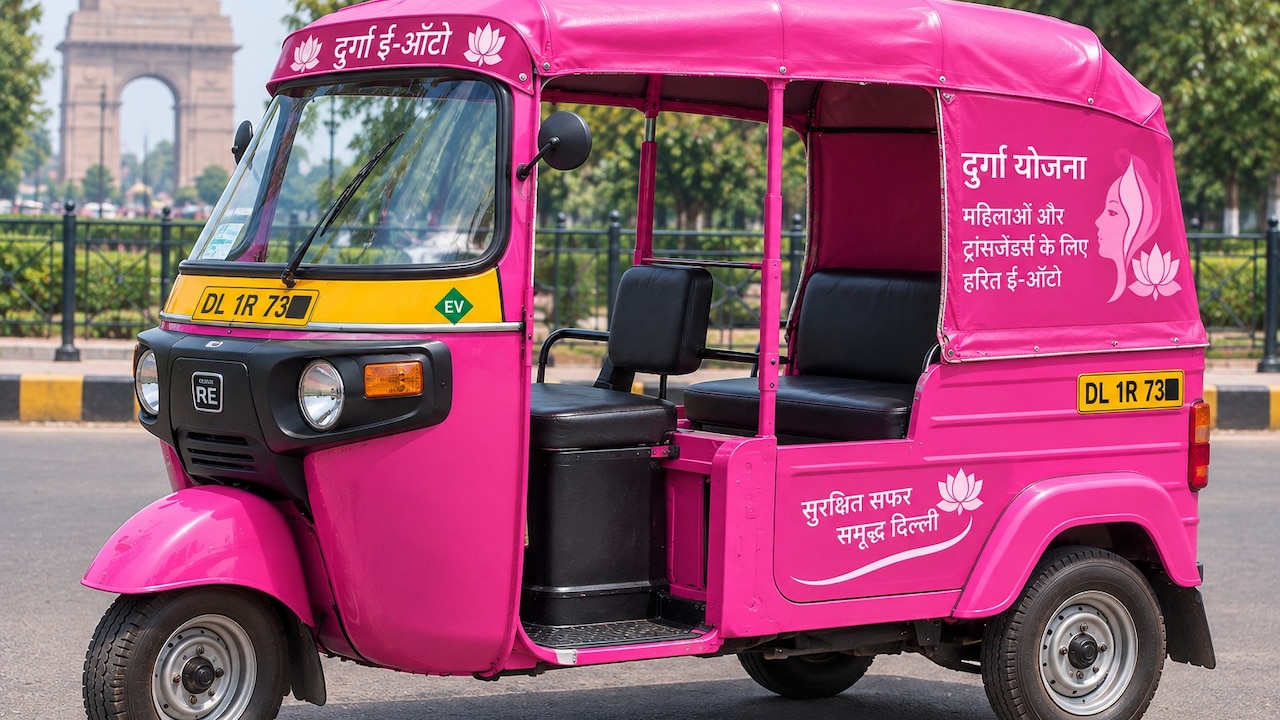
Delhi residents could get the option of booking pink electric autos through ride-hailing apps, with the government planning to bring women and transgender drivers onto these platforms without onboarding or subscription charges.
The Delhi government on Sunday said it would ask ride-hailing companies to waive these charges for drivers selected under its DURGA E-Auto Scheme, which provides for 1,300 electric autorickshaws.
If the companies agree to list these vehicles on their platforms, commuters could book an auto through their phones instead of looking for one on the road or at an auto stand.
A Safer Last-Mile Ride For Women?
The scheme is also aimed at making the last-mile travel safer and more convenient for women, particularly those travelling to and from Metro stations early in the morning or late in the evening.
The government wants to provide another transport option for passengers covering the last stretch of their journey, often between a Metro station and their homes or workplaces.
The Transport Department has also sought dedicated parking and charging spaces from the Delhi Metro Rail Corporation (DMRC) and National Capital Region Transport Corporation (NCRTC) at Metro and Namo Bharat stations.
The focus on safety comes days after the National Commission for Women issued guidelines for app-based transport services, recommending stricter driver verification and an option for women travelling alone to request a woman driver, where available.
1,300 Pink Autos, 130 Slots For Transgender Drivers
The DURGA scheme was approved by the Delhi Cabinet headed by Chief Minister Rekha Gupta on September 23.
Of the 1,300 vehicles planned in the first phase, 1,170 will be reserved for women and 130 for transgender persons, who will be able to own and drive the autos to earn a living.
The vehicles will be allotted across Delhi’s 13 revenue districts, with each district having a maximum quota of 90 autos for women and 10 for transgender applicants.
Transport Minister Dr Pankaj Kumar Singh said the scheme was intended to help women and transgender persons earn independently while increasing their participation in the transport sector.
How Will The Autos Be Allotted?
Applications will be processed through a dedicated online portal developed by the National Informatics Centre (NIC). District-level committees headed by District Magistrates will examine applications, with verification carried out every week.
If eligible applicants outnumber the available slots in a district, allotments will be decided through an online lottery.
Those selected will receive Letters of Intent, while registered owners will be issued identity cards, DURGA jackets and caps.
Beneficiaries will also be eligible for purchase incentives under Delhi’s EV Policy 2026, which provides Rs 50,000 for eligible electric autos registered in the first year, subject to conditions. The government has not specified how much each beneficiary will ultimately pay for the vehicle.
Delhi tried a similar push earlier. In 2022, 1,406 electric auto permits were reserved for women, but only 743 applied in the initial round, prompting another round of applications.
The government also plans a two-phase study to assess the scheme’s impact on beneficiaries’ incomes and livelihoods.


