


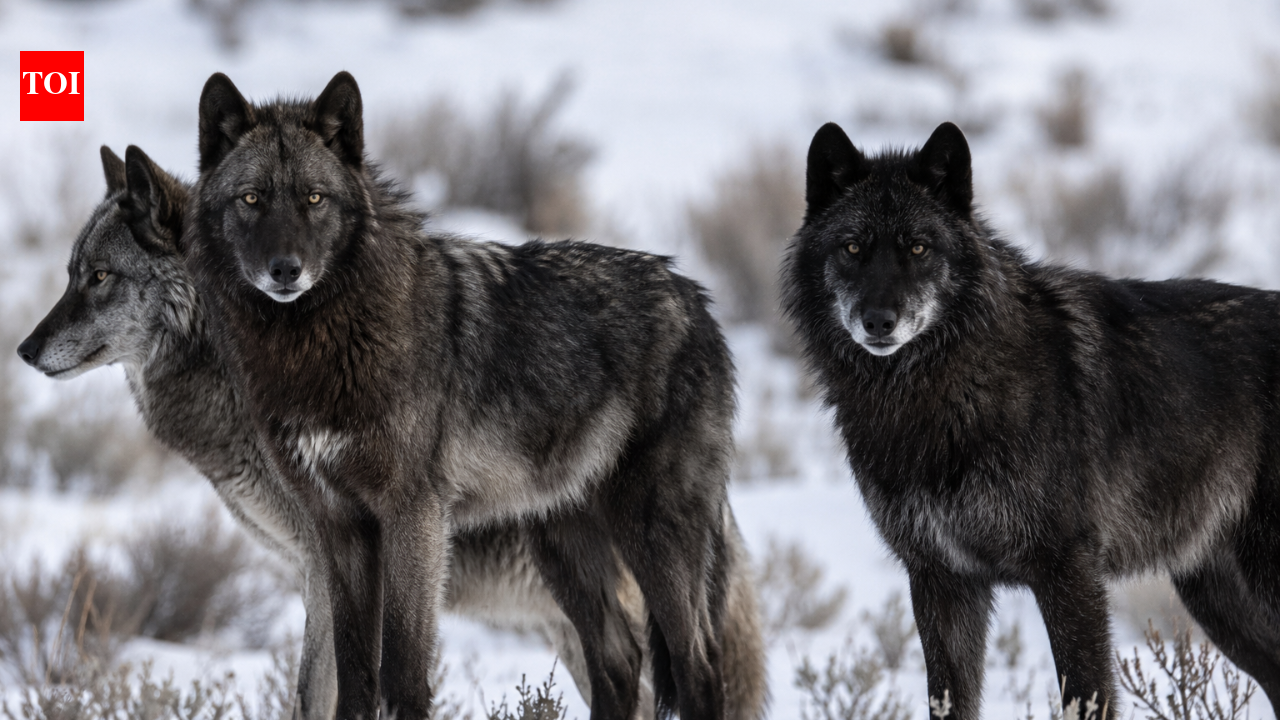
In 1995, Yellowstone National Park became the centre of a conservation experiment that would later be celebrated across the world. Fourteen grey wolves were reintroduced after an absence of nearly 70 years, with many ecologists crediting their return for triggering a remarkable ecological recovery. The story became a textbook example of a “trophic cascade”, where predators indirectly reshape entire ecosystems by controlling herbivore populations. Yet three decades later, the science is proving more nuanced than the popular narrative suggests. While few researchers dispute that wolves have influenced Yellowstone’s recovery, an ongoing debate centres on how much of the transformation can be attributed to wolves alone. New studies suggest that bears, cougars, human hunting, climate variability and changing herbivore populations may also have played significant roles in reshaping the park’s landscapes and wildlife communities.
How 14 wolves transformed Yellowstone and sparked a global conservation success story
When grey wolves disappeared from Yellowstone during the early twentieth century, elk populations expanded across much of the park. Researchers observed heavy browsing pressure on young willow, aspen and cottonwood trees, particularly along rivers and streams. Following wolf reintroduction in 1995 and 1996, ecologists documented declines in elk numbers and changes in elk behaviour, coinciding with the recovery of important plant communities.A landmark review published in Biological Conservation concluded that the return of wolves had allowed scientists to observe “tri-trophic cascades involving wolves, elk and plant species such as aspen, cottonwoods and willows”. Researchers found reduced browsing on young trees and evidence of vegetation recovery across parts of northern Yellowstone.Wildlife biologist Douglas Smith of the Yellowstone Wolf Project described the process as:“It is like kicking a pebble down a mountain slope where conditions were just right that a falling pebble could trigger an avalanche of change.”Subsequent studies also linked wolf recovery to increases in beaver colonies, improved habitat complexity and broader ecological benefits extending to birds, fish and scavengers.
New research challenges the famous Yellowstone trophic cascade narrative
Although the Yellowstone wolf story became one of conservation’s most cited examples, several ecologists have recently questioned whether wolves were solely responsible for the observed changes. A growing body of research argues that the ecosystem’s recovery reflects the combined influence of multiple predators and environmental factors rather than a simple wolf-to-elk-to-vegetation chain reaction.A recent study ‘Flawed analysis invalidates claim of a strong Yellowstone trophic cascade after wolf reintroduction’ examined decades of data on wolves, elk and aspen communities. The researchers concluded that indirect effects were primarily driven by reductions in elk density rather than fear-induced behavioural changes alone. The study also highlighted the importance of other predators, including cougars and grizzly bears, in influencing elk populations.Wildlife ecologist Daniel MacNulty argued that:“A major problem with the simple trophic cascade story is that it ignores the role of these other predators.”Other scientists have similarly cautioned against portraying Yellowstone as a straightforward ecological success story, noting that climate conditions, drought patterns, bison expansion and human management decisions have all affected vegetation recovery across the park.
What scientists agree on today about Yellowstone wolves and ecosystem recovery
Despite disagreements over the magnitude of the effect, there remains broad scientific consensus that wolves have contributed significantly to Yellowstone’s ecological changes. Recent research continues to find evidence of recovering willows, aspens and associated wildlife populations following wolf reintroduction. Another study examining ‘The primacy of density‐mediated indirect effects in a community of wolves, elk, and aspen’ also reported strong evidence that wolf recovery reduced browsing pressure and promoted willow growth across northern Yellowstone.Similarly, researchers defending the trophic cascade hypothesis stated in a 2024 commentary:“Aspen sapling recruitment increased as browsing by elk decreased, following the 1995–96 reintroduction of wolves in Yellowstone National Park.”The emerging scientific view is not that the original Yellowstone story was entirely wrong, but that it was incomplete. Wolves appear to be an important piece of a much larger ecological puzzle involving multiple predators, herbivores and environmental forces. Rather than demonstrating how a single species can instantly repair an ecosystem, Yellowstone increasingly illustrates how ecological recovery emerges from complex interactions that unfold over decades.



